A winding red thread through West Flemish provincial domains ...
What do several of our West Flemish provincial estates have in common? Not only the presence of a magnificent castle, but also the meandering English-style landscape parks that surround the castles, which are visible in some estates.
The style movement gained popularity in our country during the second half of the18th century. A natural-looking park, where winding paths, groups of trees (known as'clumps') and organic-looking water features come together, became the prevailing trend. "Let nature take its course," was the motto, despite the human intervention required to construct the parks. In any case, the new trend resulted in ecologically valuable estates. However, the progressive ideas about park and garden design were at odds with the previously indispensable, typically French geometry and symmetry, with the stately garden of Versailles as the prime example.
Provincial domains of West Flanders
The English landscape style gained popularity in the19th and20th centuries and did not go unnoticed by the lords of West Flemish castles. In line with the latest trends, this fashionable style was applied in the landscaping of their castle grounds. To this day, visitors can still see this style in some provincial domains...
Tillegem Castle Estate
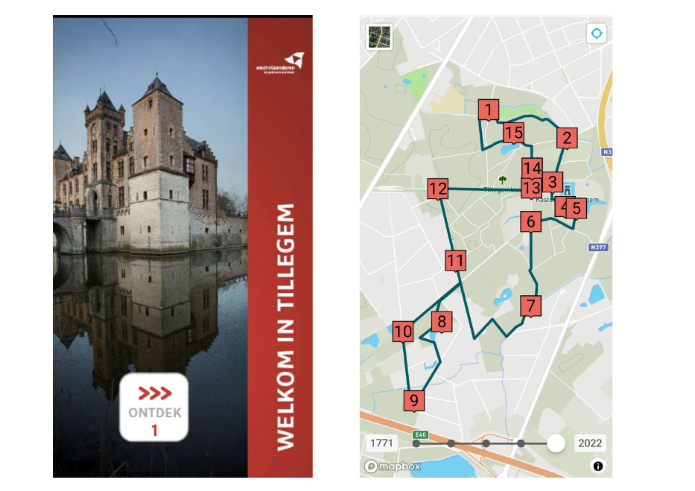
The current layout of the Tillegem estate dates back to the 18th century and is therefore not entirely in the English landscape style. The estate has a star shape: various avenues radiate out from the castle as the center point. However, the layout of Tillegem does have similarities with the English landscape style. A characteristic feature of this style is the use of slopes. Tillegem Castle offered many possibilities in this respect due to its location on a natural hill, at the beginning of a slope and centrally located in relation to the surrounding park. Castles were often placed on elevated ground to emphasize their status as landmarks.
Castle Estate d’Aertrycke
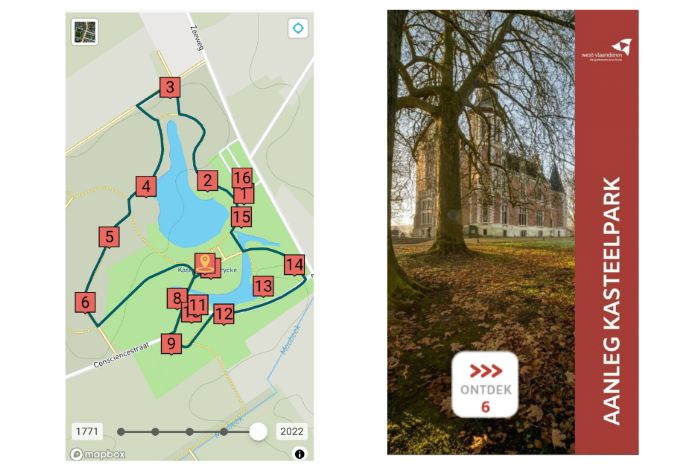
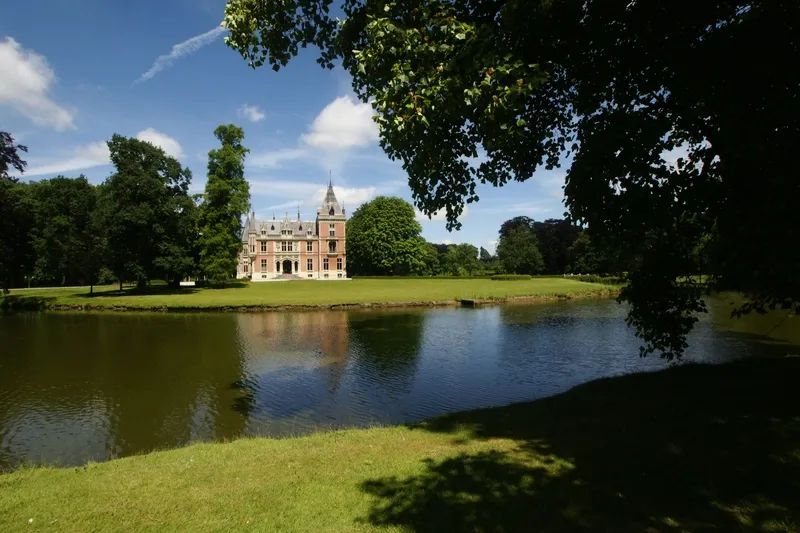
The d'Aertrycke castle grounds were designed entirely in the English landscape style by landscape architect Louis Fuchs (1818-1904). The use of sightlines was applied here. Every 15 degrees, a sightline departs from the castle, dividing the park and highlighting an element (annex, group of trees, water feature, etc.). Conversely, each sightline offers a beautiful view of the castle. A striking feature of the d'Aertrycke provincial estate is the large, ecologically valuable pond near the castle. The pond, with its natural shape, acts as an important attraction for various fauna and flora. In addition, the outbuildings on the estate, such as the dovecote, the bathhouse, and the boathouse, create a picturesque and cozy atmosphere.
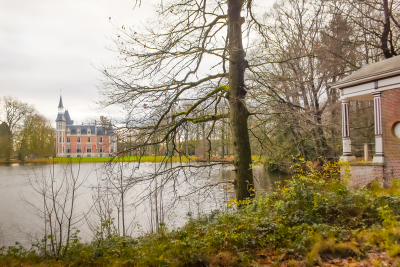
Wallemote-Wolvenhof Castle Estate
The idyllic Wallemote-Wolvenhof castle grounds are also a striking example of the English landscape style. The various clumps of red beech trees create an organic-looking forest. The castle pond can be reached via winding paths that lead to a romantic little bridge. From here, visitors have an excellent view of the pond, Wolvenhof Castle, and the surrounding garden.
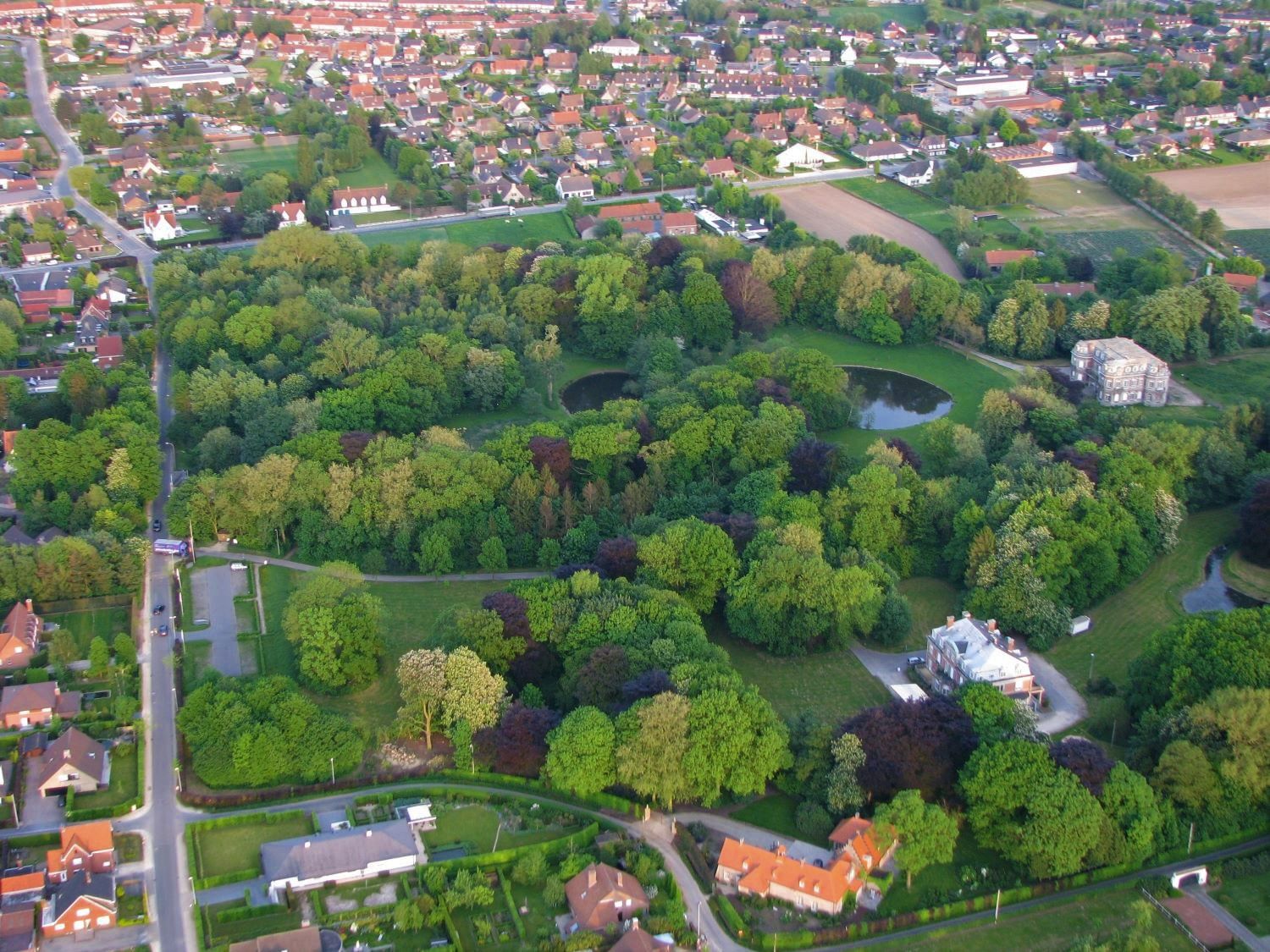
Curious to explore one of the provincial estates in person? Come visit, download the ErfgoedApp start your walk. The heritage walk through the Wallemote-Wolvenhof estate will appear on the map soon!
www.west-vlaanderen.be/erfgoed