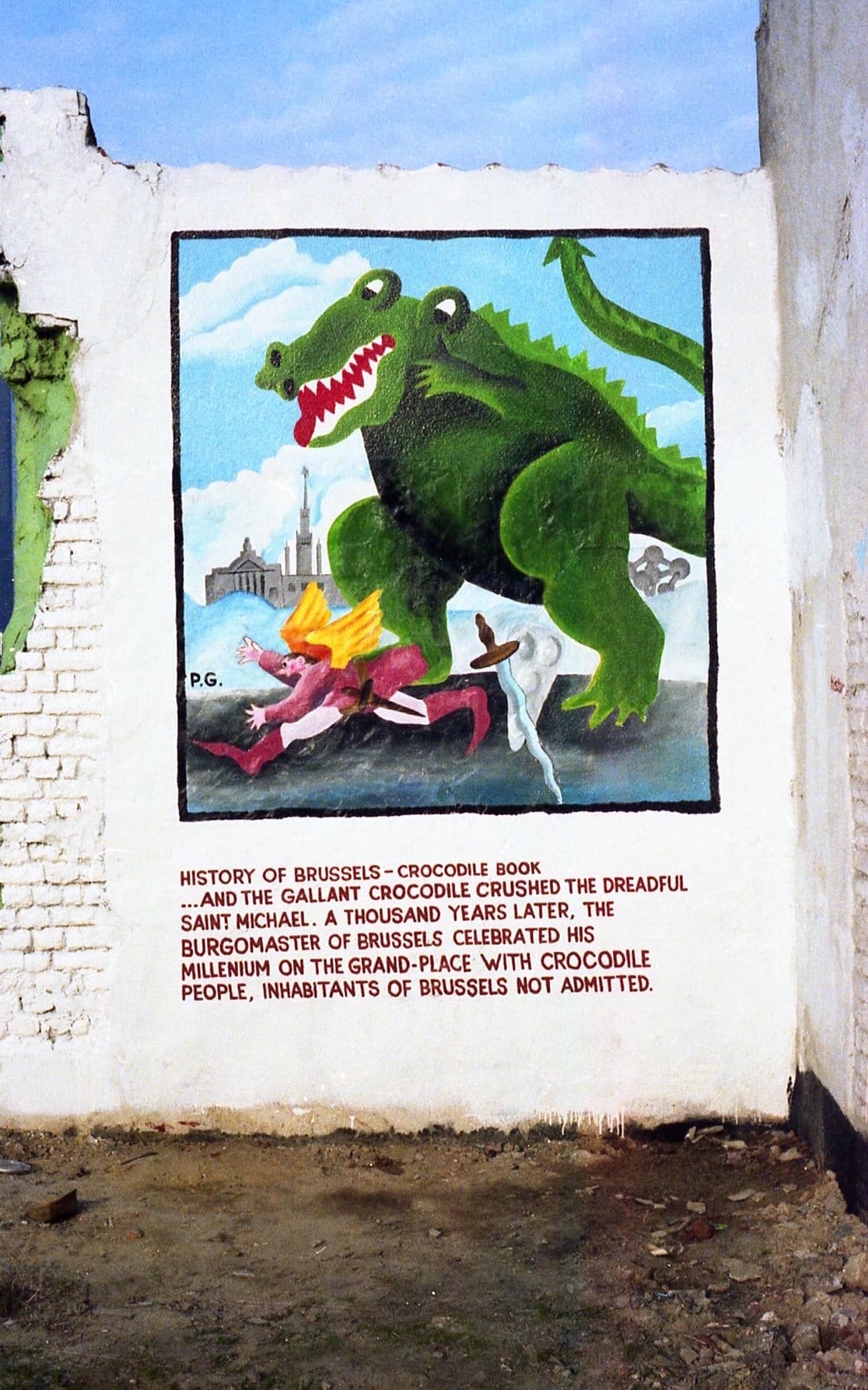
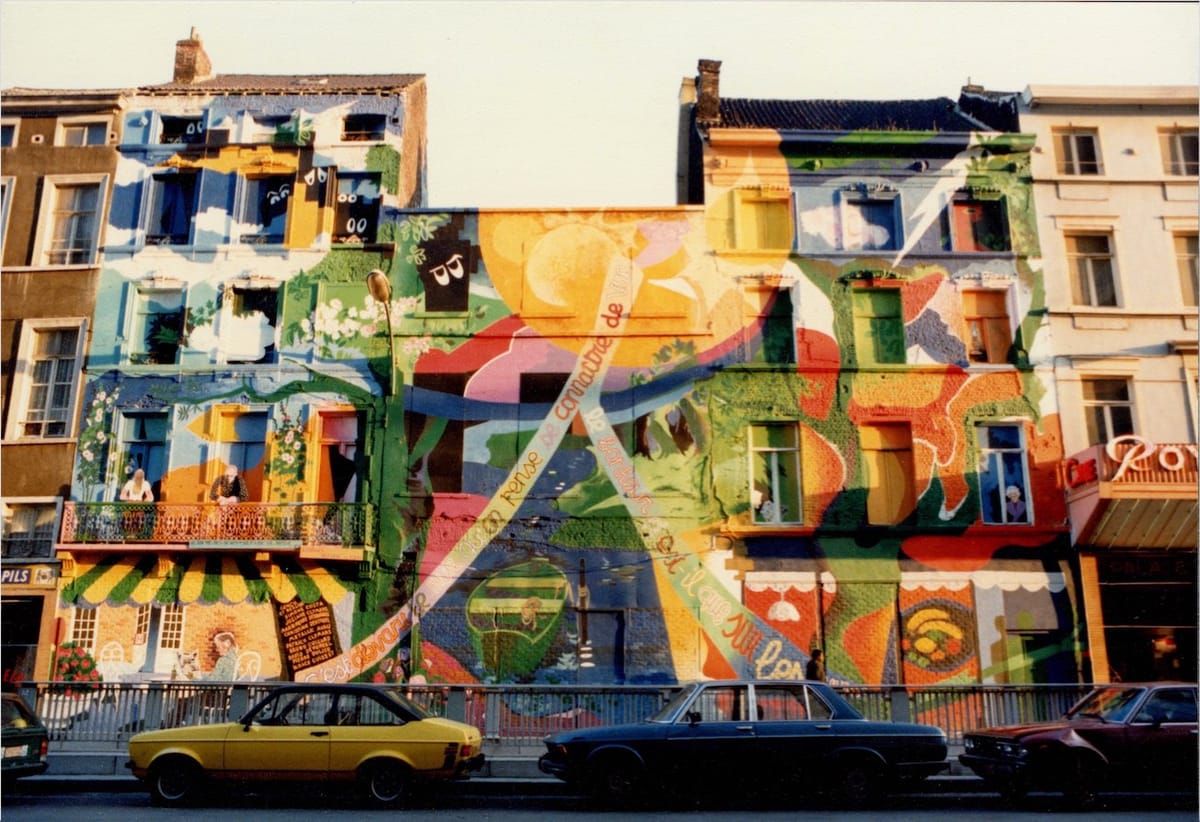
Anyone walking through Brussels' North Quarter today will mainly see gleaming office towers and wide avenues. But behind this backdrop lies a forgotten piece of urban history. During a walk with the ErfgoedApp , you ErfgoedApp how the neighborhood was once transformed into a desolate plain—and how art temporarily brought color and life to it.
From lively neighborhood to lunar landscape
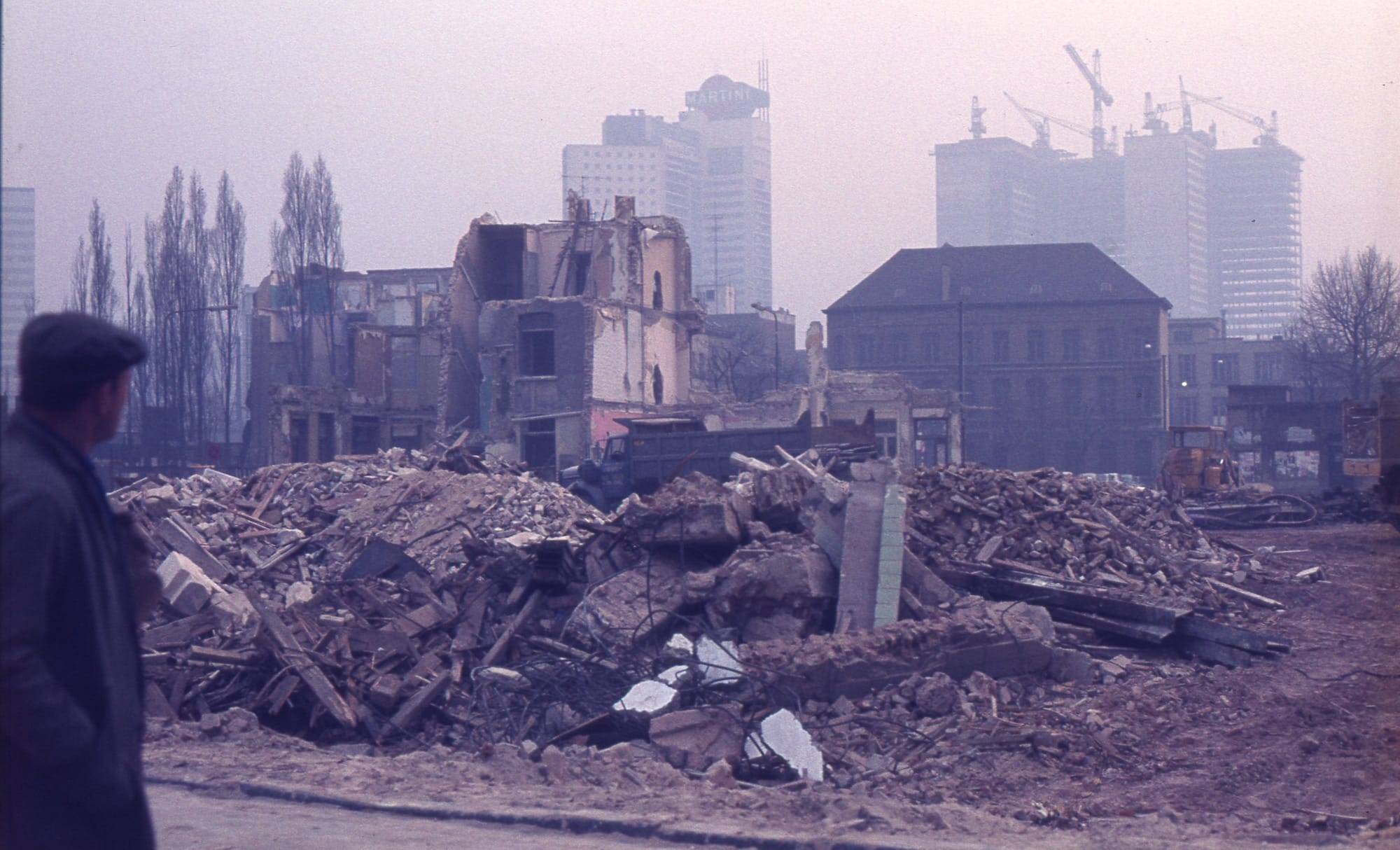
In 1967, the infamous Manhattan Plan was approved. The plan provided for an intersection of international highways and a skyline of towers up to 162 meters high. Thousands of residents had to move out for the plan to be realized. The demolition hammers advanced and the once bustling streets were transformed into a lunar landscape of vacant lots and abandoned houses.
When the oil crisis broke out in the 1970s, the construction boom came to a halt. The Noordwijk district was left behind as a barren wasteland, a no man's land in the heart of Brussels.
An explosion of color
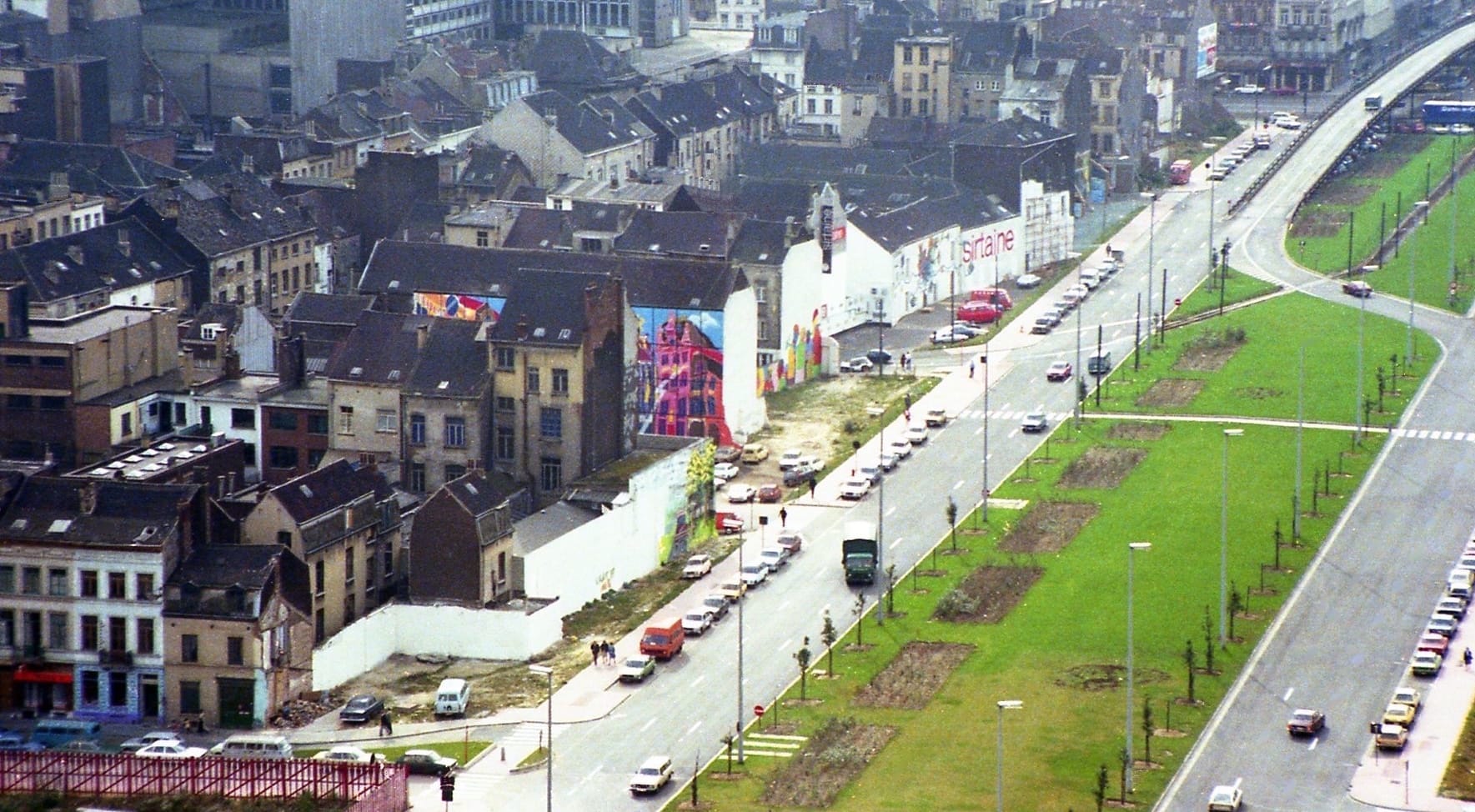
And then something unexpected happened. Between 1977 and 1981, young artists took possession of the dreary walls. Under the impetus of François de Cugnac, then director of Sirtaine, a local wholesaler of electrical and telecommunications equipment, a unique project was launched: 22 enormous murals, covering a total of 5,000 m². He recruited Pierre Gérard, a recently graduated artist, and asked him:
"Get me out of this dreariness."
With the support of the Le 75 art school and together with other artists, he set to work. The first murals can still be considered artistic advertising panels, but gradually they became indictments of urban planning, social, or ecological abuses.
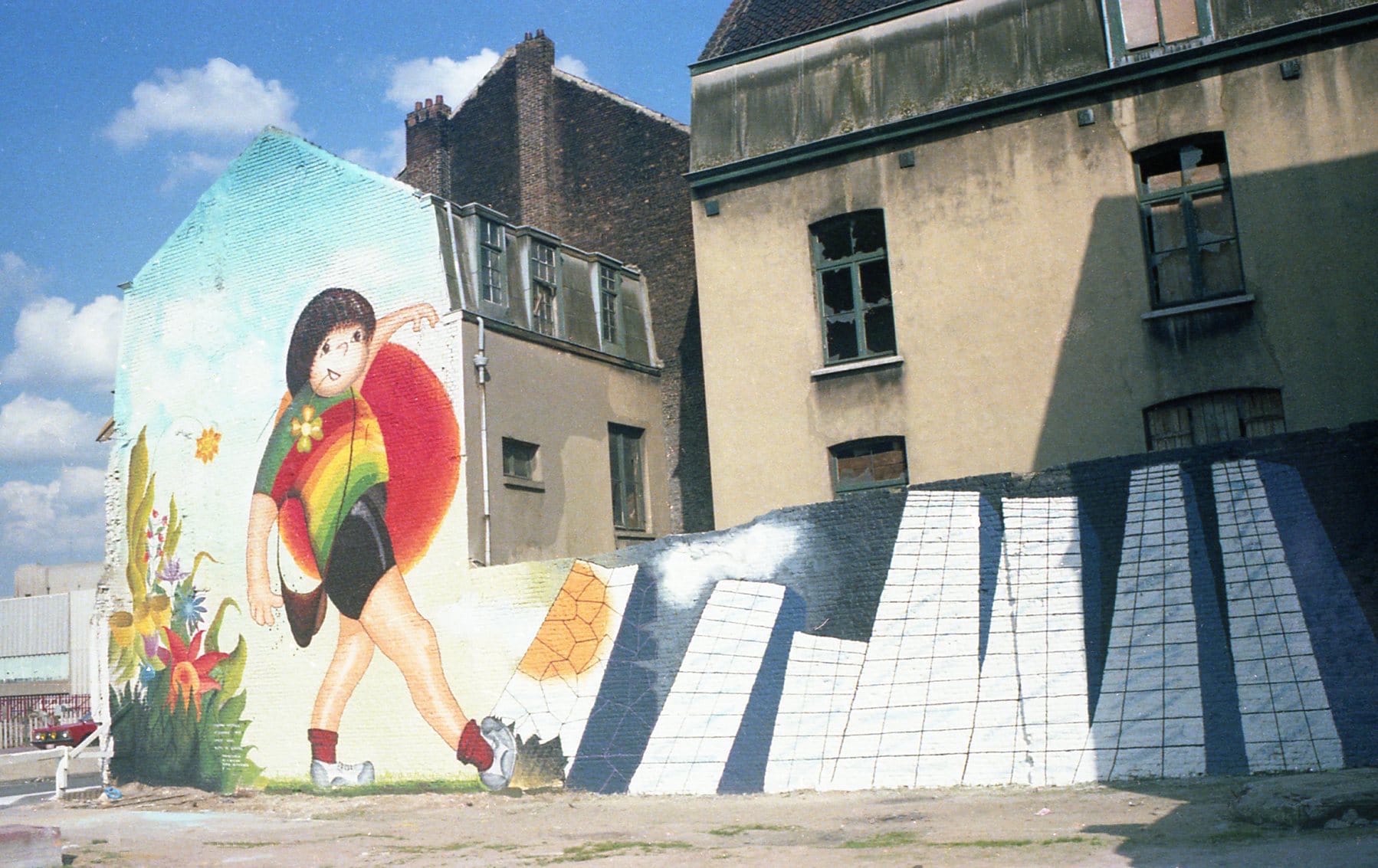
The works were colorful, humorous, and often socially charged. They depicted trams, workers, flowers, and even cartoon characters. For a neighborhood that had been gray and run-down for years, these paintings were a bright spot—literally and figuratively.
Forgotten, but not lost
Since 1995, the murals have completely disappeared from the streetscape. The office buildings were eventually built, and the artworks disappeared under concrete and glass. Yet the story lives on thanks to city guide Joris Sleebus, who brought the memory back to life with his research and exhibition Lichtpunt ( Ray of Light).
During the walk, you can listen to this story about the Noordwijk neighborhood, the residents who had to leave, and the artists who temporarily brought color to the neighborhood. Historical footage is used to reconstruct an episode that had almost been forgotten.
A walk full of stories
This walk with the ErfgoedApp clear that heritage is not always tangible. Sometimes it is about memories, about stories that are in danger of disappearing. The murals of the Noordwijk are a wonderful example of this: they no longer exist, but their meaning remains.
And what is certainly remarkable is that every day, thousands of people walk along this route to and from work, unaware that one of Europe's largest mural projects once took place here. The past is literally beneath their feet and above their heads, but the story is largely unknown.
Walking through Noordwijk, you might only see towers and offices. But listen to this story and you'll discover that this neighborhood once lived, protested, and was colored by art.
Would you like to experience this past for yourself? View the walk in the ErfgoedApp and let yourself be carried away by the forgotten history of the Noordwijk district. Curious to see more photos of this project? Be sure to take a look at erfgoedbankbrussel.be.