
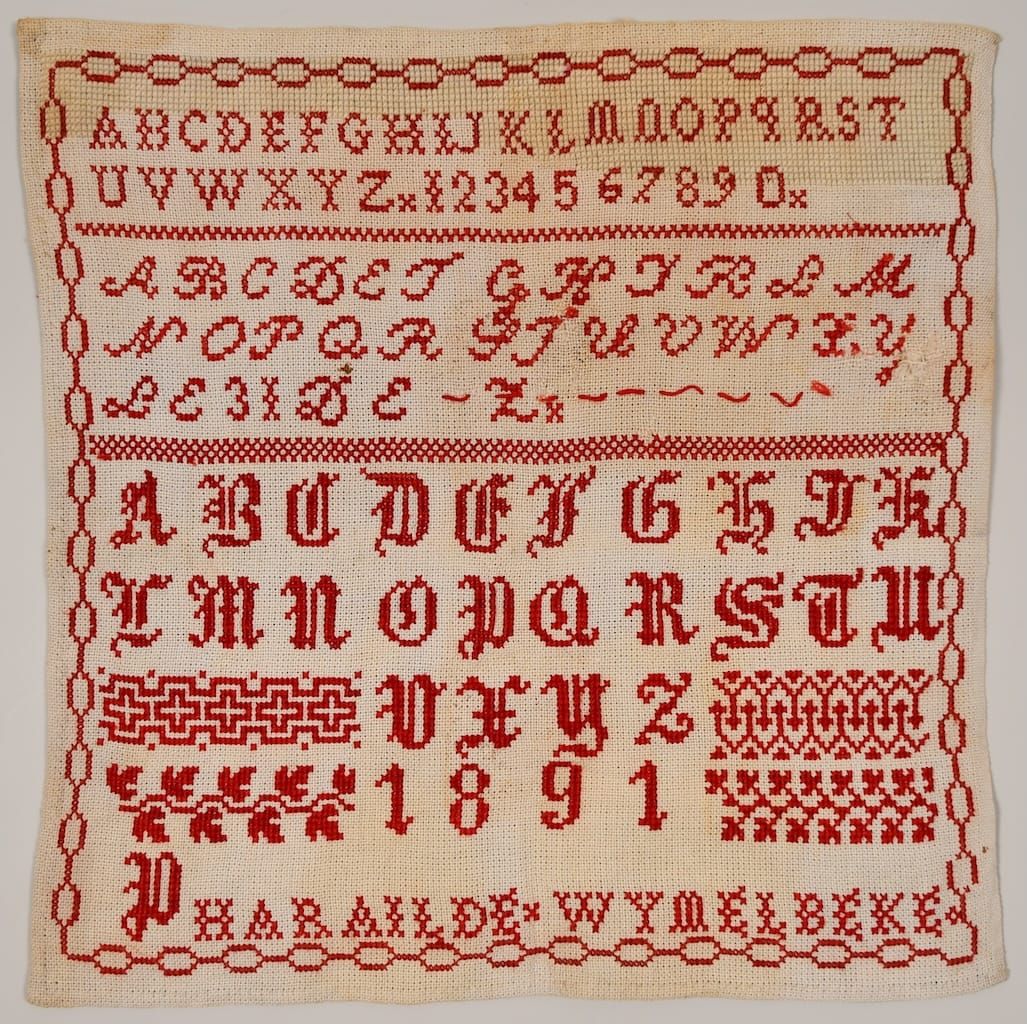
A small piece of linen, filled to the brim with elegant letters, numbers, curls, and figures. Maybe you've seen one hanging in a museum?
This unique piece of 19th-century practice fabric is called a sampler. Schoolgirls used it to practice their sewing and embroidery techniques, building their skills step by step. Some of these pieces even evolved into small fabric paintings, decorated with ornate borders, flowers, little houses, or religious motifs.
And then there are the darning patches. Because a hole in a piece of clothing? That had to be mended. After all, clothes were too expensive to just throw away. That’s why girls were also taught to darn: to repair a damaged spot in such a way that the shape, thickness, and pattern of the fabric were replicated as closely as possible.
But why did girls actually make such unusual embroideries? And what do all those patchwork and darning cloths have to do with the households of wealthy families?
Even more treasures to discover
Want to see more? Be sure to check out these stories and tours in the ErfgoedApp:
 ErfgoedApp
 ErfgoedApp
 ErfgoedApp