Heilig-Blut-Prozession (Gebärdensprache - DGS)
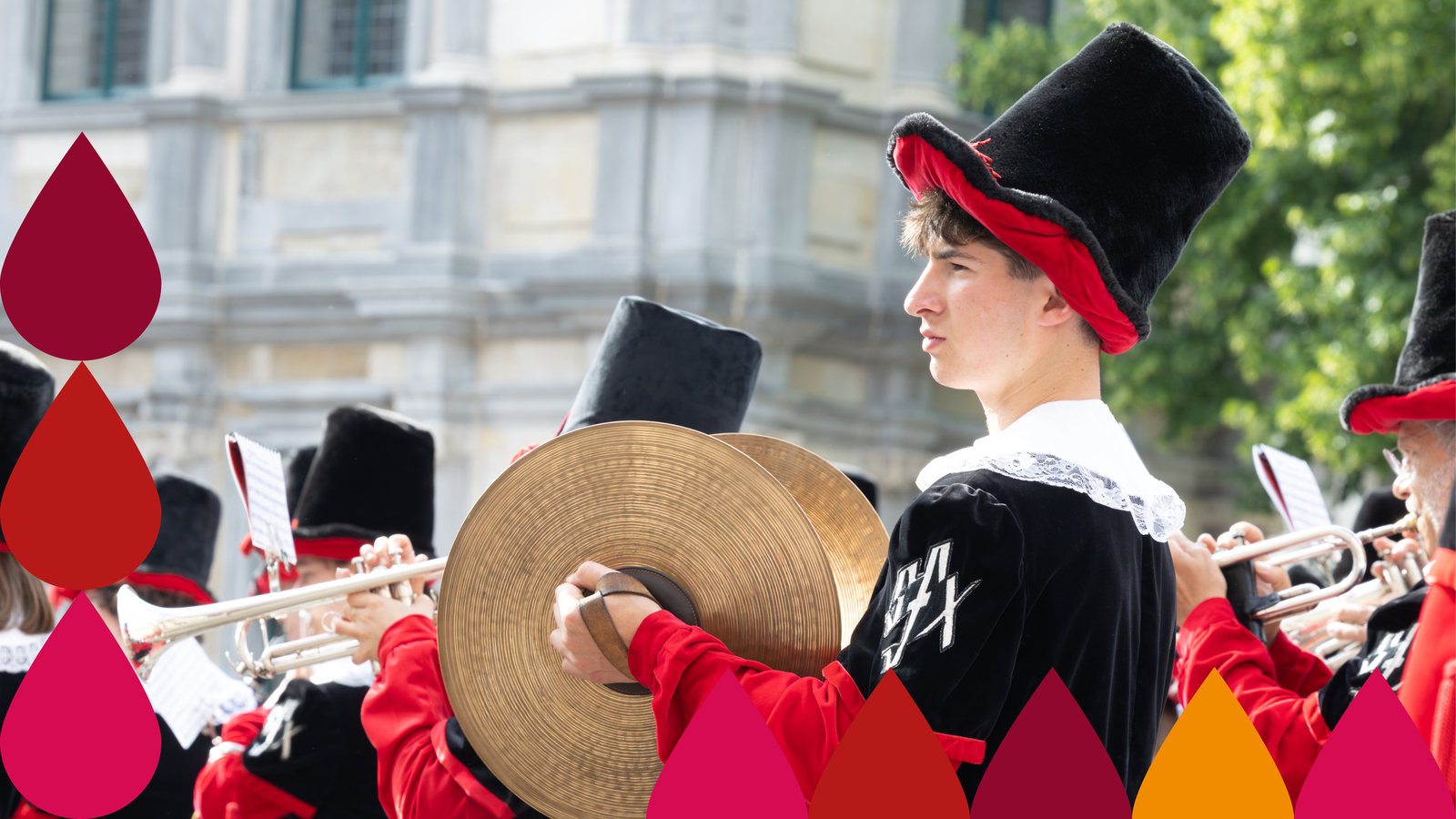
Jedes Jahr zu Christi Himmelfahrt zieht die Heiligblutprozession durch Brügges Altstadt. Die Heilig-Blut-Prozession wurde 1304 ins Leben gerufen als Ausdruck von Dankbarkeit und christlichen Glaubens ins Leben gerufen.
Im Mittelpunkt steht die Erinnerung an das Leiden Jesu Christi. Die Prozession basiert auf den Überlieferungen der Bibel. Thematisch ist die Heilig-Blut-Prozession in fünf Teile unterteilt. Die Evokation beginnt mit einer Einleitung. Darauf folgt das Alte Testament, vom Paradies bis zum Rorate. Anschließend kommt das Neue Testament, von der Geburt in Bethlehem bis Pfingsten. Im vierten Teil wird die Ankunft der Reliquie des Heiligen Blutes in Brügge dargestellt. Im letzten Teil begleiten die Mitglieder der Edlen Bruderschaft des Heiligen Blutes den Schrein, in dem sich die kostbare Reliquie befindet.
Über 1800 Teilnehmer singen, musizieren, tanzen und schauspielen. Der Stil der Prozession erinnert an die burgundische Zeit, in der Gilden, Handwerker, Bruderschaften und die „Rhetorikkammern“ (Dichtergilden) für die Darstellung der Szenen verantwortlich waren.
Verfolgen Sie die Heilig-Blut-Prozession mit Audiobeschreibung auf dieser Tour. Die Audiobeschreibung ist in 20 Teile aufgeteilt. Schalten Sie die Bluetooth-Funktion Ihres Handys oder Tablets ein. Während der Prozession werden Sie regelmäßig benachrichtigt; Sie können dann die Audiobeschreibung starten, die Ihnen eine Beschreibung der vorbeiziehenden Szenen gibt.
Verfolgen Sie die Heilig-Blut-Prozession mit Erklärungen in Gebärdensprache (DGS) über diese Tour. Die Videos in Gebärdensprache sind in 20 Teile unterteilt. Schalten Sie die Bluetooth-Funktion Ihres Handys oder Tablets ein. Während der Prozession erhalten Sie regelmäßig eine Benachrichtigung; Sie können dann die Erklärung in Gebärdensprache starten, die Ihnen eine Beschreibung der vorbeiziehenden Szenen gibt.
Die Heilig-Blut-Prozession steht auf der Repräsentativen Liste des immateriellen Kulturerbes der Menschheit (UNESCO).
Scan QR met ErfgoedApp om tour te starten of start de tour in de app