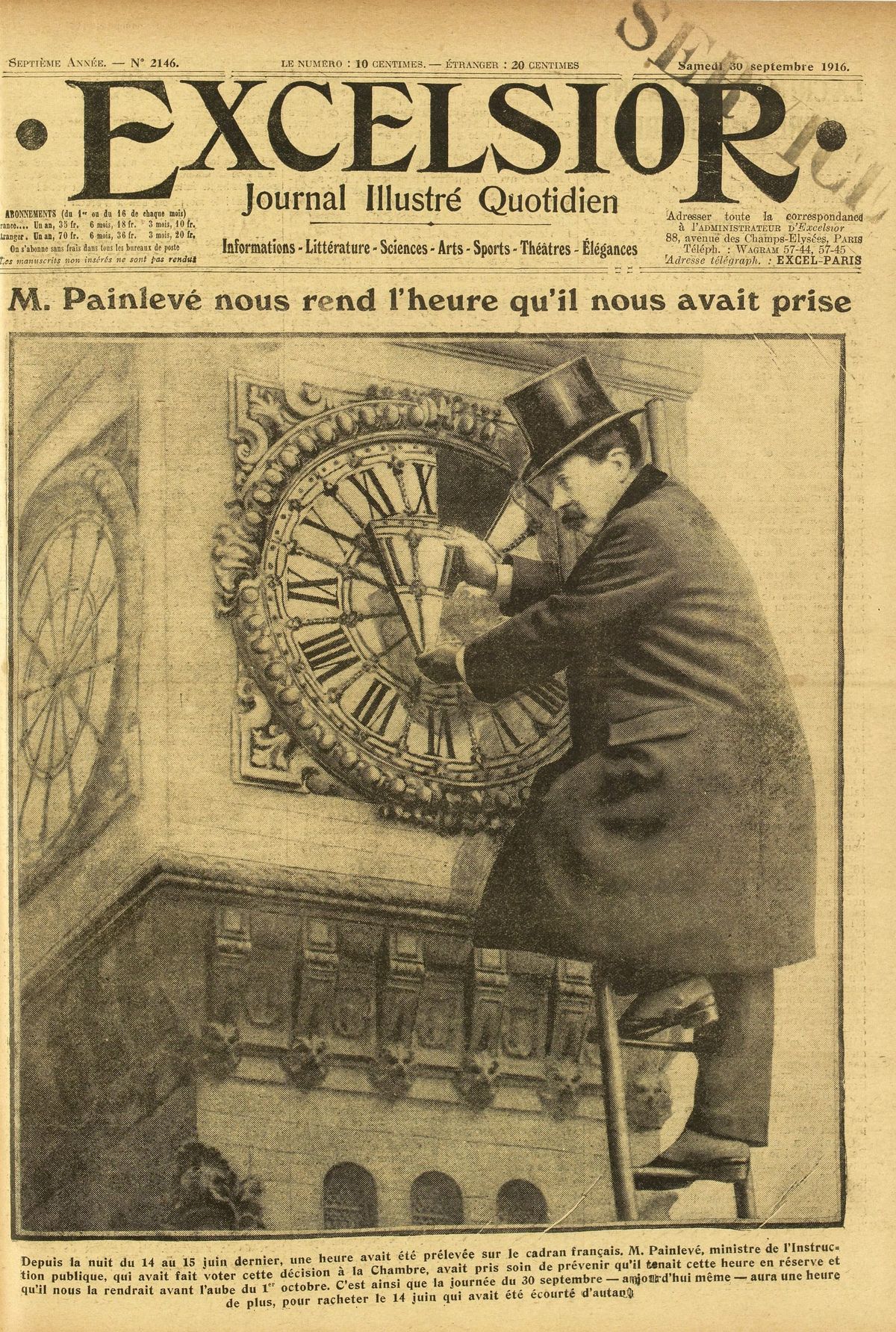
On May 1, 1916, the West Flemish writer Stijn Streuvels wrote in his war diary: “Daylight saving time has thrown everyone off. (…) All the market-goers are arriving late for the tram—no one thought that if you set the clock forward an hour, the tram would arrive and depart an hour earlier. (…) The best part was a gentleman who consoled himself by saying that the war would now be over an hour sooner!”
Where did this confusion over time during World War I come from? Since the late 19th century, Belgians had no longer been living according to the rhythm of nature, but according to an internationally agreed-upon time system. In 1892, clocks were set to the same time everywhere. The world was divided into time zones. Belgium was initially in the London (GMT) time zone. In Germany, you had to add an hour to that (GMT+1).
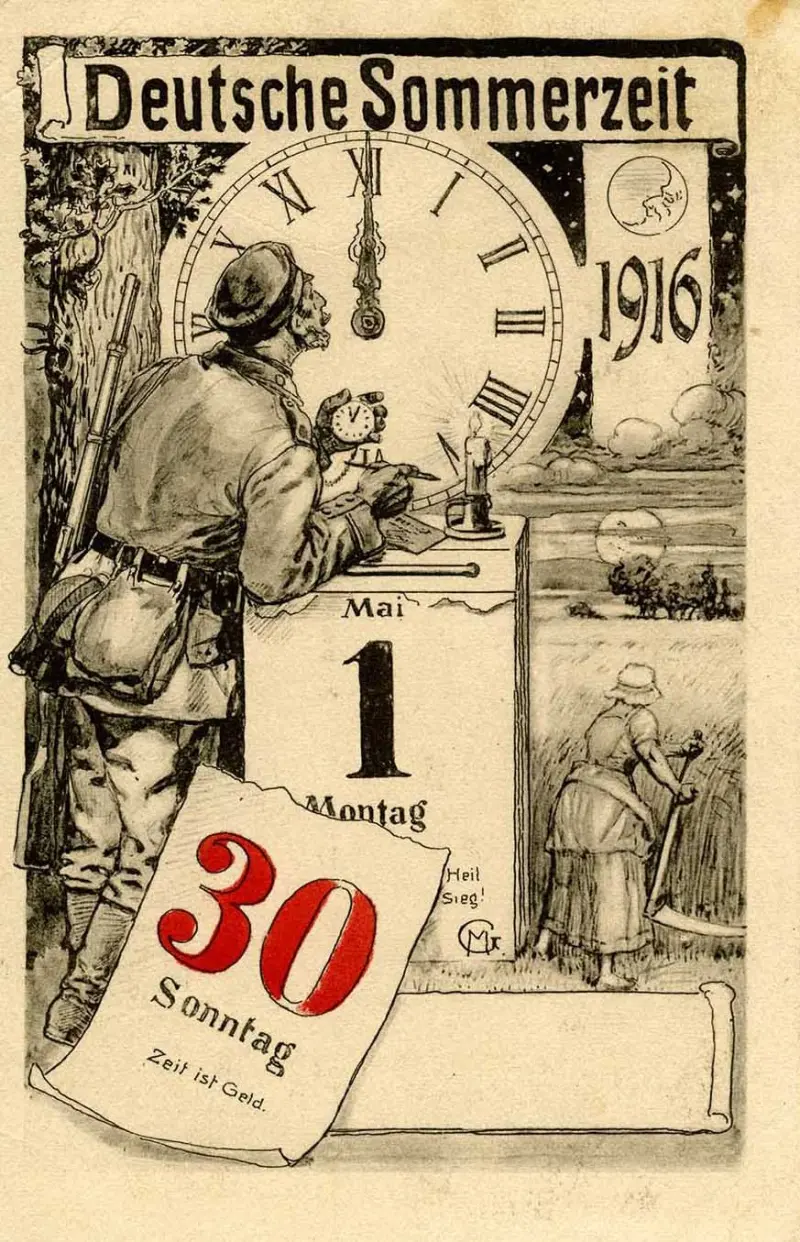
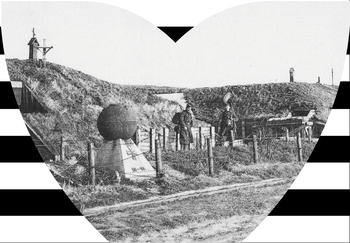
When the German army conquered nearly all of Belgium in 1914, they immediately introduced “German time.” On April 30, 1916, they added to the confusion by imposing daylight saving time for the first time. All clocks had to be set forward another hour. In the unoccupied Westhoek, it was suddenly two hours earlier than on the other side of the Yser.
Save on candles
The American Benjamin Franklin is said to have been the first to suggest, in the 18th century, getting up earlier and going to bed earlier in the summer to save on candles. The Germans were the first to actually do this during the war, and they, too, were motivated by energy conservation. After the war, Belgian clocks were set back one hour amid cheers. After World War II, daylight saving time was abolished, and GMT+1 was adopted year-round. The wars were over, but the confusion over time had not yet been eliminated.
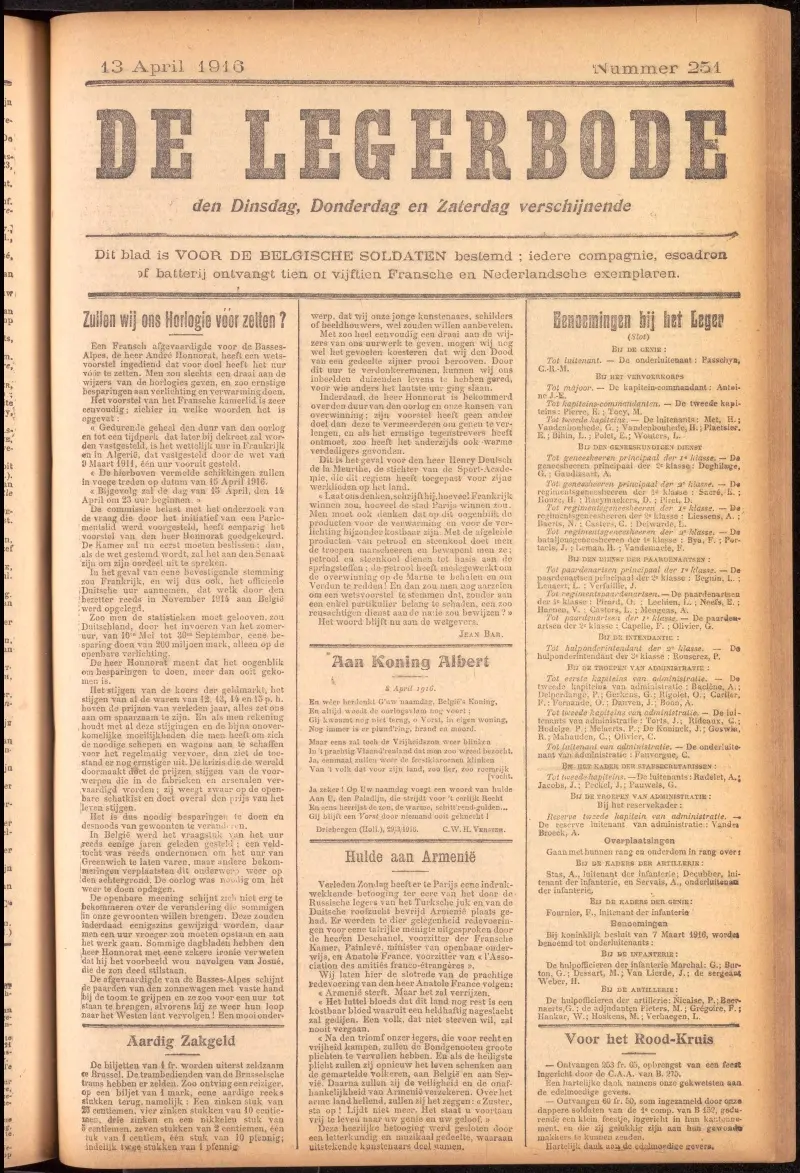
The current daylight saving time regulations date back to 1977—not coincidentally, a period of economic crisis when energy conservation once again became a priority.
This story was created by Geheugen Collectief for FAAM – Virtual Museum.
 ErfgoedApp
 ErfgoedApp
 ErfgoedApp
 ErfgoedApp
 ErfgoedApp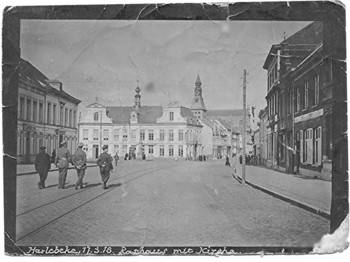
 ErfgoedApp