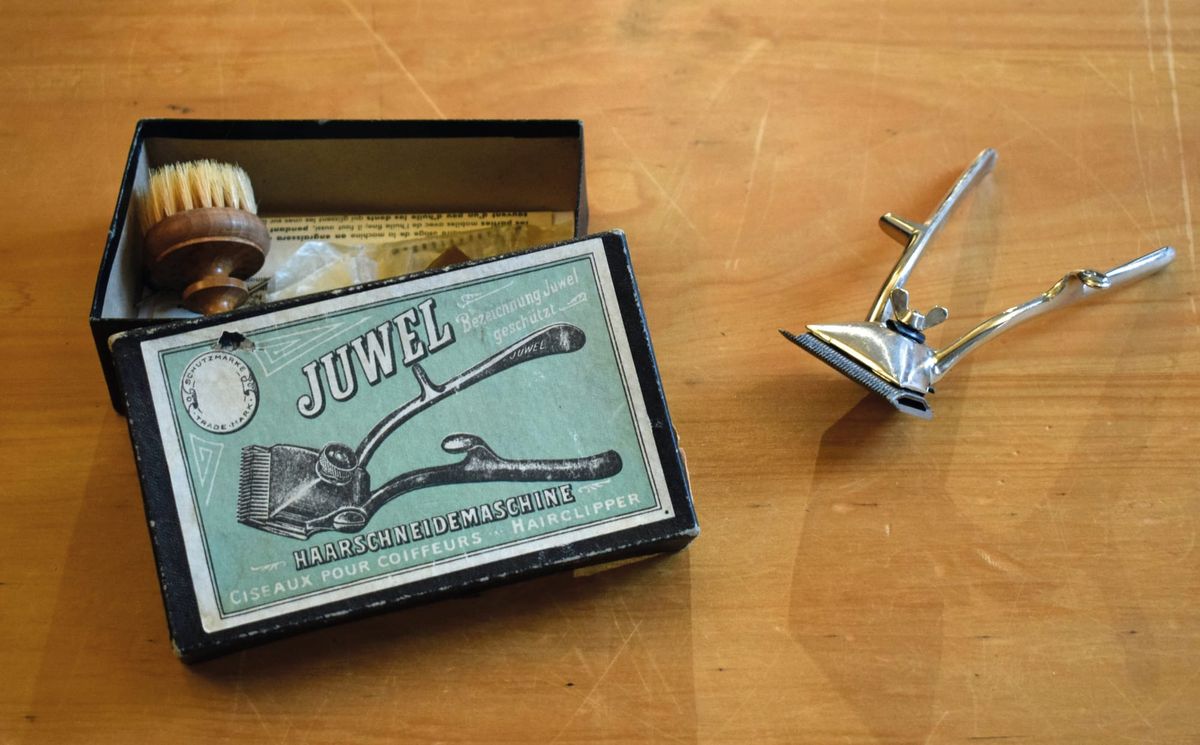
The Erfgoedhuis | Sisters of Charity J.M. collection includes several Juwel brand hair clippers (“Haarschneidemaschinen”). What were they used for?
Conversations with the sisters offer guidance. The hair clippers were a commonly used item in the convent. On their heads, the sisters wore “a hood,” an ensemble consisting of four layers of fabric that completely covered the head. For hygienic reasons, the sisters’ hair was shaved off. Every few weeks, they were attended to by the “barber” on duty.
When a sister entered the convent, she first underwent a training period consisting of two parts: the postulancy and the novitiate. The postulancy lasted six months, and the postulants were dressed simply in black, with a veil that did not completely cover their heads. At the end of this period, a vote was held on the candidates: who would be accepted into the novitiate, and who would not?
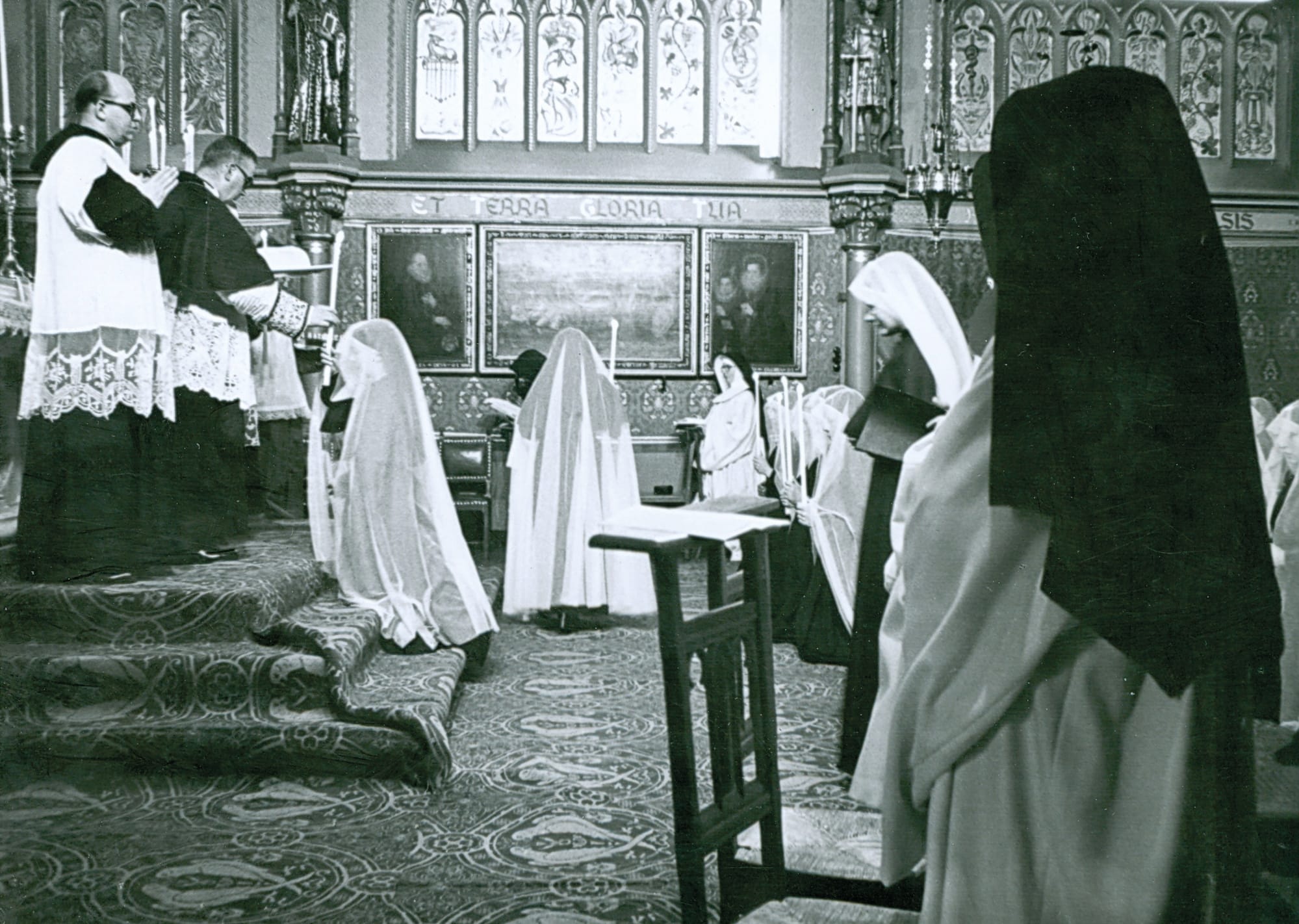
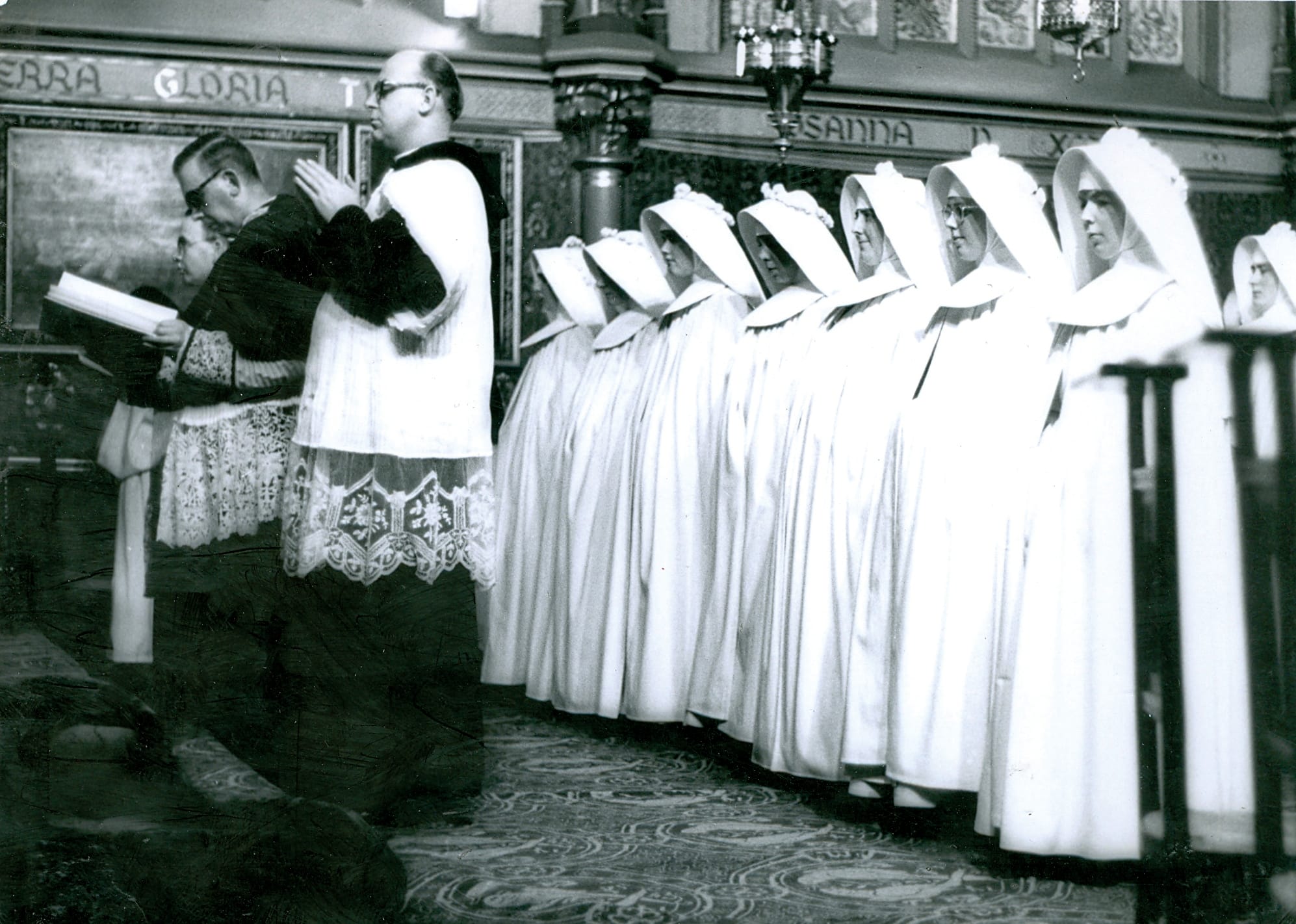
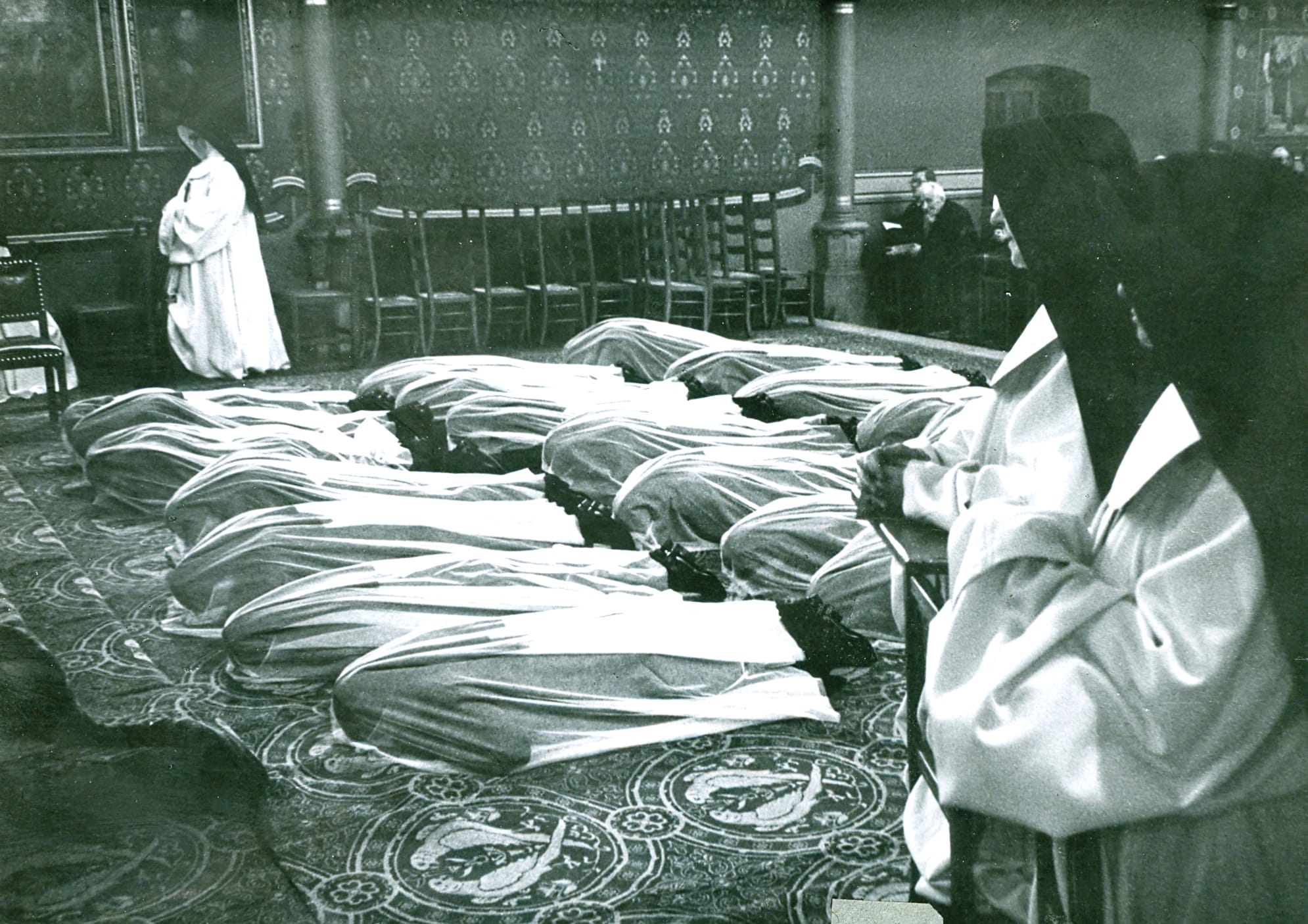
The entrance of the sisters into the convent © Erfgoedhuis Collection | Sisters of Charity J.M.
The transition took place during an elaborate ceremony in which the future nun laid aside her secular clothes, donned the habit, and received a religious name. The night before, another event took place. Because the novices wore a traditional “nun’s hood,” their hair had to be shaved off. The stools were lined up in the bathroom. Some cried, while others laughed at each other’s bald heads. It was a moment of transition, and a sacrifice was made: one’s hair.
As their hair was cut off, the sisters renounced the world, their former lives, and their former selves. After the tonsure, the shaven-headed postulants walked in procession to the Grotto of Our Lady on the convent grounds, wearing a veil on their heads and holding a lit candle in their hands. Ready for the big day!
 ErfgoedApp
Text: Kaat Leeman and Alexander Vander Stichele
This article also appeared in*faro | magazine on cultural heritage*, 12(2019)4.