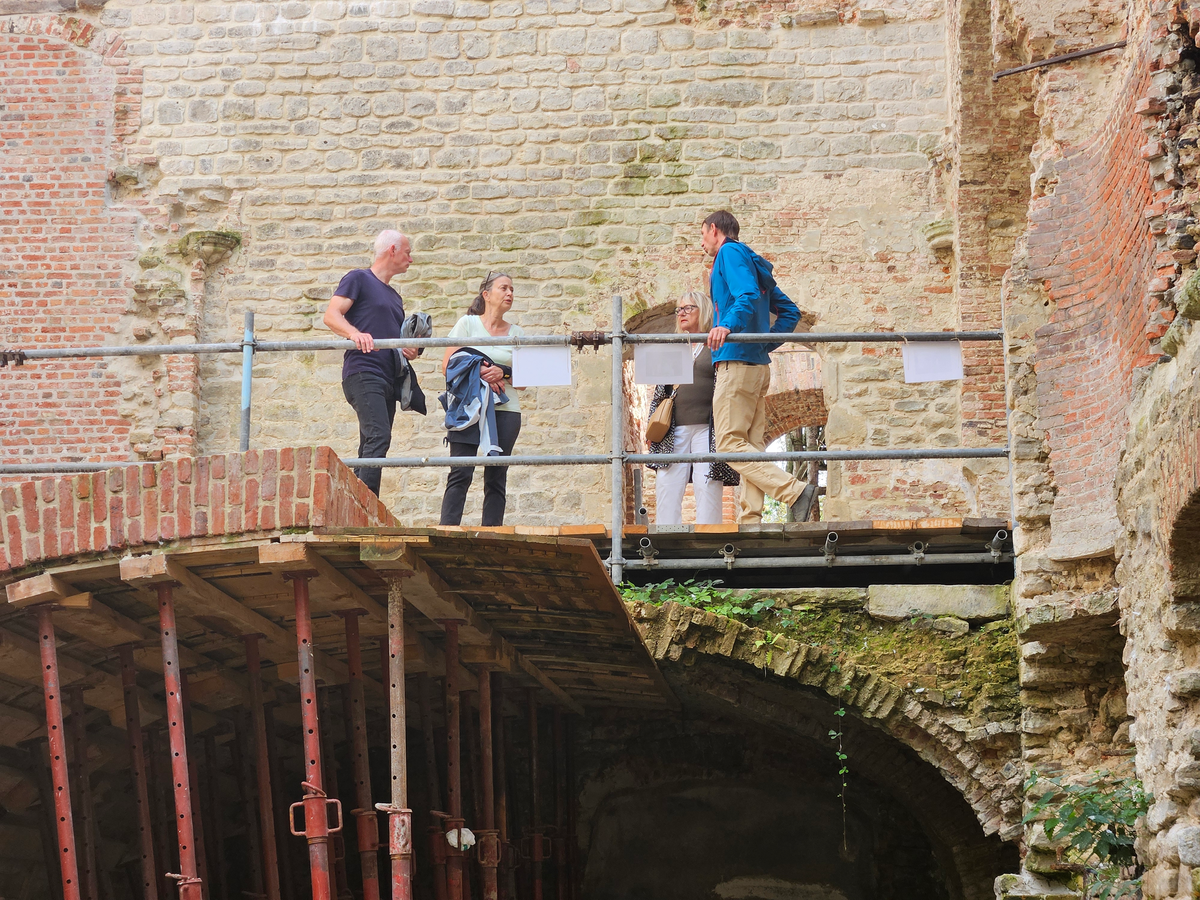
Anyone visiting the Prinsenkasteel in Grimbergen today will see a ruin. Weathered walls rise above the water, and the keep still watches over the Prinsenbos. At first glance, the castle’s story seems to be one of loss and decay.
But appearances can be deceiving. Behind the centuries-old stones, a new story is unfolding: that of a castle that is not being rebuilt as it once was, but is being given new life as a place for craftsmanship, experimentation, and community.
A castle with a long history
For centuries, the Prinsenkasteel served as the residence of the lords of Grimbergen. After their castle in the Borcht was burned down during the Grimberg War, a new residence was built elsewhere. As far as we know today, the Prinsenkasteel first appears clearly in historical sources in the 15th century.
Over the centuries, the castle was expanded and modified several times. In 1610, it underwent a thorough renovation to transform it into an attractive residence for the nobility. The surrounding estate, which we know today as the Prinsenbos, was then part of a vast castle park.
History has not always been kind to the Prince’s Castle. The castle suffered greatly during the War of the Austrian Succession and the French bombardments. Yet it remained standing for centuries.
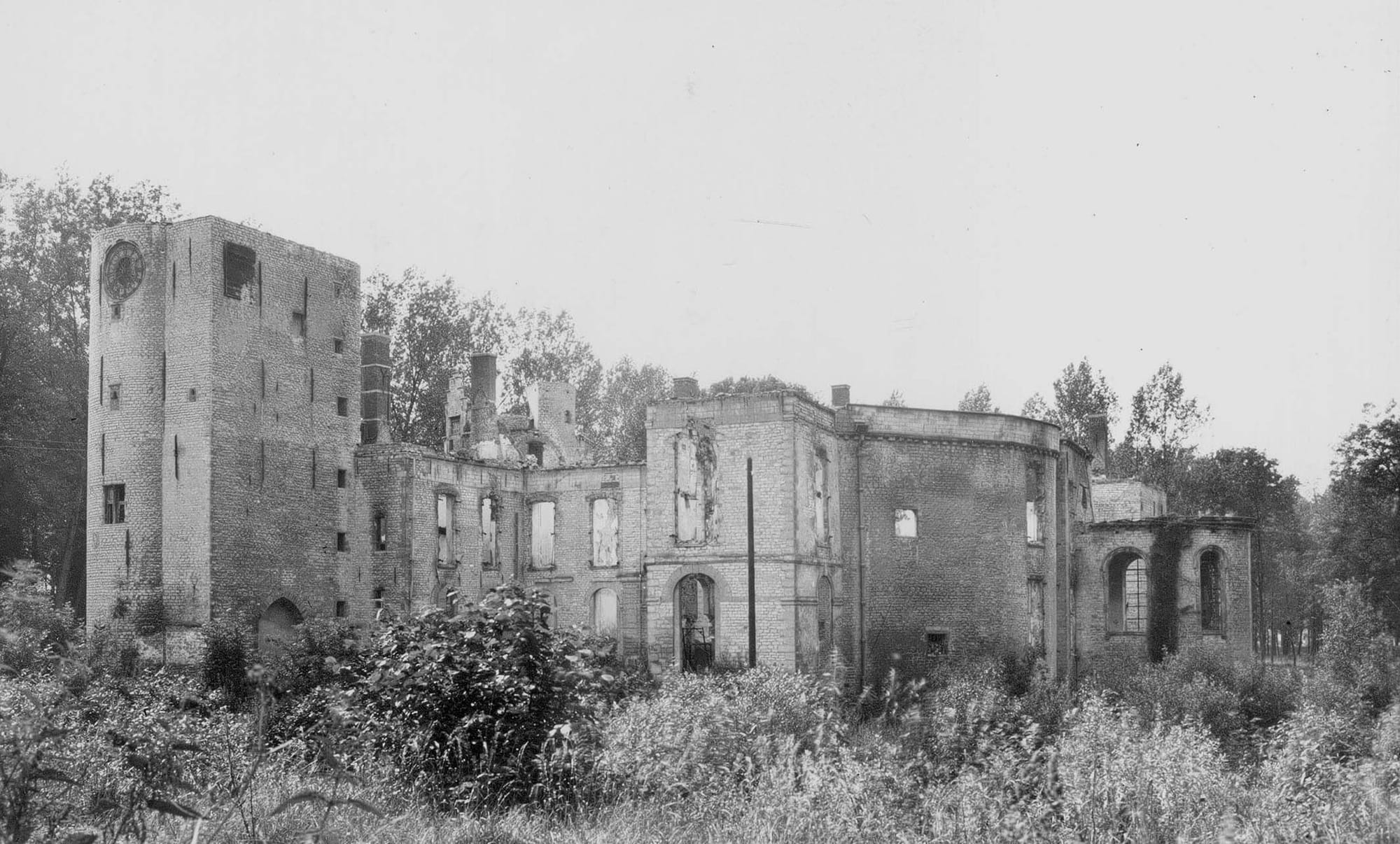
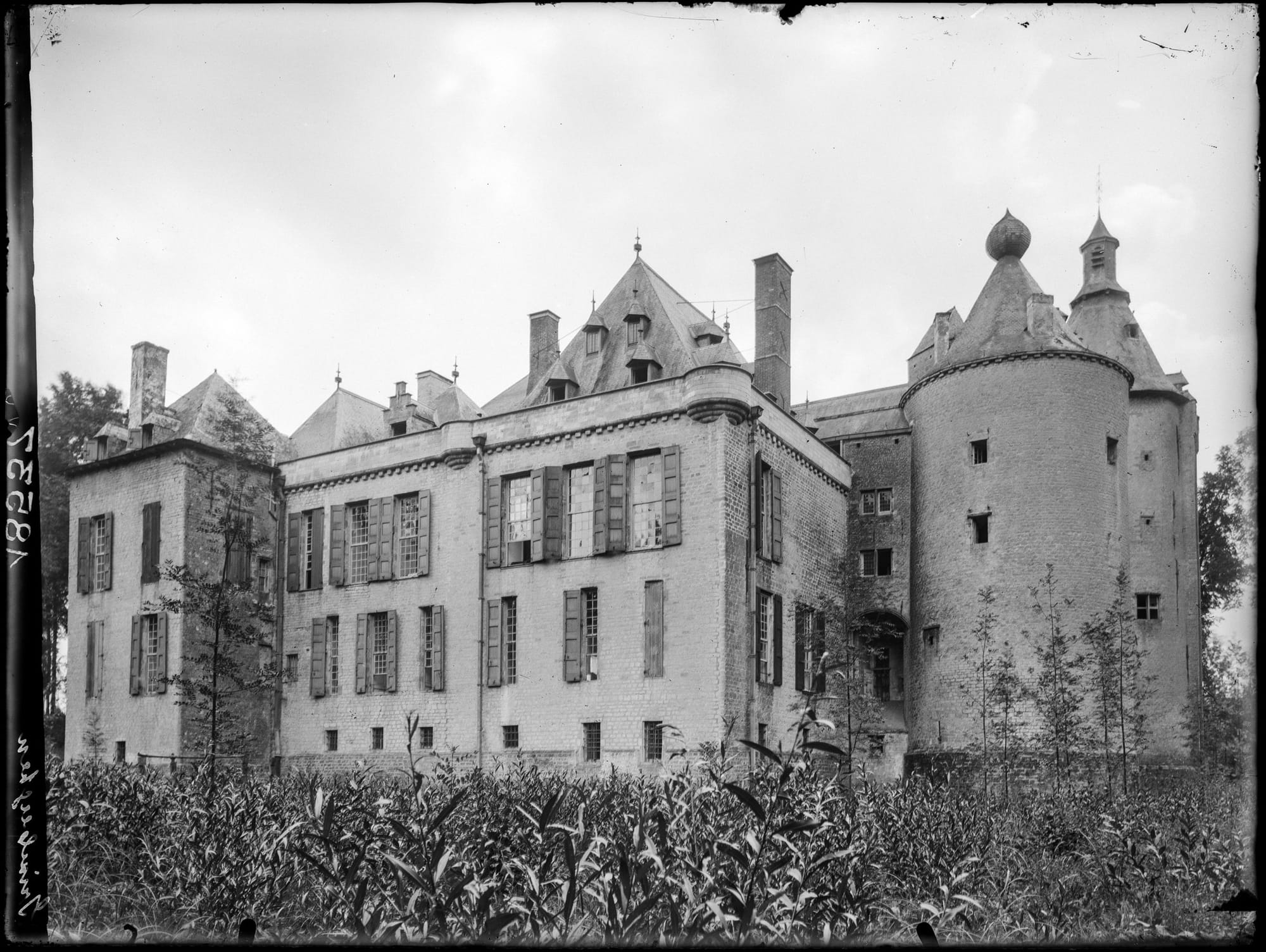
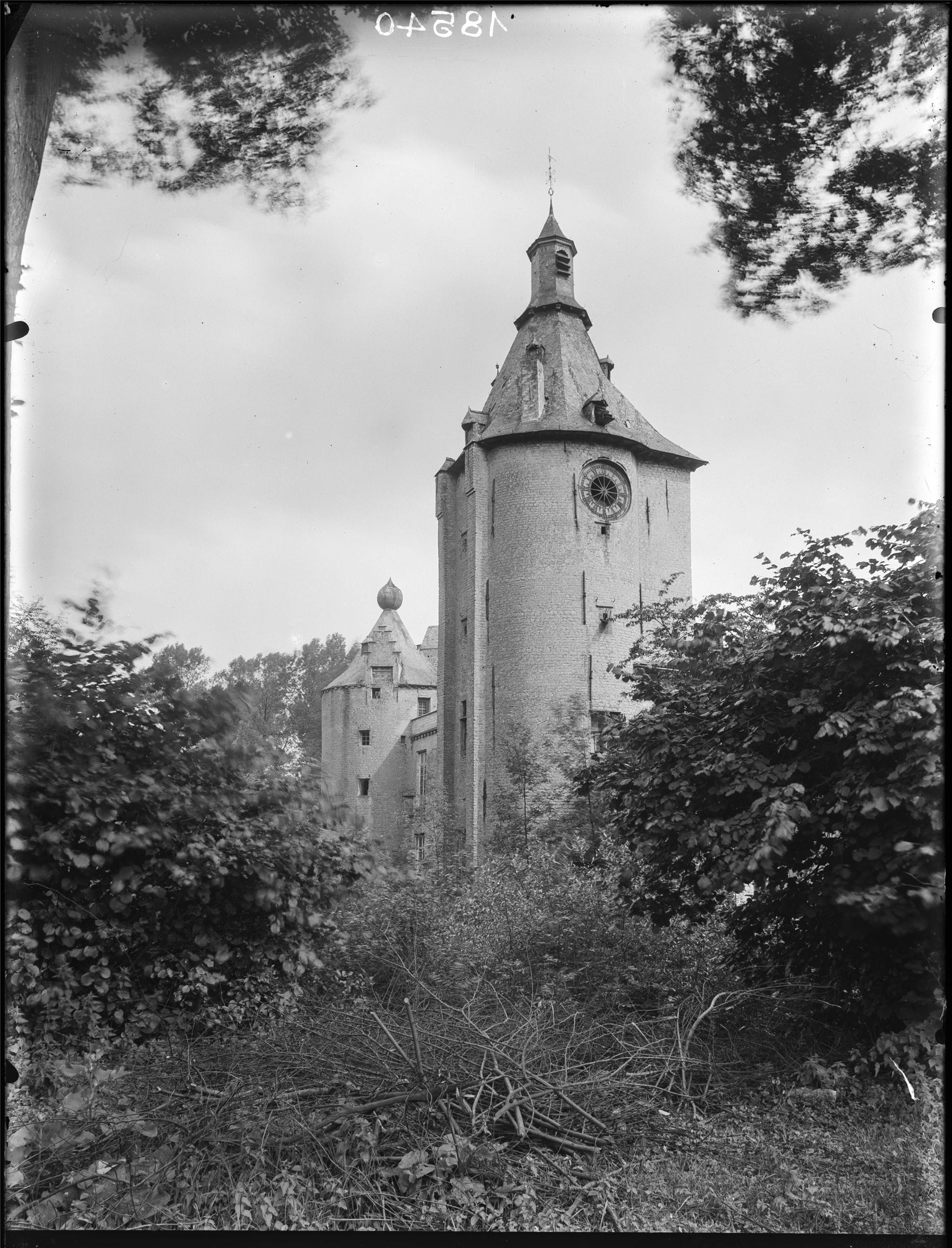
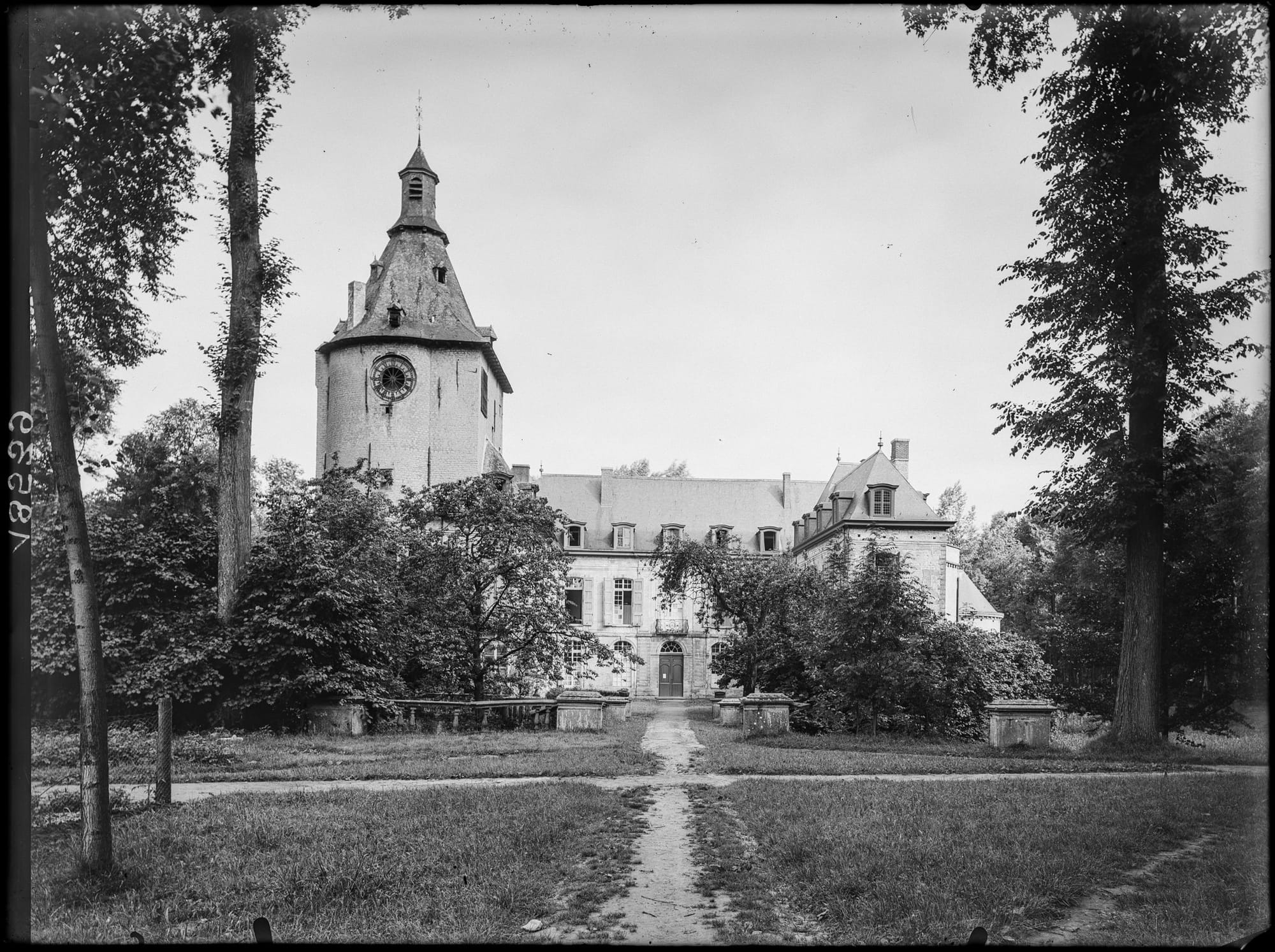
The Prince's Castle in 1918 (German negatives) and after the fire. Photos by KIK-IRPA, Brussels (Belgium), Balat.
The hardest blow came during World War II. German troops took up residence in the castle. When they withdrew in 1944, they set the building on fire. What had been built up over generations was destroyed in a short time.
Then began a long period of decline. Rain, frost, and overgrowth were left unchecked. Walls crumbled, and parts of the castle collapsed. People also contributed to the castle’s disappearance by removing stones from the ruins and reusing them elsewhere. Slowly, the moated castle turned into the ruin we know today.
The Last Witness
Of the castle, the keep is the main surviving structure. This medieval residential tower is an exceptional example of a gate keep: a tower that served both as a gateway and as living quarters.
Inside, the various floors still offer a glimpse into daily life from centuries ago. This is where visitors were received, where people lived, ate, slept, and where the estate was managed. From the tower, the castle and its surroundings were kept under watch.
Saving the Ruins
After the war, the castle island remained inaccessible for decades. It wasn’t until the 1990s that the first major restoration work was carried out. Yet the ruins remained vulnerable. A collapse of the keep’s facing in 2020 and damage to a corner tower in 2021 made it clear how urgent further action was.
For this reason, the Prince’s Castle—which has been designated a historic monument since 1980—once again became the subject of large-scale preservation work. The goal was to secure the ruins to prevent further damage and to make the site fully accessible again. The work has just been completed.
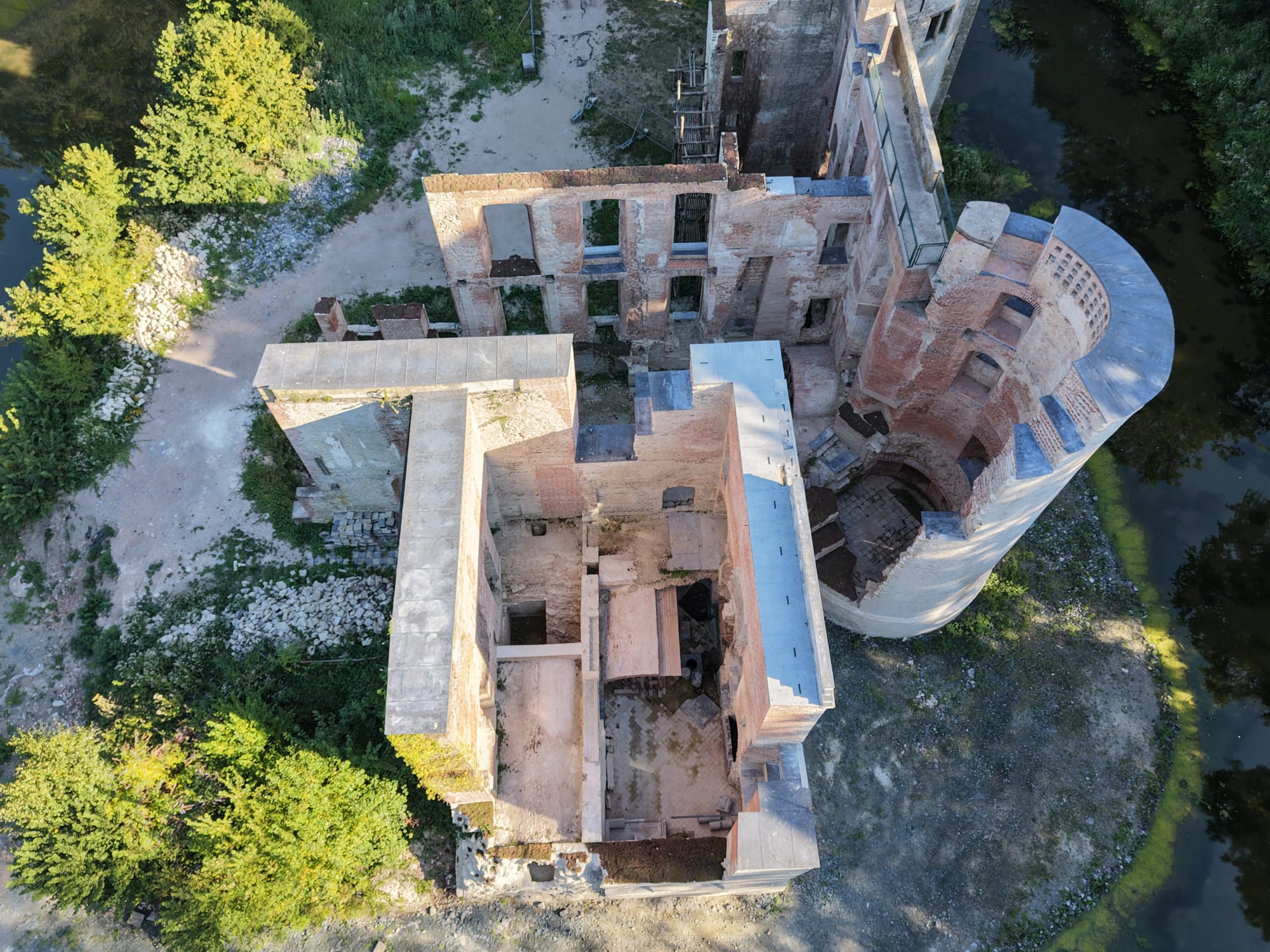
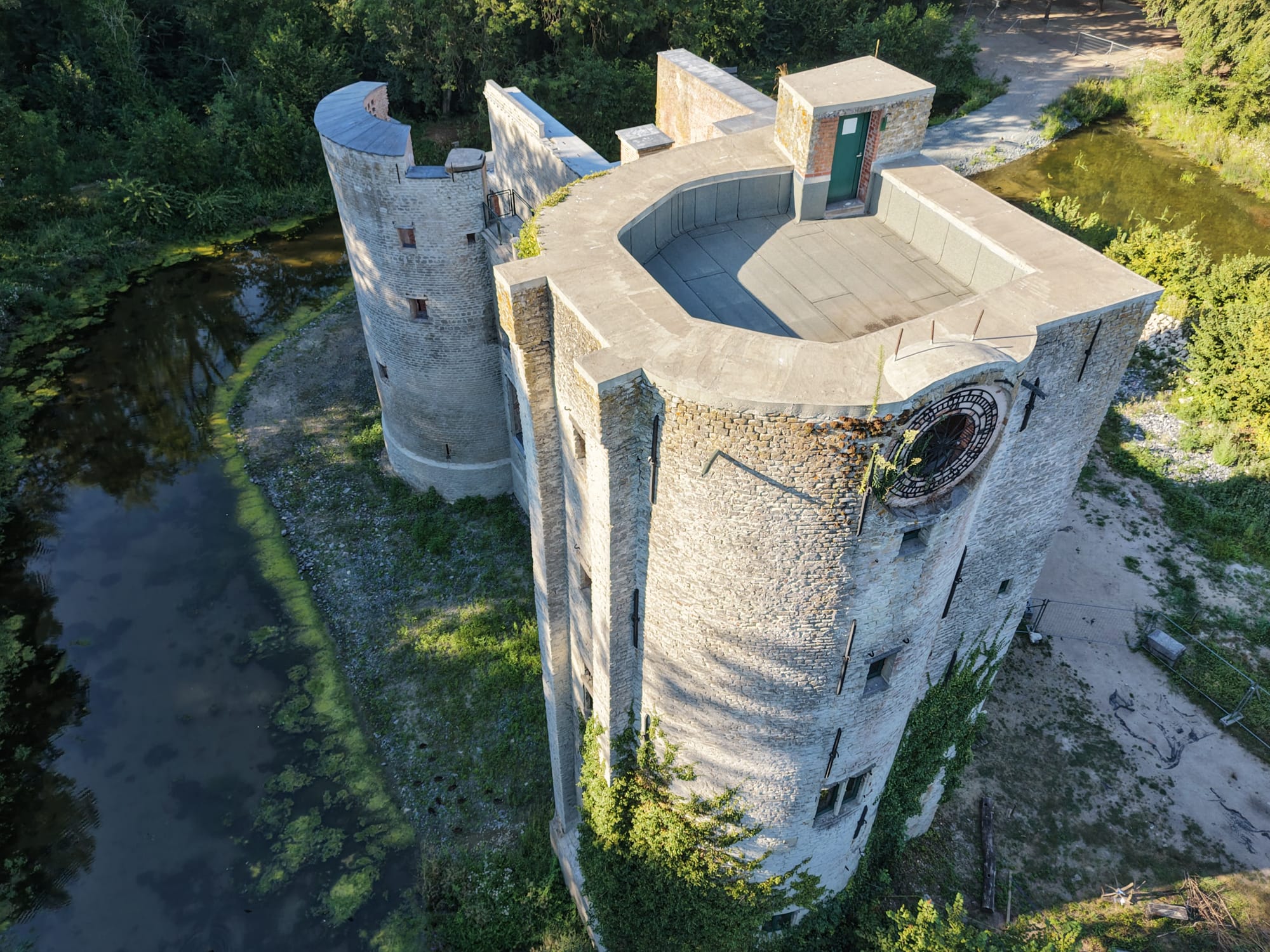
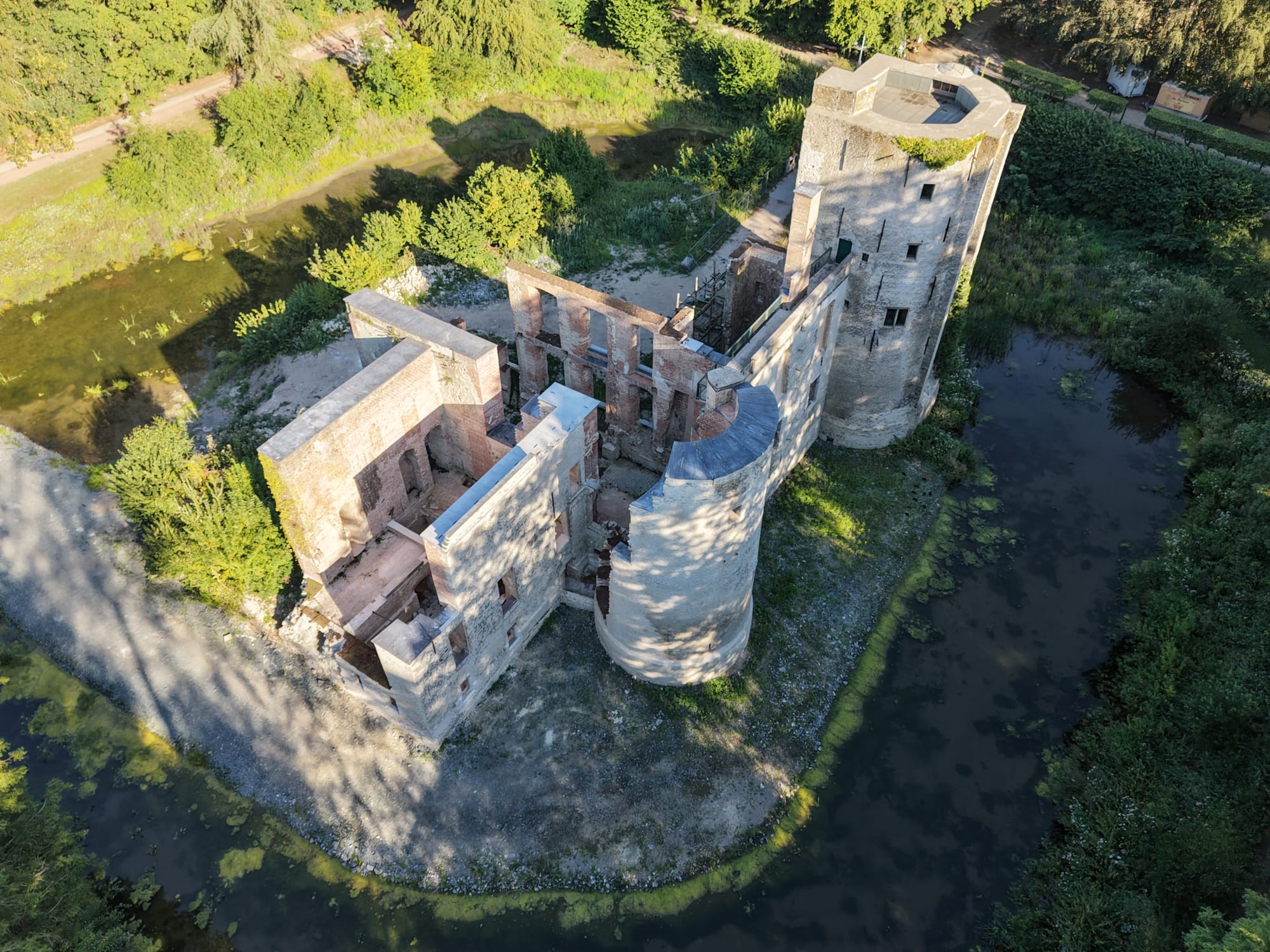
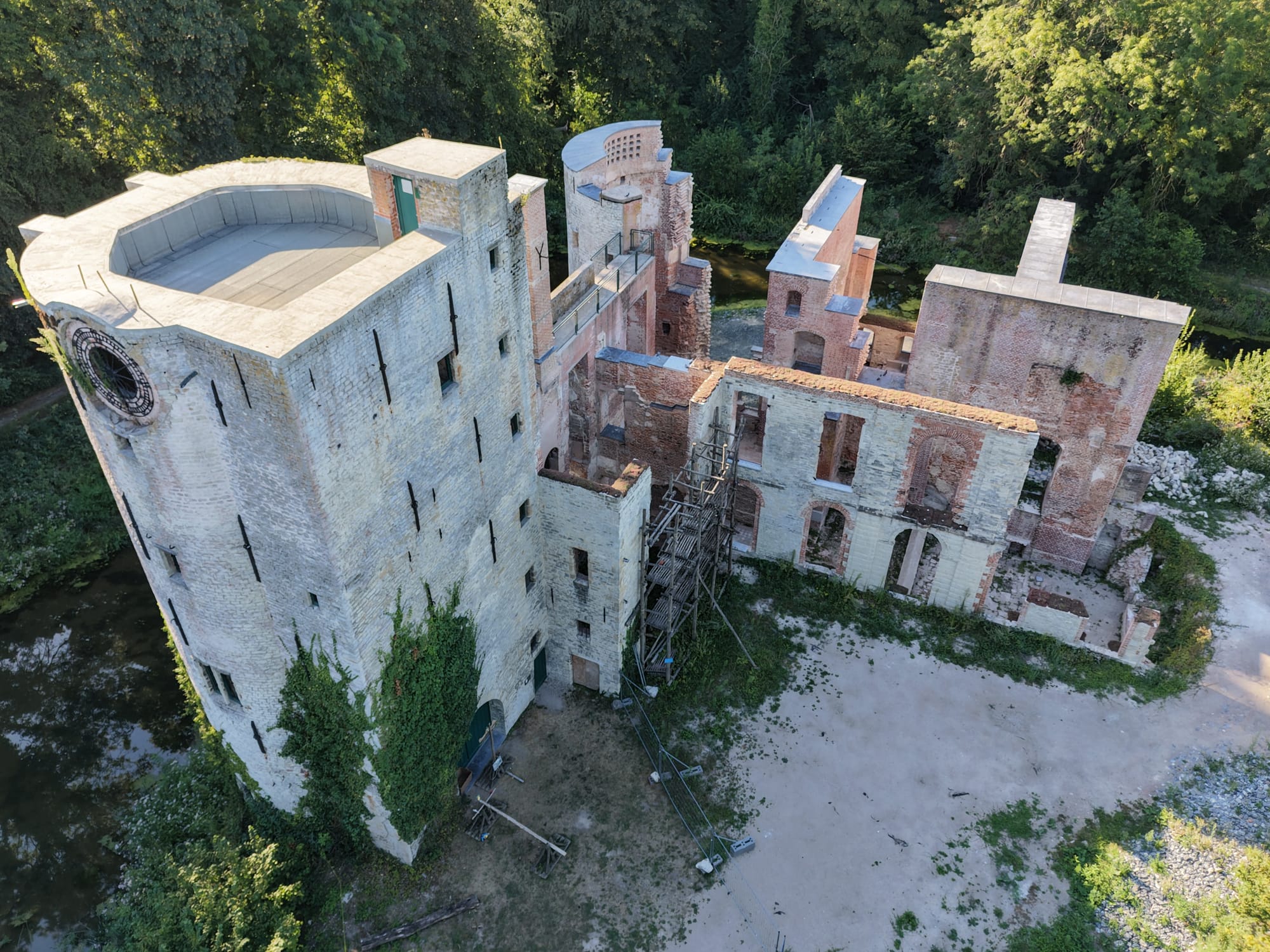
Drone photos of the Prince's Castle after the preservation work. Photos: Théo Bastin
Building the Future
And that is exactly where a new chapter begins. The plan is not to completely reconstruct the Prince’s Castle. However, the MOT does want to breathe new life into the site by turning it into a historic construction site.
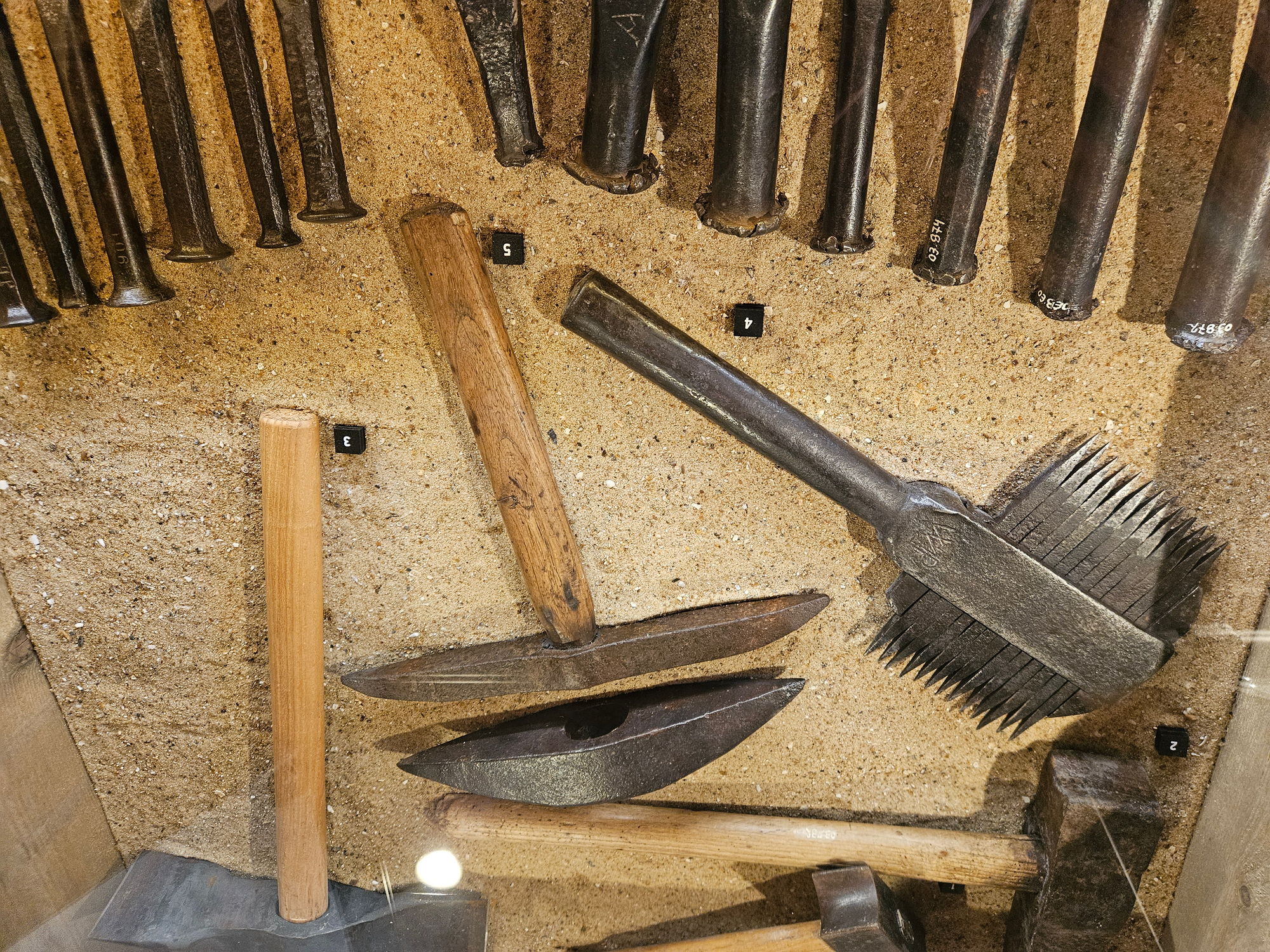
On Castle Island, you’ll be able to discover how stonemasons, carpenters, blacksmiths, and other artisans used to work. Historical building techniques are not only demonstrated but also actually put into practice and tested. Under a new half-timbered shed, artisans can give demonstrations and experiment with techniques from the late Middle Ages.
Even the wooden scaffolding is part of that story. It shows how high walls were built and maintained centuries ago. What appears to be a ruin today is thus gradually transforming into a living laboratory for heritage and craftsmanship.
Perhaps the most beautiful thing about the Prince’s Castle is that it will never be finished. The ruin remains a ruin. Its scars remain visible. The fire of 1944, the centuries of decay, and the lost buildings are all part of its story. Where knights, nobles, and soldiers once roamed, visitors, volunteers, students, and artisans now gather. And so the castle is no longer in decline but under construction.
You can find more information about the Prinsenkasteel on the MOT website.
Thanks to Théo Bastin for the drone photos and other pictures. You can view more old photos of the Prinsenkasteel in BaLat.