For centuries, elegant balls remained the exclusive preserve of the nobility and the bourgeoisie. In the 19th century, this tradition became more widespread.
Popular ballrooms and dance halls sprang up in the cities’ entertainment districts and in rural areas. There, for a modest admission fee, you could let loose to the music of a live orchestra. Increasingly, however, that orchestra had to make way for a mechanical piano or organ.
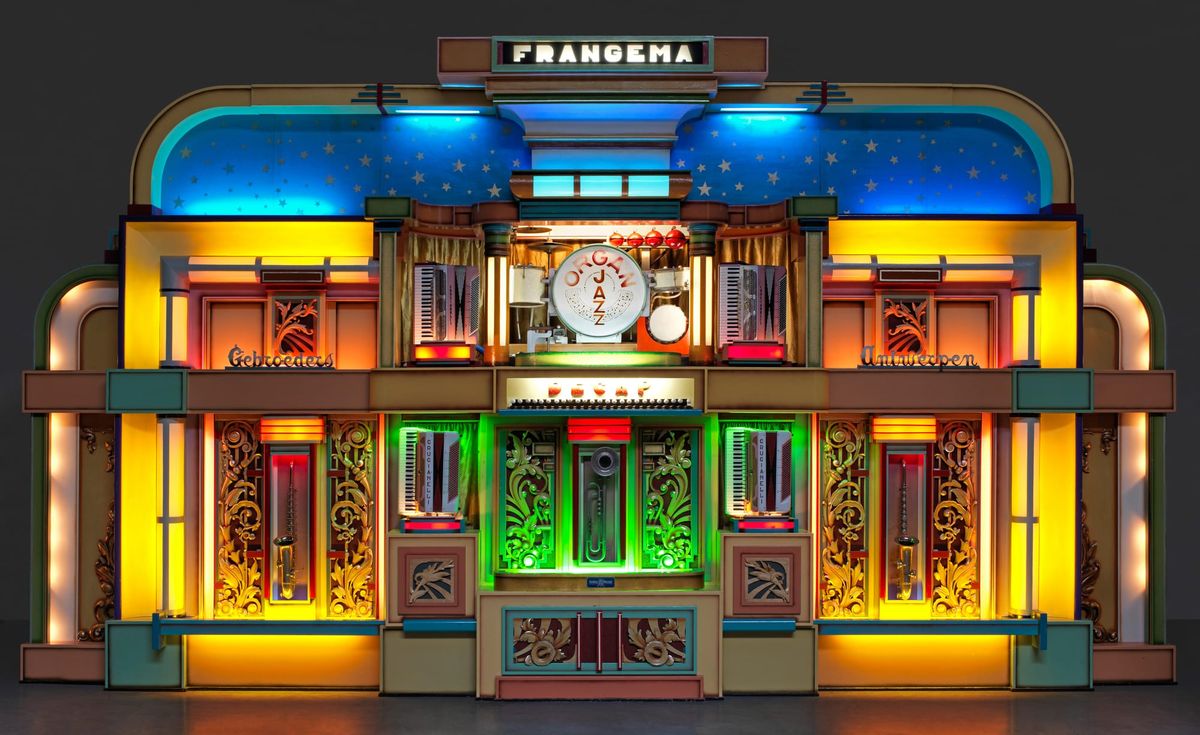
Around 1900, Belgium was known for its mechanical musical instruments. Aloïs Decap, the son of a farmer, decided in 1902 to start a small business making barrel organs together with his son Lievin. As a traveling accordionist, he had seen just how successful they were.
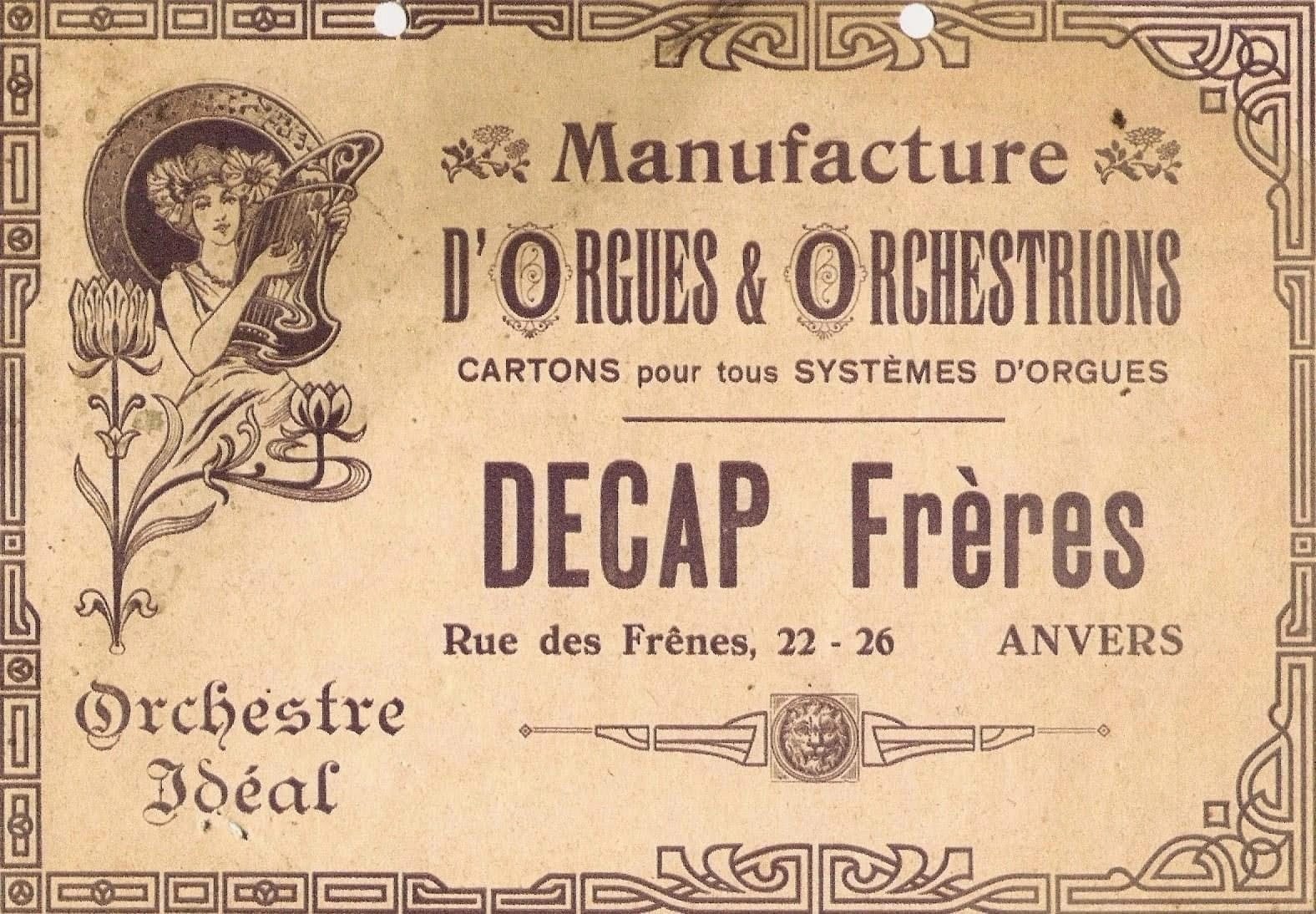
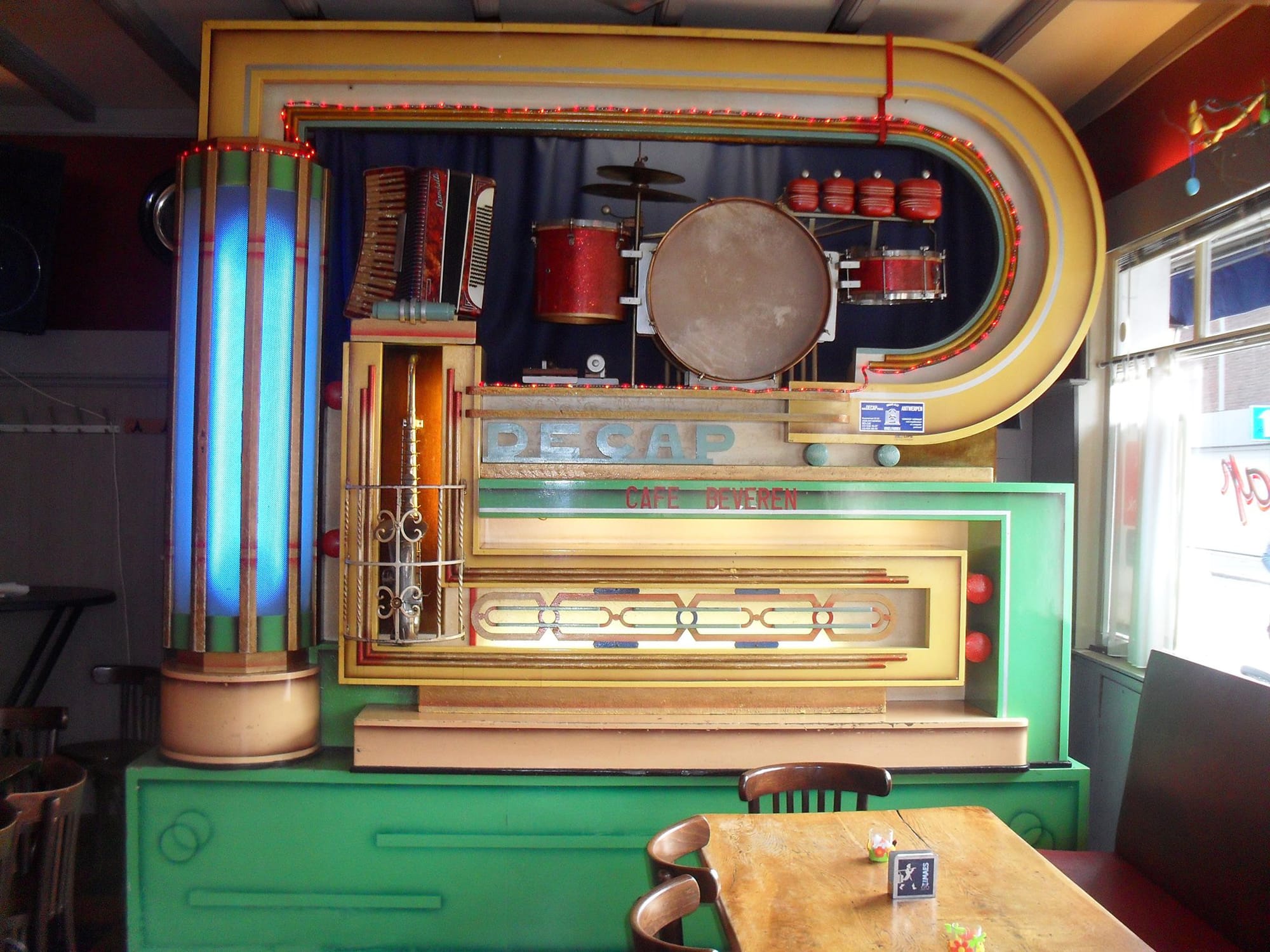
His new family business in Antwerp rose to become Belgium’s leading workshop for automatic musical instruments. The Decaporgels stood out not only for their sophisticated mechanics and musical variety; great care was also taken with their design. The glittering Art Deco casing, with its many lighting effects, made for a spectacular sight.
Starting in the 1930s, Decap also began incorporating real musical instruments into the organ, such as an accordion, a drum set, and a saxophone. Electronic instruments began to appear in 1953. The American company Hammond was world-famous for its electromechanical organ, which was used by The Beatles, among others. Hammond developed a customized organ for the Decap Brothers.
For years, Decaporgels kept people dancing not only in dance halls but also in many cafés. With the rise of the jukebox after World War II, many owners set the large instrument aside. The Decaporgels were forgotten and left to gather dust, until Jef Ghysels began collecting dance and fairground organs. In 2007, the Flemish Community acquired his collection.
This story was created by OKV for FAAM - Virtual Museum.
 ErfgoedApp
 ErfgoedApp