As soon as Belgium gained its independence in October 1830, cartoonists began drawing. The former King William I was depicted in cartoons as “King Cheese” or as a king who was gorging himself and nearly falling off his chair.
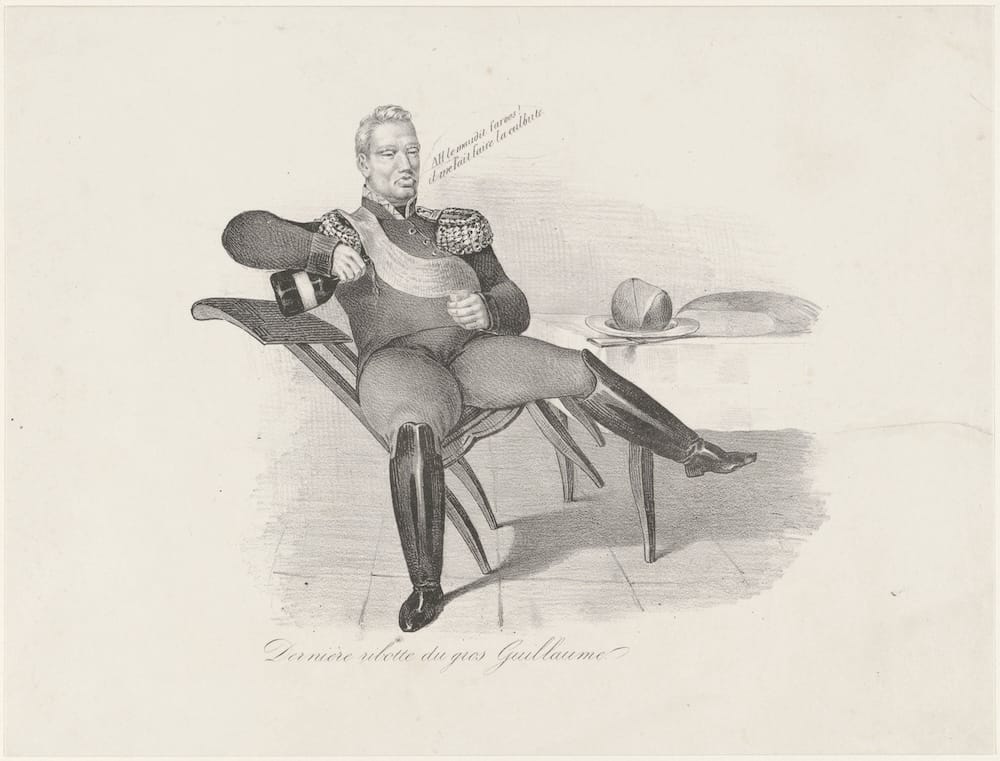
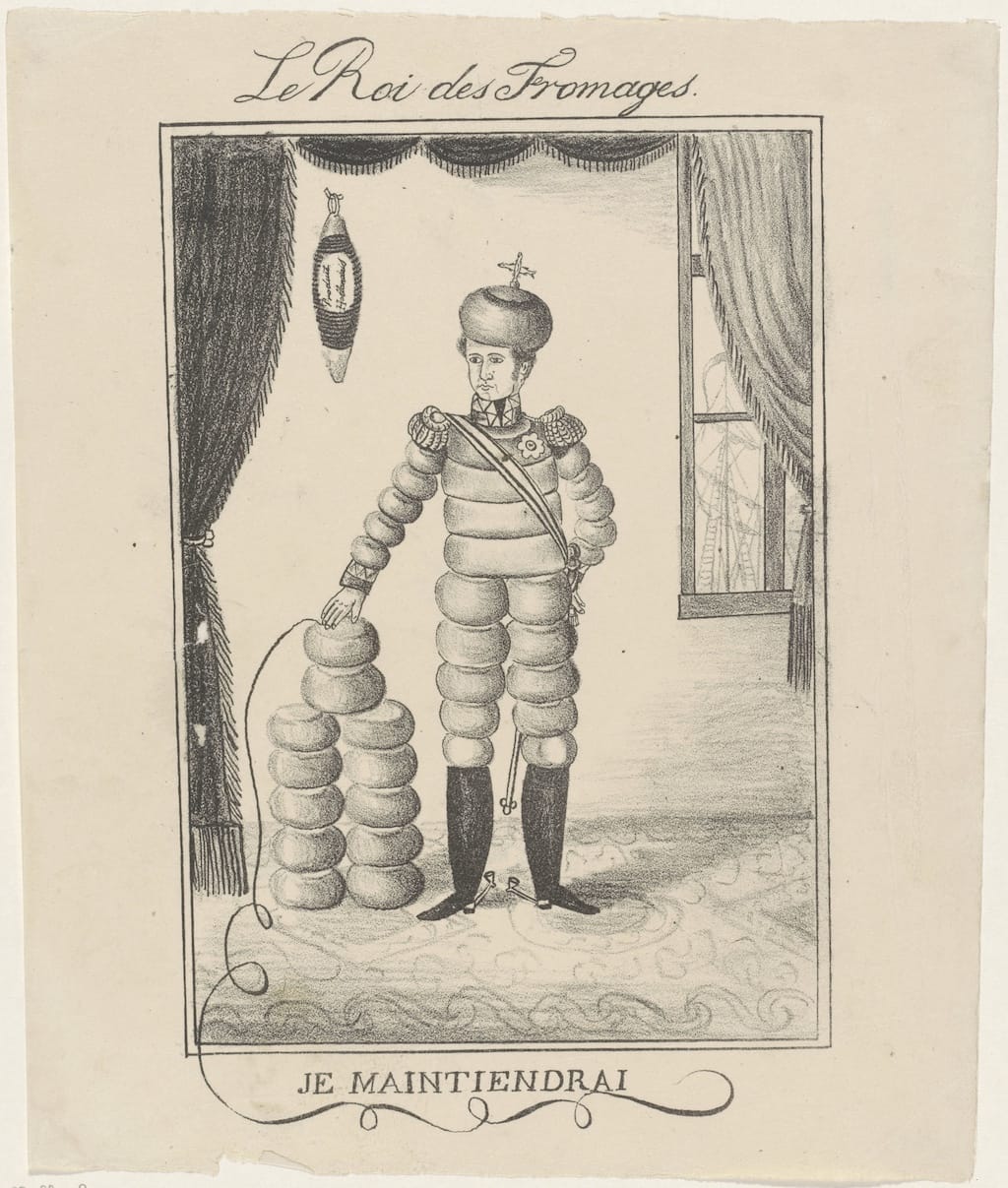
Anonymous caricatures of King William I, 1830–1831, Amsterdam, Rijksmuseum, inv. FMH 6564 and RP-P-OB-88.318
But not everyone was equally pleased with the Dutch monarch’s departure. Some Belgian businesspeople saw their businesses grow significantly under his reign. With Dutch subsidies, they were able to make their factories thrive and sell their products in a huge market.
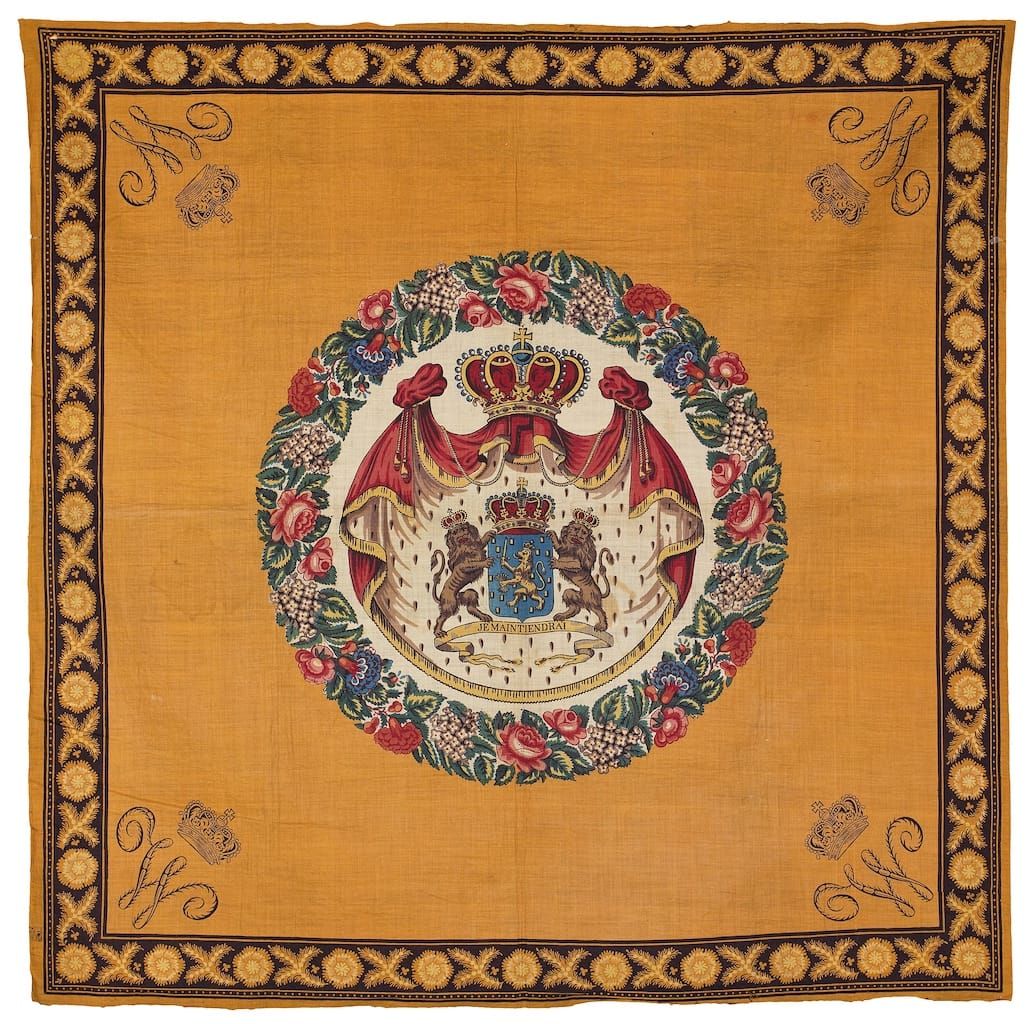
Especially in Ghent, home to dozens of textile manufacturers, the love for the House of Orange-Nassau remained strong. A colorful Orangist scarf in the collection of STAM—Ghent City Museum—still bears witness to that commitment today.
You can read about exactly where that dream comes from and what it means today in the scroll story Oranje boven? in the ErfgoedApp.
Even more treasures to discover
Want to see more? Be sure to check out these stories and tours in the ErfgoedApp:
 ErfgoedApp
 ErfgoedApp
 ErfgoedApp