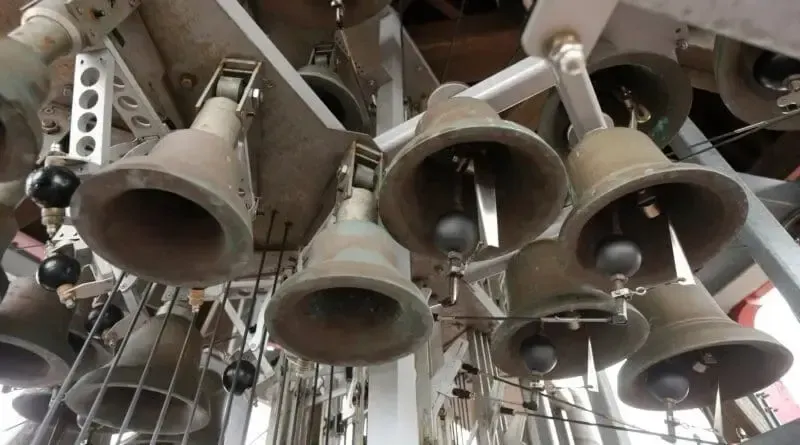
The carillon is a quintessentially Flemish musical instrument. The original carillon from 1510 in the Oudenaarde town hall was probably the oldest.
Originating in Flanders, the carillon spread throughout the Low Countries in the 16th century, and later to many other regions, even reaching the United States in the 20th century.
A carillon consists of a series of bronze bells suspended high in the bell tower of a belfry or church. The carillonneur plays these bells using a wooden keyboard with keys and pedals. The clappers are connected to the keyboard by metal wires.
The carillon evolved from the combination of two earlier forms of bell music. On special occasions, carillonneurs made music by pulling ropes attached to the clappers of various heavy bells. In addition, tower clocks also automatically played a prelude—a short melody on a few smaller bells—to announce the striking of the hour to nearby residents. In the 16th century, manual and automatic playing were combined on a single set of bells, which were connected to a keyboard.
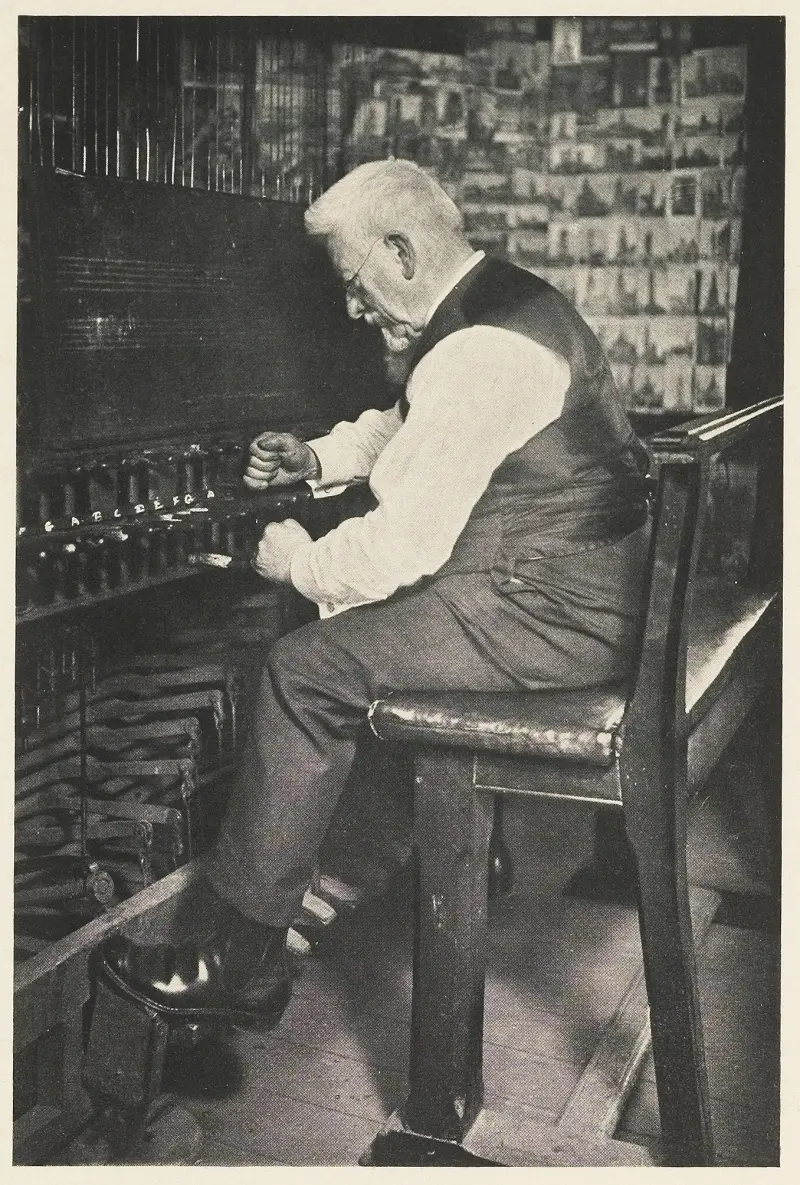
Over the course of the 19th century, the carillon fell out of favor. The experience of music shifted to concert halls, opera houses, and salons. But at the end of the 19th century, Jef Denyn, the city carillonneur of Mechelen, reignited interest in Flanders. In 1922, he founded the world’s first carillon school. Today, this school is also the world’s largest carillon training program, with more than 100 enrolled students from countries including the United States, the Netherlands, Ukraine, Poland, and Japan.
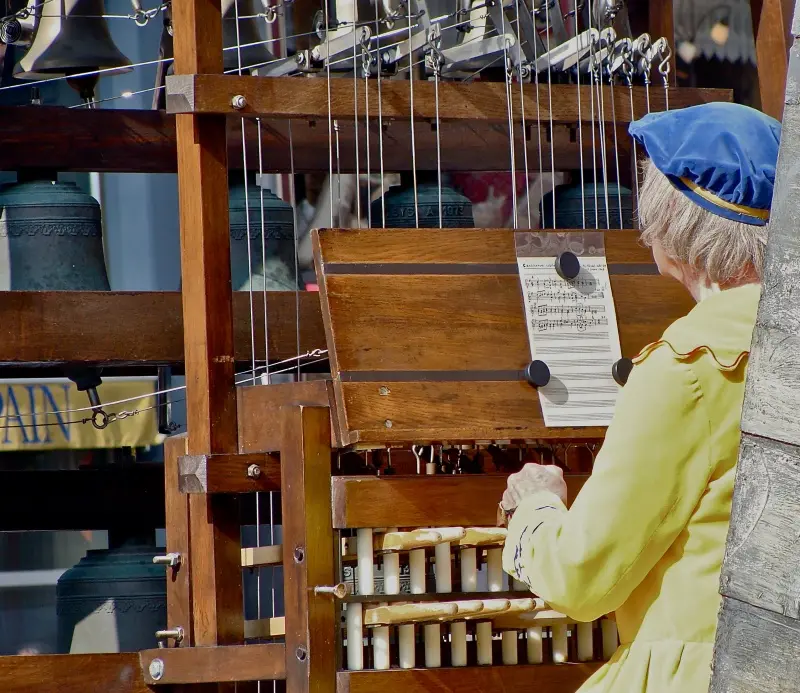
In addition to the carillon in the bell tower, there is a mobile carillon on wheels. Belgium has three of them. During the Holy Blood Procession in Bruges, one of these mobile carillons brings up the rear of the procession. To make the traditional carillon more appealing to a broader and younger audience, carillonneurs are now also arranging pop music for the carillon. Jan Verheyen, the city carillonneur of Hasselt, tours with his Bells Lab. With his touring carillon, he aims to promote Flemish carillon culture through collaborations with modern musicians.
This story was created by OKV for FAAM—a virtual museum.
 ErfgoedApp
 ErfgoedApp
 ErfgoedApp