In the 15th century, Bruges was the commercial hub of Western Europe. The city was teeming with foreign merchants, bankers, and politicians.
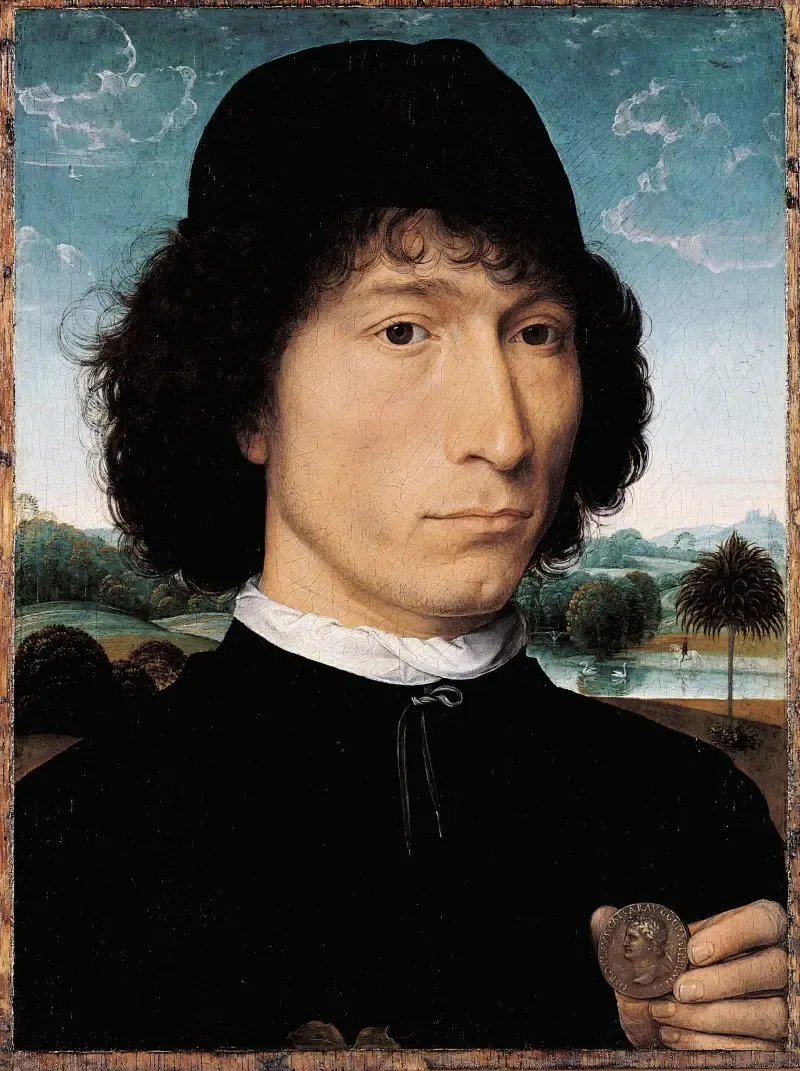
Hans Memling found clients here for his elegant portraits. He was unmatched in his ability to portray his subjects attractively against a sunny landscape. One of his most intriguing portraits is the “Man with a Roman Coin” (ca. 1474).
For a long time, the person’s identity was unknown. Experts now believe it to be Bernardo Bembo. From 1471 to 1474, Bembo served as a Venetian ambassador at the court of Charles the Bold, Duke of Burgundy. He then returned to Italy, where he represented his city in Florence.
Venice was a powerful city. It was the Italian counterpart to Bruges in Flanders. It was therefore necessary for Venice to be represented here by an ambassador. Many Italians were active in Bruges. They were engaged in trade between Italy and the Low Countries.
The port of Bruges was directly connected to the North Sea via the Zwin estuary. When the Zwin silted up, Bruges lost that important role. Overseas trade, capital, and power shifted to Antwerp at the end of the 15th century.
It is striking that the Venetian diplomat had himself portrayed holding a Roman coin in his left hand. The coin bears the head of Emperor Nero. It was minted in Lyon. In this way, Bernardo Bembo presented himself as a learned man who collected ancient coins.
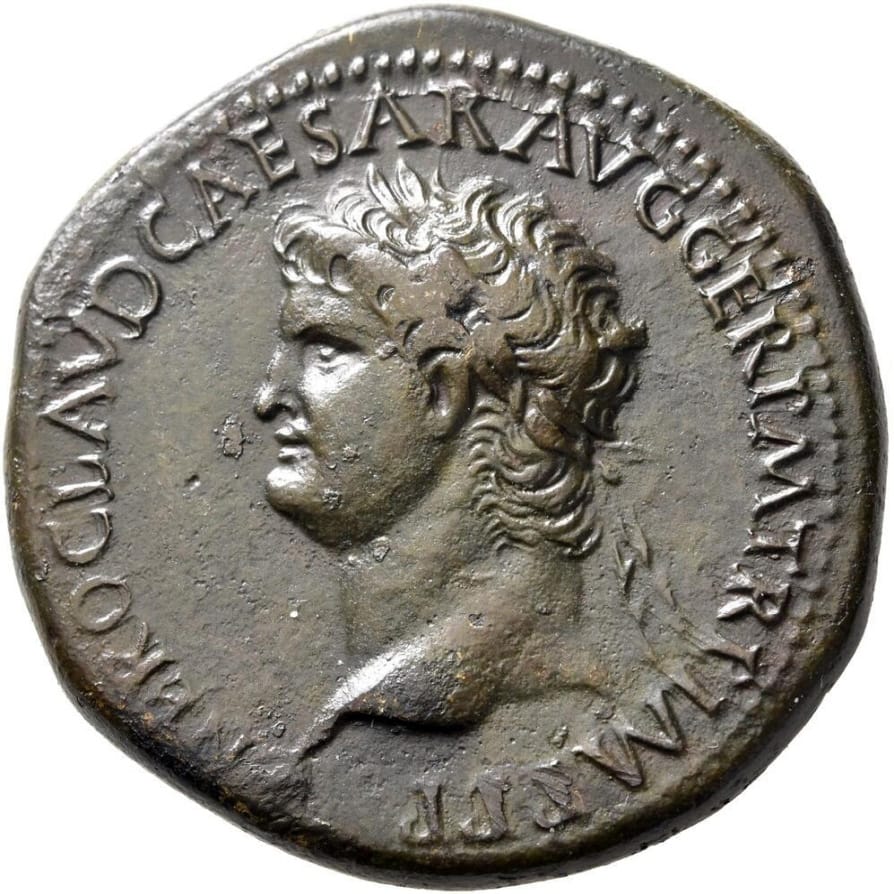
Starting in the 15th century, wealthy citizens often began building collections. In addition to ancient coins, such collections included exotic shells, ostrich eggs, coconuts, Egyptian antiquities, and much more. Bembo was undoubtedly a humanist, a man of the world.
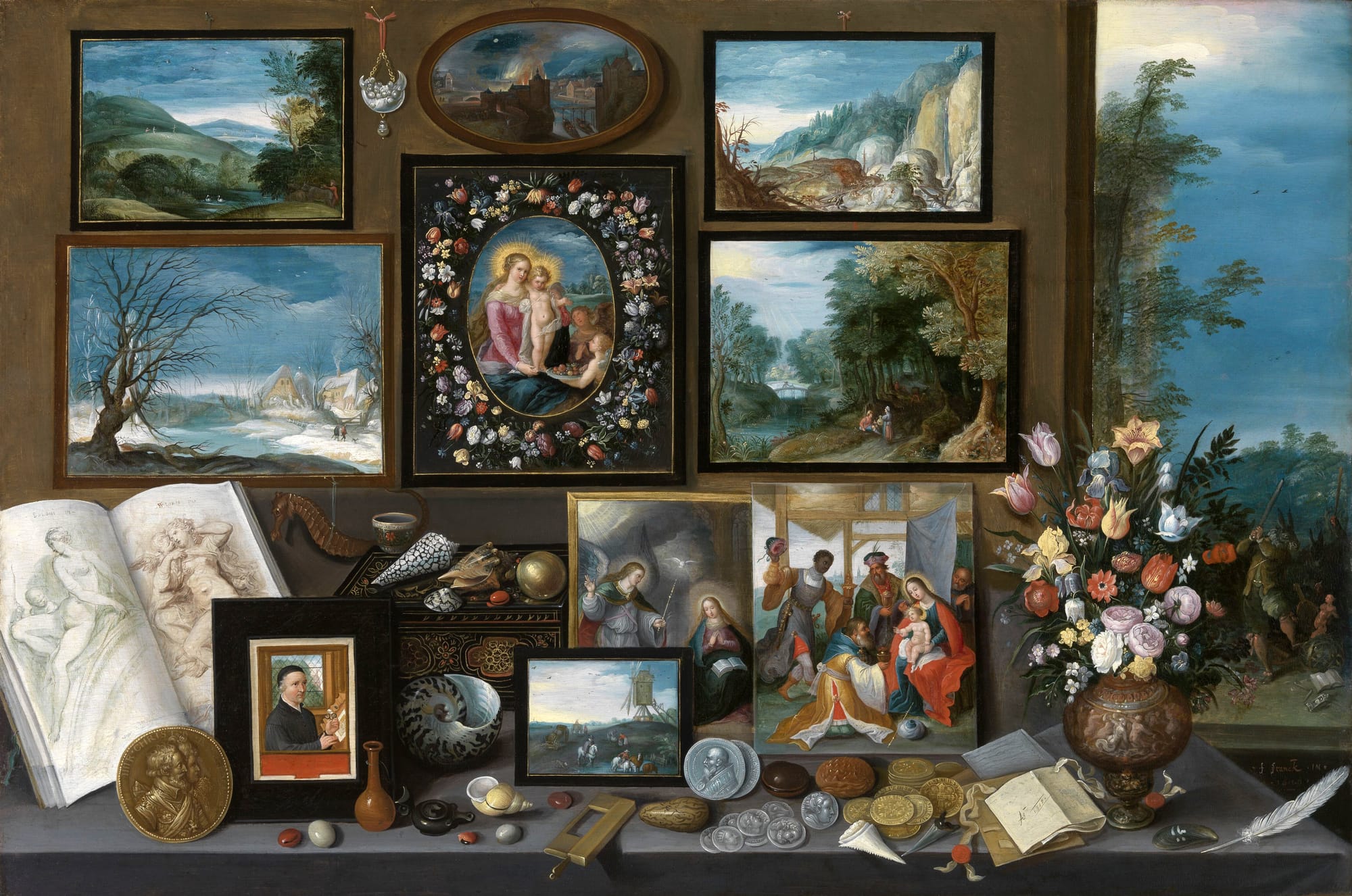
This story was created by OKV for FAAM - Virtual Museum.
 ErfgoedApp
 ErfgoedApp
 ErfgoedApp
 Bram
Bram
 FAAM
FAAM