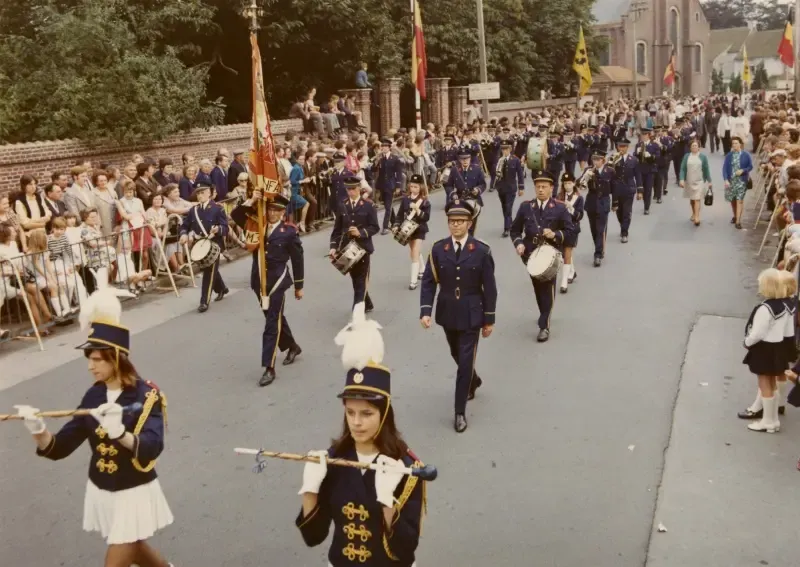
More than 300 marching bands still march through Flanders. They parade through the streets at fairs and festivals.
Brass instruments, percussion, and saxophones ring out cheerfully. The bass drum sets the rhythm with a thud. The most important brass instrument in the marching band is the flugelhorn, which has a warmer sound than the trumpet.
Like the carillon, the brass band is a tradition that originated in the Low Countries. It emerged in the mid-19th century from military marching music. The most authentic form remains the musical parade.
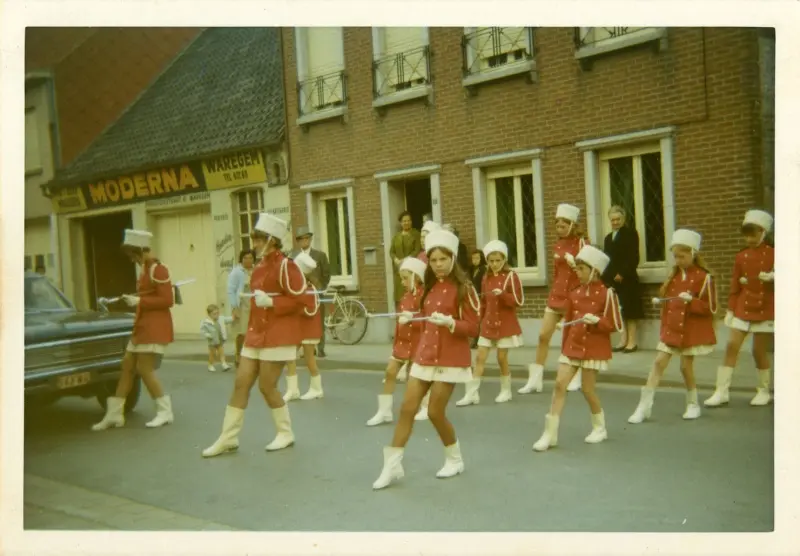
The musicians are joined by a colorful majorette corps. With their flowing skirts and rhythmic movements, they lead the way for the marching band. The band itself is led by the drum major, who uses his baton to set the rhythm and direction.
In the 19th century, local bands had political affiliations. They aligned themselves with either the Catholic or the Socialist party and added musical flair to their events. Each brass band had its own café where members of the rival band were not welcome. Over the past few decades, the political affiliations of the bands have faded away. Making music together—that’s what it’s all about.
Through international competitions and contemporary compositions, the brass band has shed its old-fashioned image. A wind ensemble is a brass band with added woodwind instruments. They don’t shy away from organizing music festivals where they invite their colleagues from neighboring villages for a festive Sunday afternoon.
This story was created by OKV for FAAM - Virtual Museum.
 ErfgoedApp
 ErfgoedApp
 ErfgoedApp