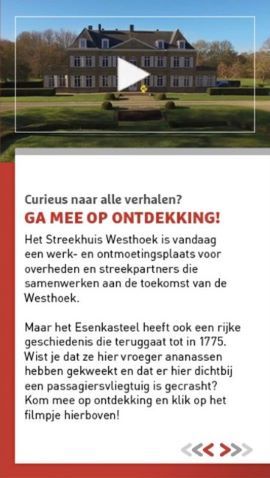
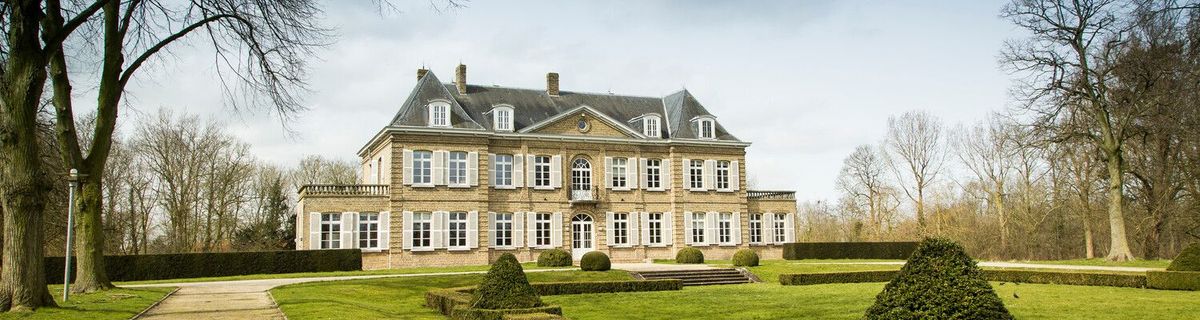
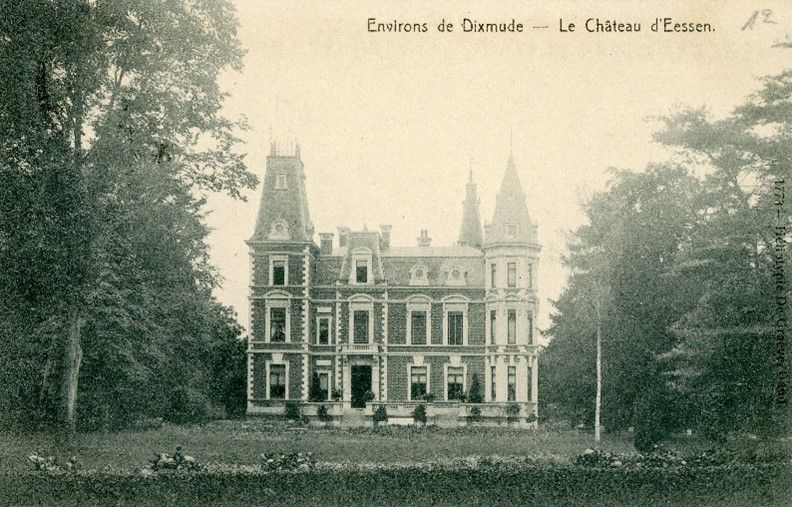
The history of Esen Castle, located on the outskirts of Diksmuide, dates back to 1775. The castle has undergone various changes over time. Today, provincial employees work together with local partners at Esen Castle on the development of the Westhoek region.
Maurice Maeterlinck
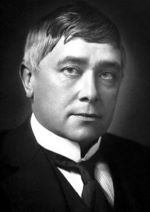
In his autobiography Bulles Blueus (1948), Ghent playwright Maurice Maeterlinck (1862-1949), son of Polydore Maeterlinck and nephew of Edmond De Ruysscher, entertains us with several lively anecdotes about life at Esen Castle in the late nineteenth century. At that time, the castle was popularly known as the 'Russian castle', a corruption of the name De Ruysscher, the family of pharmacists from Diksmuide who owned the castle at the time. Maeterlinck is not impressed by the nineteenth-century appearance of Diksmuide Castle:
The castle of Diksmuide was impressively ugly. It was built on the ruins of a charming 16th-century knight's estate, of which only an old copper engraving remains as a memento. The local architect had amalgamated the Tourangeau style (from the region of Tours) with the English rustic architectural style, crossed with the Swiss country house style. To crown the horror, it was decorated with stained glass windows made of real glass, which looked like transparent chromos, and the sun, accustomed to the beautiful windows of the twelfth, thirteenth, and fifteenth centuries, seemed to blush with shame when it lit them up."
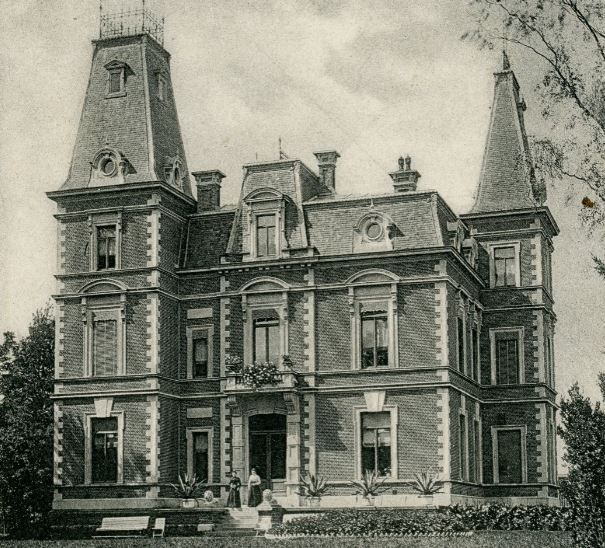
The orangery was built in an eclectic brick style with battlements and turrets. At the end of the nineteenth century, the castle was given a new look and a chapel was added. It was mainly the eclectic whole that was criticized by Maeterlinck. At the beginning of the twentieth century, the castle was given the name Chateau de la tour blanche, after the tower with white stone ornaments that was added to the front of the castle.
Uncle Florimond
Maeterlinck vividly describes his extravagant uncle Florimond, his mother's sister's husband, who was part of the noble family of Diksmuide and spent his summers at the castle.
He was considerably larger than father and made a monumental impression on us. His carefully shaven face resembled an oval full moon. His quadruple chin reached down to his stomach, and his belly, which protruded a meter in front of him, hung down to his knees. To make room for his protruding belly and to enable him to reach the glasses and plates, a wide arched cutout had been made in the tables of his two main dining rooms."
To satisfy his enormous appetite, a total of four dining rooms are provided in the castle. On the other hand, he detests salons. Maeterlinck's lively writing style gives us a picture of what life was like in the opulent, luxurious Esen Castle at the time. For example, Uncle Florimond ventures into growing pineapples, an extremely expensive and daring hobby in the Belgian climate. After all, the pineapple plant was difficult to bring into bloom in Northern Europe. Fruit appeared on the plant only very rarely.
When we were guests at his house, which was every two years, he would stand up just to show us his pineapples. In ilo tempore, he would have said, only a few dared to attempt this extremely costly cultivation. For this cultivation from America, he had a special greenhouse built that had to be heated to a temperature of 25 to 30 degrees in winter and summer with a boiler. He admitted that each pineapple cost him 100 to 150 francs. They ripened slowly and laboriously, one by one, and the fruit that turned golden yellow received special, meticulous care. Rumors of their imminent ripeness spread throughout the region, and friends from neighboring castles, as well as the most important citizens of Diksmuide, came to admire the miraculous fruit."
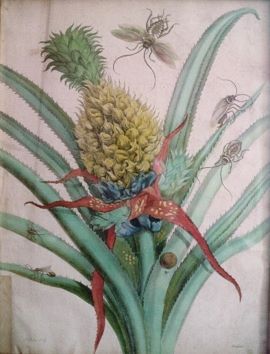
Polydore Maeterlinck considers pineapple cultivation a waste of money. He claims that his melons are just as tasty, juicier, less pretentious, and less destructive. Uncle Florimond dies a year after his successful cultivation. Given his majestic size, his tomb must be widened before his coffin can be lowered into it. After this, the castle's residents face uncertain times. The impact of the First World War on the castle is incalculable. It is set on fire by the Germans and only rebuilt in 1925. During the Second World War, the castle is also occupied by German troops, resulting in damage.
After the war
Maeterlinck wrote Bulles Blueus after the Second World War. He concludes the chapter devoted to Uncle Florimond with a melancholic note about the impact of the destructive world wars on Diksmuide and the castle.
"And all that is no more. The castle, Ypres, and Diksmuide have been razed to the ground, even the graves have disappeared. The two cities were rebuilt, but did the second war, which was more violent than the first, respect them? Will it be necessary to start life over again every twenty or thirty years and return to death? And what happened to my sister, a prisoner of the Nazis in Brussels, and Florimond's parents? Is her daughter still alive, and her granddaughter? She was married to a French officer who was a descendant of the Jacques Amyot family, the admirable translator of Plutarch and Longus and one of the creators of our language. Where are they? No one can say, and I wait with fear in the universal darkness and silence the cruel revelations, the mortal surprises of peace."
On May 6, 1949, one year after writing his Bulles Blueus, Maurice Maeterlinck passed away at the age of 86.
Practical
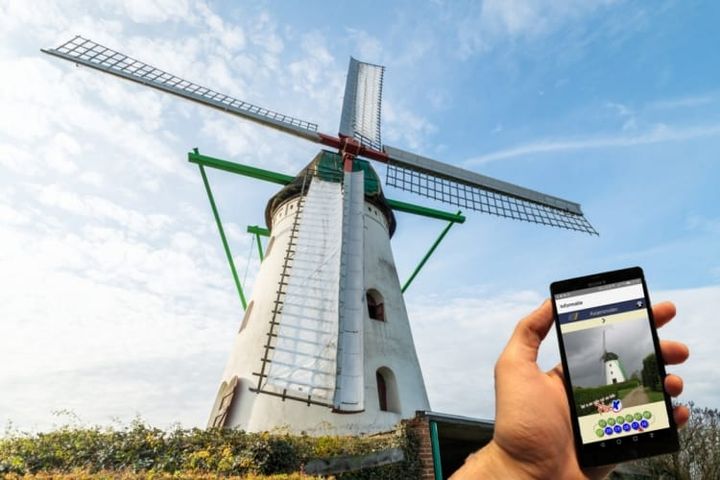
Discover more about the remarkable history of Esen Castle via the Streekhuis Westhoek route on the ErfgoedApp.