Around 1200, a new musical style emerged in Paris. Gregorian chant, which had been around for centuries, was monophonic. Now, a second and third voice were added. Thus, polyphonic music was born.
Through the choral schools of Tournai and Kamerijk, polyphony also took hold in the Low Countries. Beginning in the 14th century, composers were active in many major cities. They were soon in demand throughout Europe, where they found work in cathedrals and royal courts. These musicians were known as “Fiamminghi,” even though they did not all come from the county of Flanders.
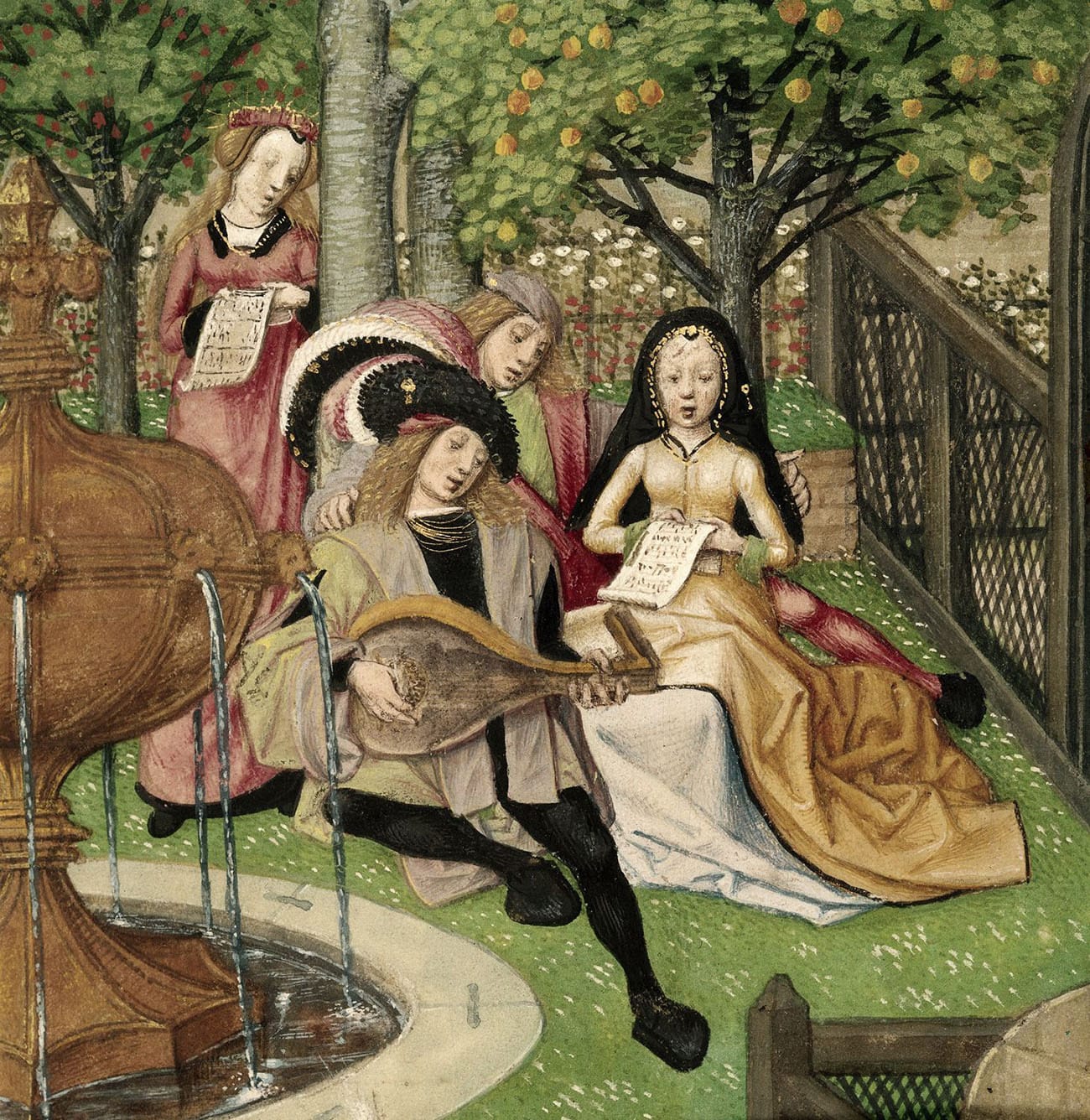
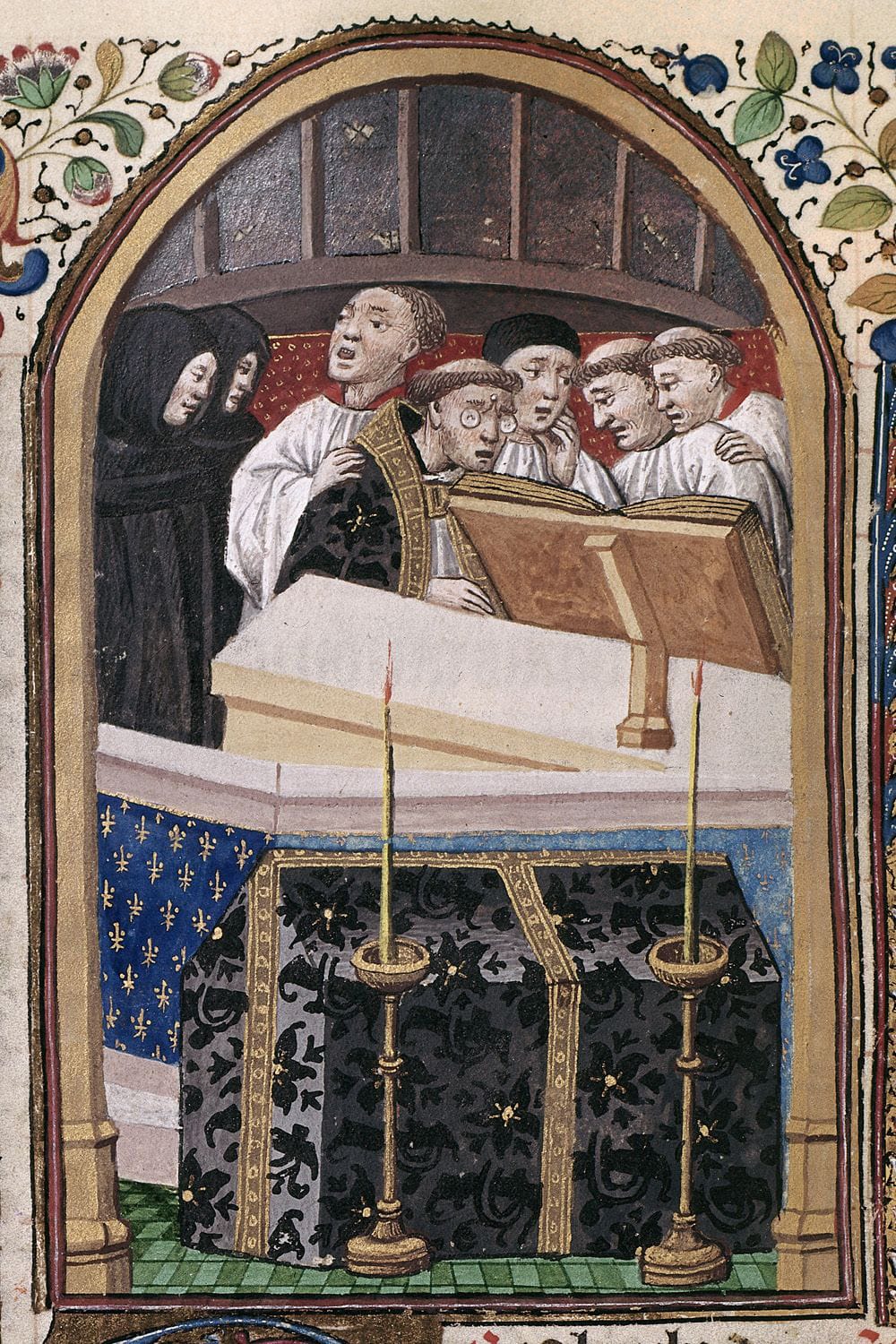
Many musicians began their careers as boys in a church choir. Talented young people rose to become choirmasters. They then went on to compose music. Monarchs, nobles, and bishops vied with one another to hire them. The polyphonic composers often traveled from one country to another, from Denmark to Spain.
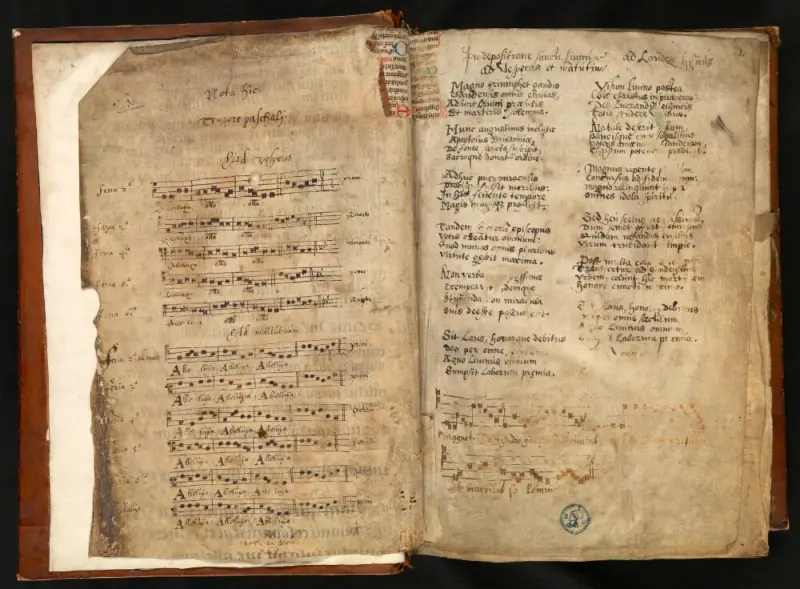
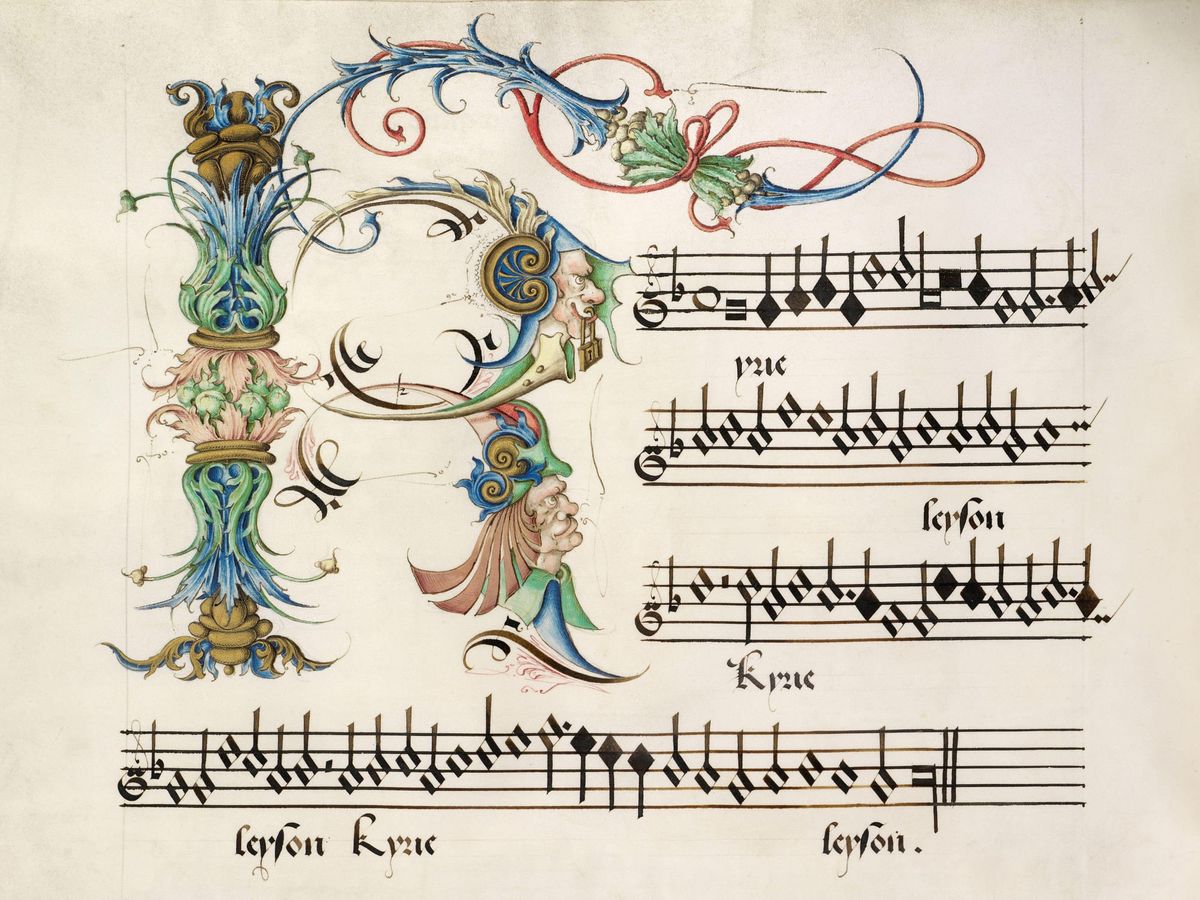
For choral singing, it was necessary to create large music books from which multiple singers could sing together. These were made by hand. Often, the songbook was decorated with delicate paintings (miniatures). With the advent of printing in the early 16th century, it became possible to print multiple copies of sheet music.
These luxurious manuscripts are now housed in major libraries around the world. In Flanders, a few magnificent examples have been preserved, such as theTsgrooten Antiphonaryand theChoir Book of Margaret of Austria. The former was commissioned for Antonius Tsgrooten, the abbot of Tongerlo. TheChoir Bookwas likely a gift from the Habsburg Emperor Maximilian of Austria to his grandson Charles, later known as Emperor Charles V.
This story was created by OKV for FAAM - Virtual Museum.
 ErfgoedApp
 FAAM
FAAM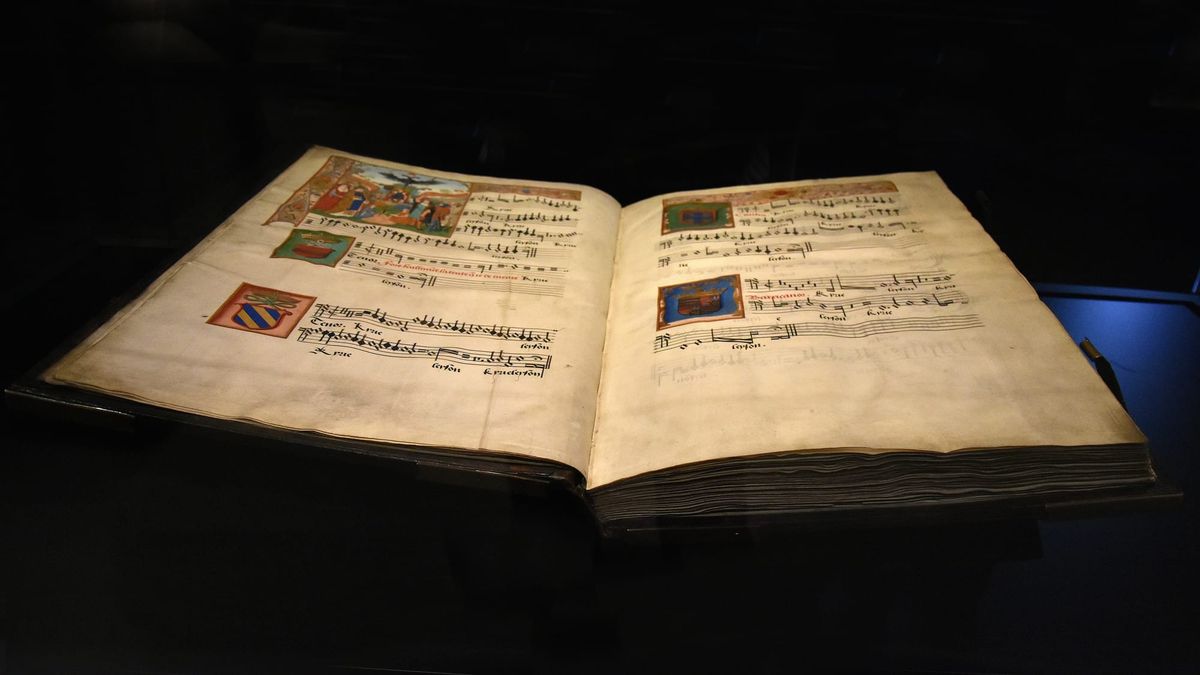
 FAAM
FAAM