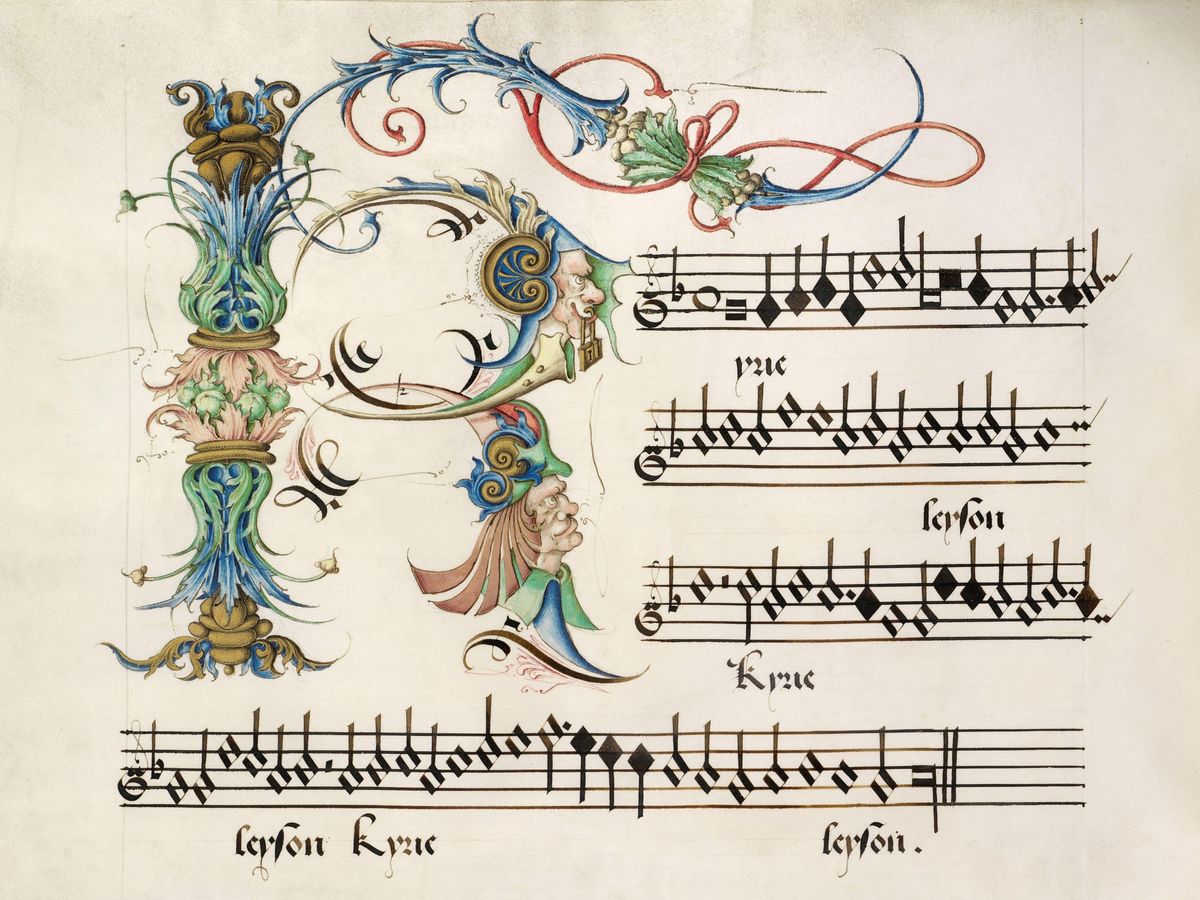
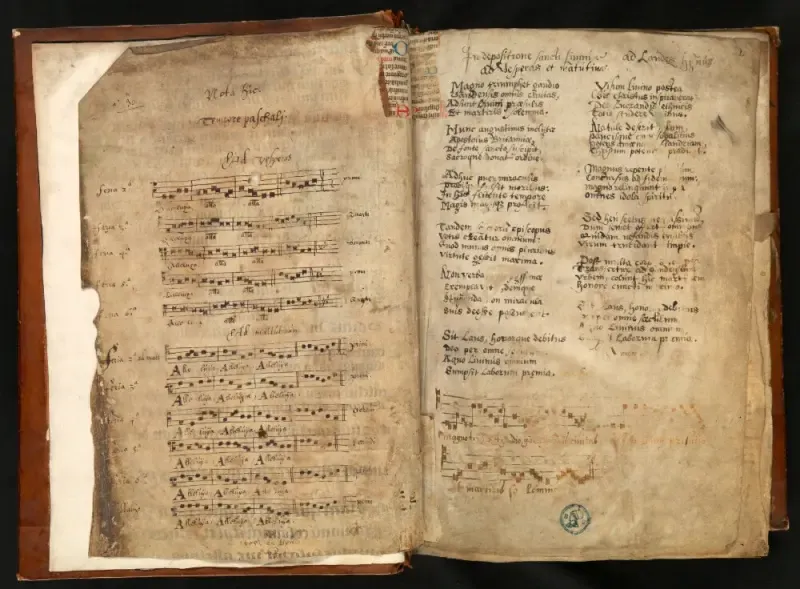
It was probably in the late 9th century that Hucbald of Saint-Amand (now Saint-Amand-les-Eaux, near Valenciennes, France) wrote down his ideas about music on parchment.
At that time, music was largely passed down orally. Hucbald proposed a new form of musical notation. He placed symbols above the text to indicate the notes in the various keys. Thanks to his work and that of other music theorists, such as the Italian Guido of Arezzo, we now have a rough idea of what early medieval music sounded like. It was no coincidence that both Hucbald and Guido were monks.
After all, in Catholic Western Europe, music was not merely a form of art or entertainment. It also served an important religious function.
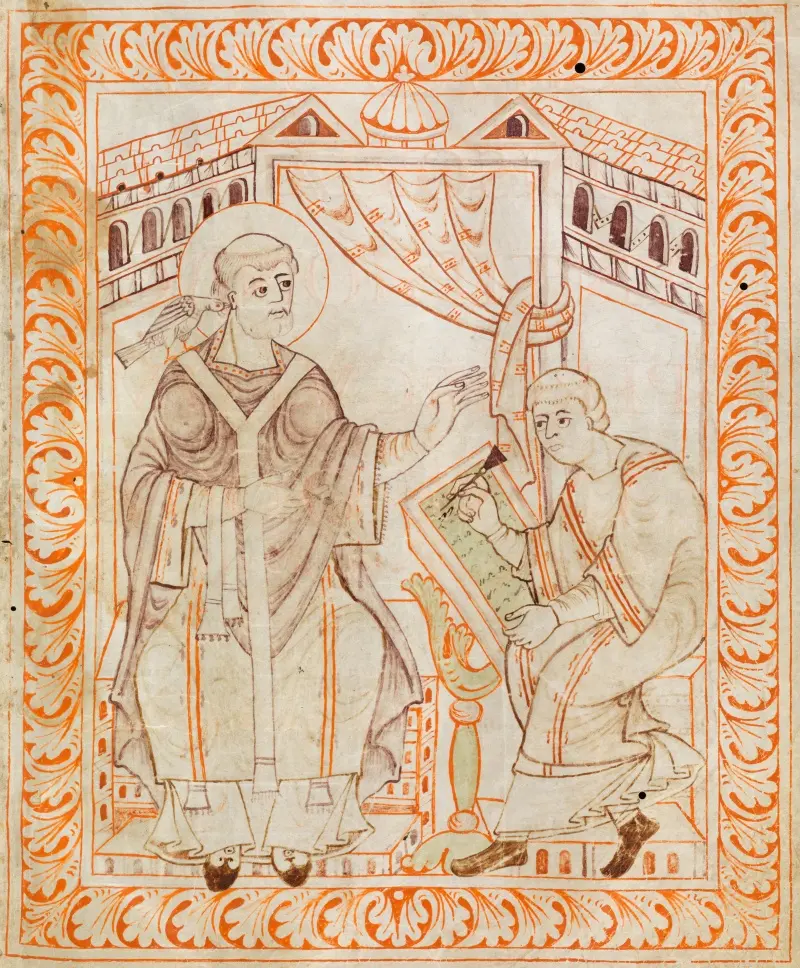
The liturgy—the content of a Mass—was sung almost entirely. A legend emerged in the 9th century that legitimized this practice. Around the year 600, the Holy Spirit, in the form of a dove, is said to have whispered the church chants to the pope at the time, Gregory the Great. Those chants were sacred and were to be used throughout the Catholic liturgy. The legend also gave church music a name: “Gregorian chant.”
It was unison choral music. That doesn’t mean there was only one singer, but rather that all the singers were singing the same melody.
The choir (there were both men's and women's choirs) was not accompanied by instruments and usually sang in Latin.
For centuries, Gregorian chants accompanied people through important moments in their lives, such as baptism and death. The funerals of wealthy and prominent figures, such as Countess Judith of Flanders in 879, were accompanied by extensive chanting.
Beautifully illustrated manuscripts give us a glimpse into the spread of Gregorian chant. For example, songs have been preserved from St. Bavo’s Church in Ghent that celebrate the life of the local saint, Bavo.
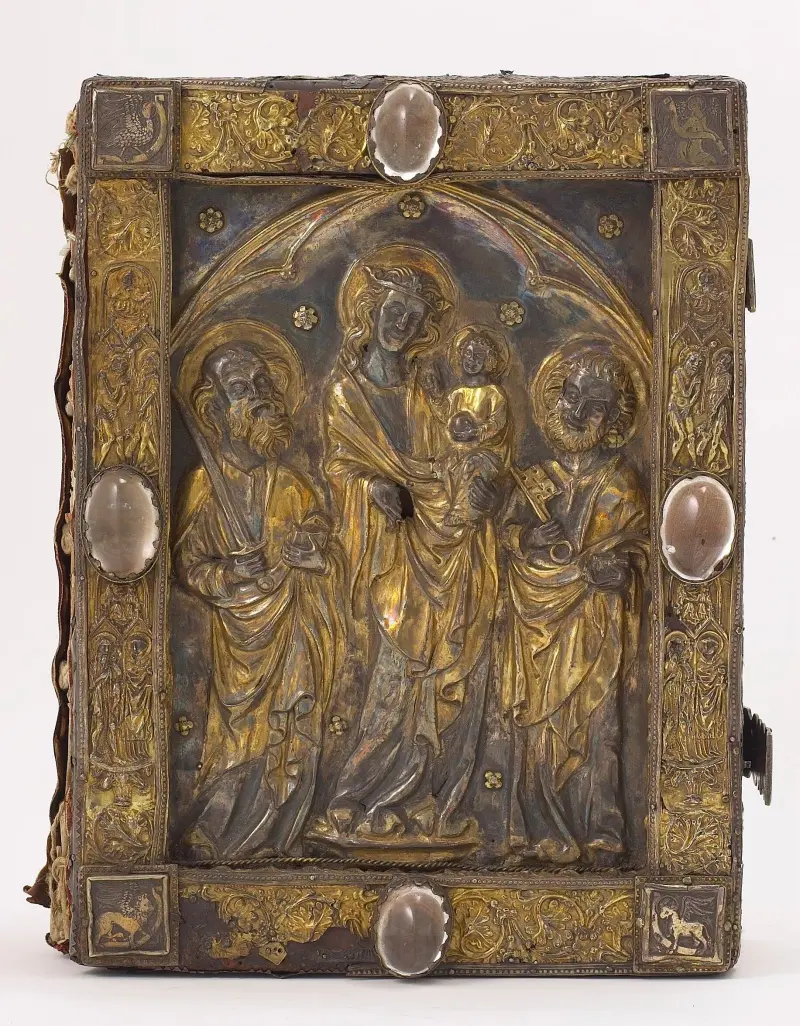
Gregorian chant remained dominant until the 15th century. Then polyphonic music became more popular.
This story was created by Geheugen Collectief for FAAM – Virtual Museum.
 ErfgoedApp
 ErfgoedApp
 ErfgoedApp
 FAAM
FAAM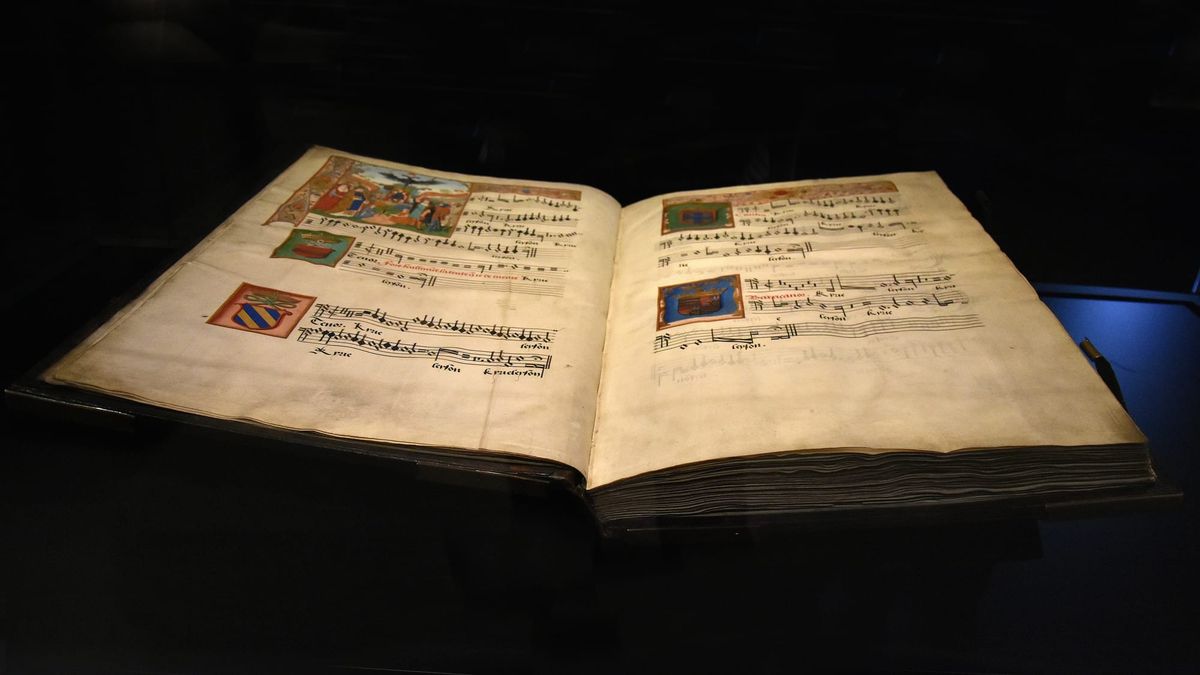
 FAAM
FAAM