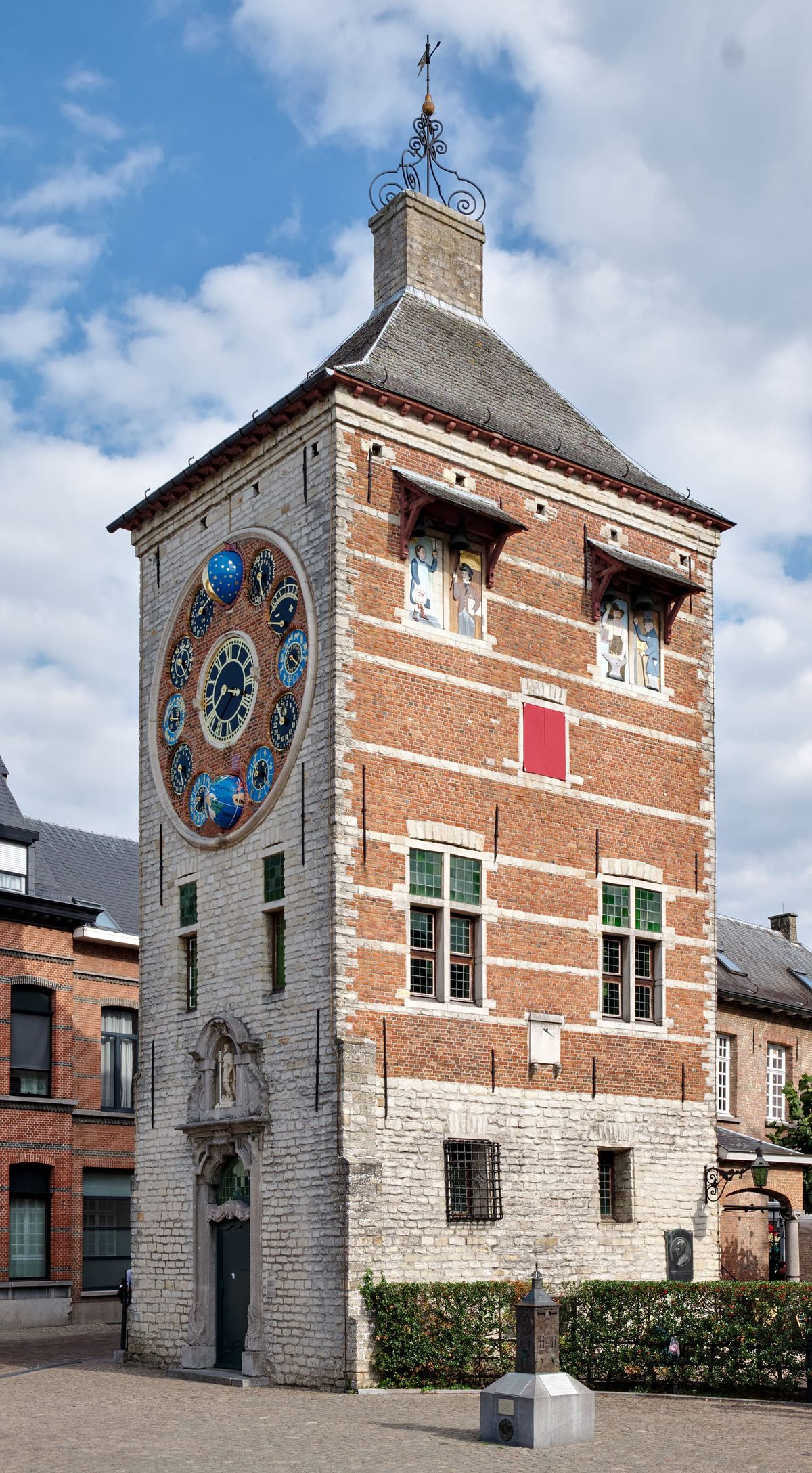
The city of Lier in the province of Antwerp boasts not one, but two remarkable timepieces. The Church of St. Gummarus is home to one of the oldest wrought-iron tower clocks in Europe. It was purchased in Maastricht in 1702 and, according to recent research, dates back to 1395. But Lier is also known for a modern astronomical clock, which hangs on a tower named after the clock’s builder: Louis Zimmer.
Albert Einstein was also impressed
Zimmer was a clockmaker, just like his father, and an amateur astronomer. In 1930, he presented his hometown with a clock that not only displayed standard time but also decimal time (which divides a day into 10 hours of 100 minutes of 100 seconds), the phases of the moon, the day of the week, the Earth’s rotation, and other information. This so-called Jubilee Clock features no fewer than 57 dials. It was installed in a medieval tower in honor of the centennial of Belgian independence.
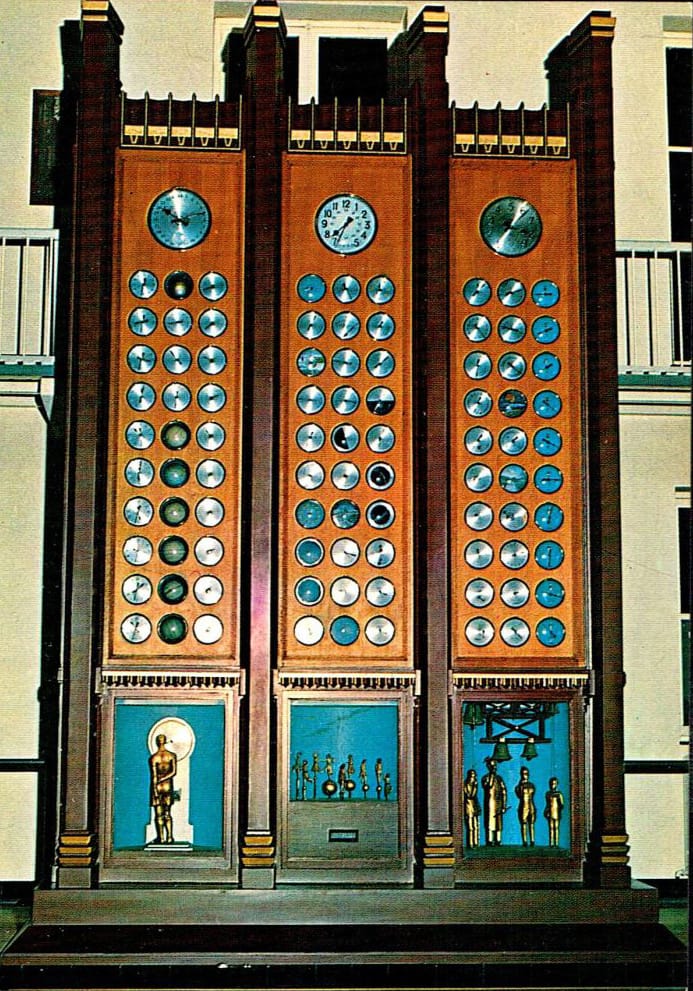
Zimmer was not yet satisfied, so he created an expanded version for the 1935 World’s Fair: the Wonder Clock. The clock is nearly 5 meters tall, weighs about 2 metric tons, and features 93 dials and 14 automata. It was briefly exhibited in New York, and Albert Einstein is said to have been impressed by it.
This story was created by Geheugen Collectief for FAAM – Virtual Museum.
 ErfgoedApp
 ErfgoedApp
 ErfgoedApp
 FAAM
FAAM