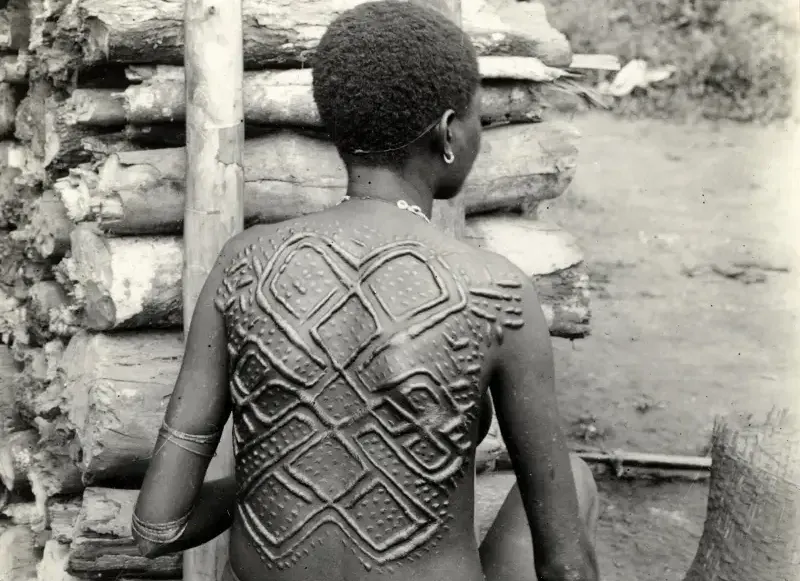
Not every tattoo consists of ink. Various ethnic groups in the Congo used a unique form of body decoration: scarification. By creating scars, decorative shapes were formed on the skin, often in complex geometric patterns. During the era of the Independent State of Congo and later in Belgian Congo, the practice was extensively studied, sketched, and photographed by colonial scientists. The scientists and ethnologists referred to Congolese scarificationsas “tattoos”—even though no ink was involved.
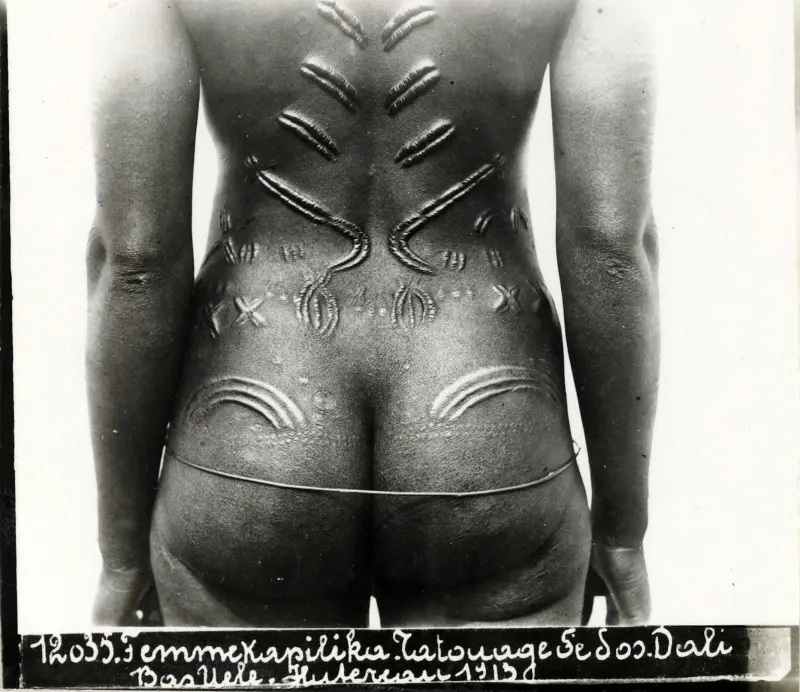
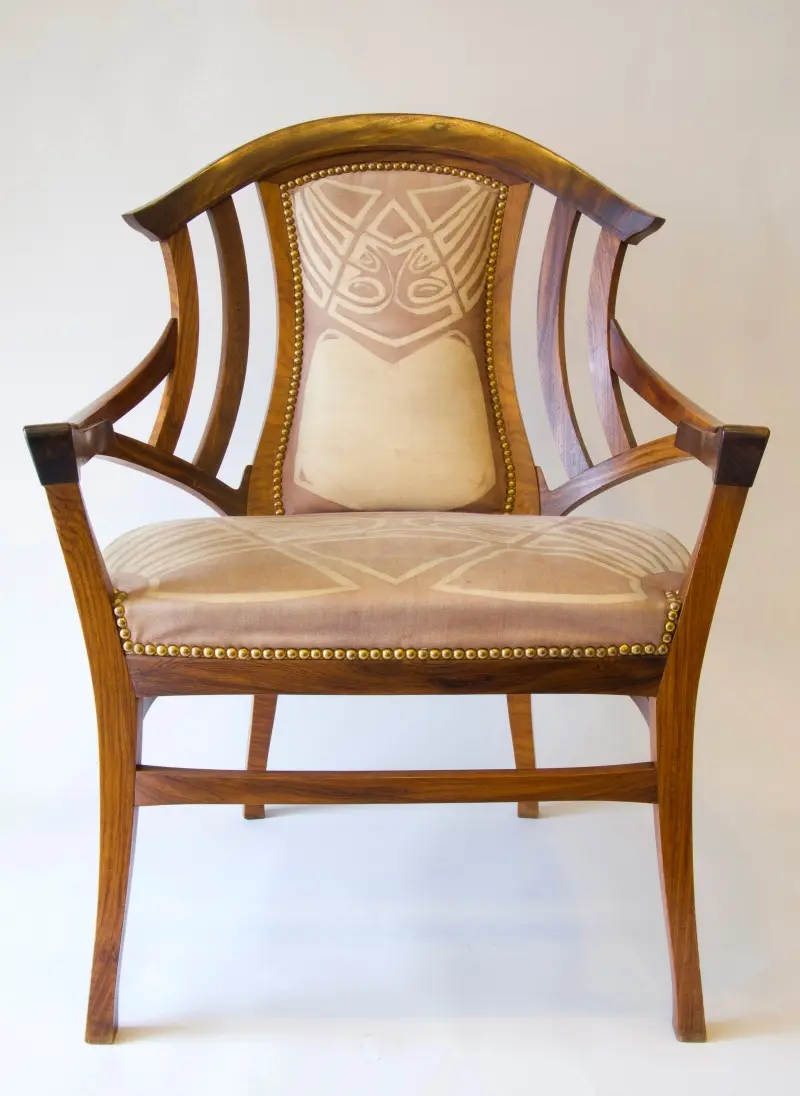
Through magazines, photographs, and (world) exhibitions, late-19th-century Belgium was introduced to Congolesetattooing. Art innovators such as architect and designer Henry Van de Velde were inspired by it and incorporated the patterns into their own work. As a result, Belgian Art Nouveau owes a direct debt to traditional forms of body decoration from the Congo.
"Tattoo" is actually a Polynesian word. In the late 18th century, British navigator James Cook encountered extensively tattooed islanders in Polynesia.
Through accounts of that journey, the word also came into use in Europe. Westerners became fascinated by the “exotic” body decorations of the peoples they conquered. In 1871, the biologist Charles Darwin wrote that there is no country in the world where the people do not tattoo themselves.
Archaeological discoveries of tattooed mummies and painted anthropomorphic figurines have shown that tattooing is likely as old as humanity itself. For centuries, people have also modified their bodies in other ways, such as through skull deformation, intentional scarring, piercings, or plastic surgery. They do this for aesthetic, religious, or symbolic reasons.
For some, this type of body art is an art form in its own right. It has also influenced other art forms, such as Art Nouveau. Some artists, on the other hand, incorporate the practice directly into their work, such as Wim Delvoye, who tattooed both people and pigs.
This story was created by Geheugen Collectief for FAAM – Virtual Museum.
 ErfgoedApp
 ErfgoedApp
 ErfgoedApp
 ErfgoedApp
 ErfgoedApp