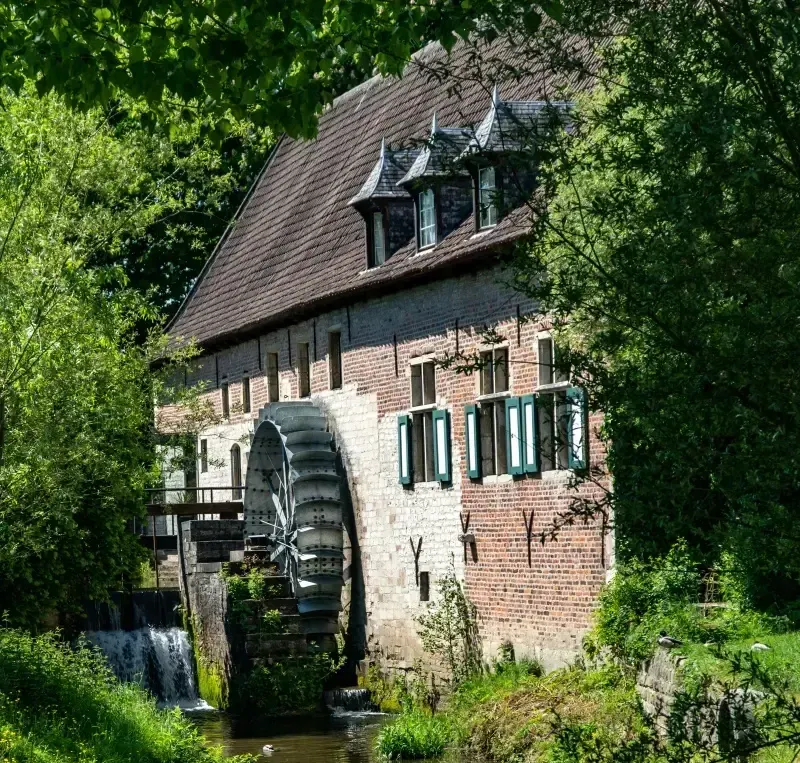
Have you ever dreamed of becoming a miller? You can still train to become one in Flanders! Or you can visit a mill that’s still in operation. There are dozens of them. Take, for example, the Liermolen in Grimbergen. It’s a grain watermill on the Maalbeek dating from the 17th or 18th century. In the Middle Ages, there was an even older mill on the site, owned by the de Lire family—hence its name. In 1341, the Abbey of Grimbergen purchased it.
The Wonderful Journey of Bread
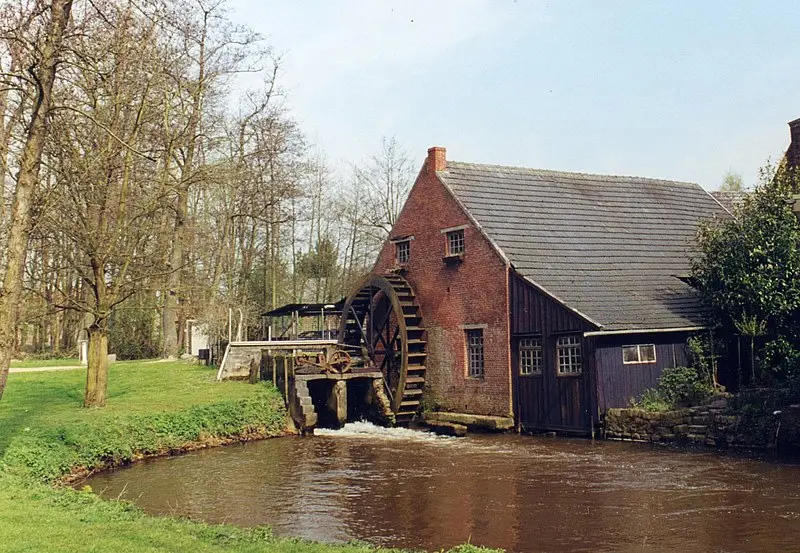
People have been eating bread for about 10,000 years. To bake bread, you need ground grain, and to grind grain, you need power. That power can come from human or animal muscle strength, but even better from wind or water. The familiar windmills with sails date back to the 11th or 12th century and represented a major technological innovation. Much older is the watermill, in which the power of flowing water turns a wheel. Water wheels were already known in antiquity, among the Mesopotamians and later the Greeks and Romans. At first, the wheel was horizontal, but it soon became clear that a vertical orientation was much more efficient.
The Presence of Windmills in the Flemish Landscape
The water mills believed to be the oldest in the Low Countries date back to the 8th century. By 1846, there were no fewer than 2,739 of them in Belgium (and 2,634 windmills). In Flanders, there were about five per square kilometer. That number steadily declined due to advancing mechanization. By 1930, the miller’s economic role had come to a complete end.
Until the 20th century, the miller was a vital part of rural life. He was paid partly in kind—that is, with flour. It was hard and sometimes dangerous work. Not only the mill, but the miller himself was an iconic figure. As a result, mills and millers feature in numerous folk tales. The miller’s craft was recognized as part of Flanders’ intangible cultural heritage in 2020.
This story was created by Geheugen Collectief for FAAM – Virtual Museum.
 ErfgoedApp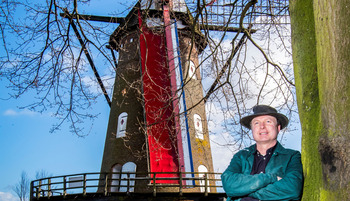
 ErfgoedApp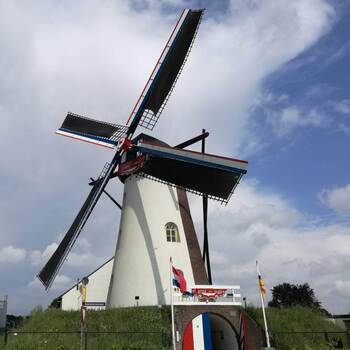
 ErfgoedApp
 ErfgoedApp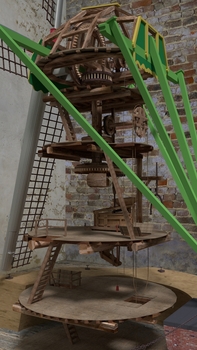
 ErfgoedApp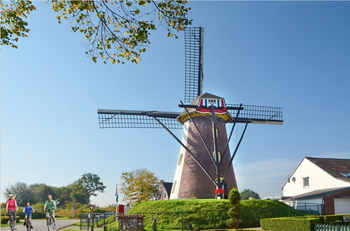
 ErfgoedApp
 ErfgoedApp