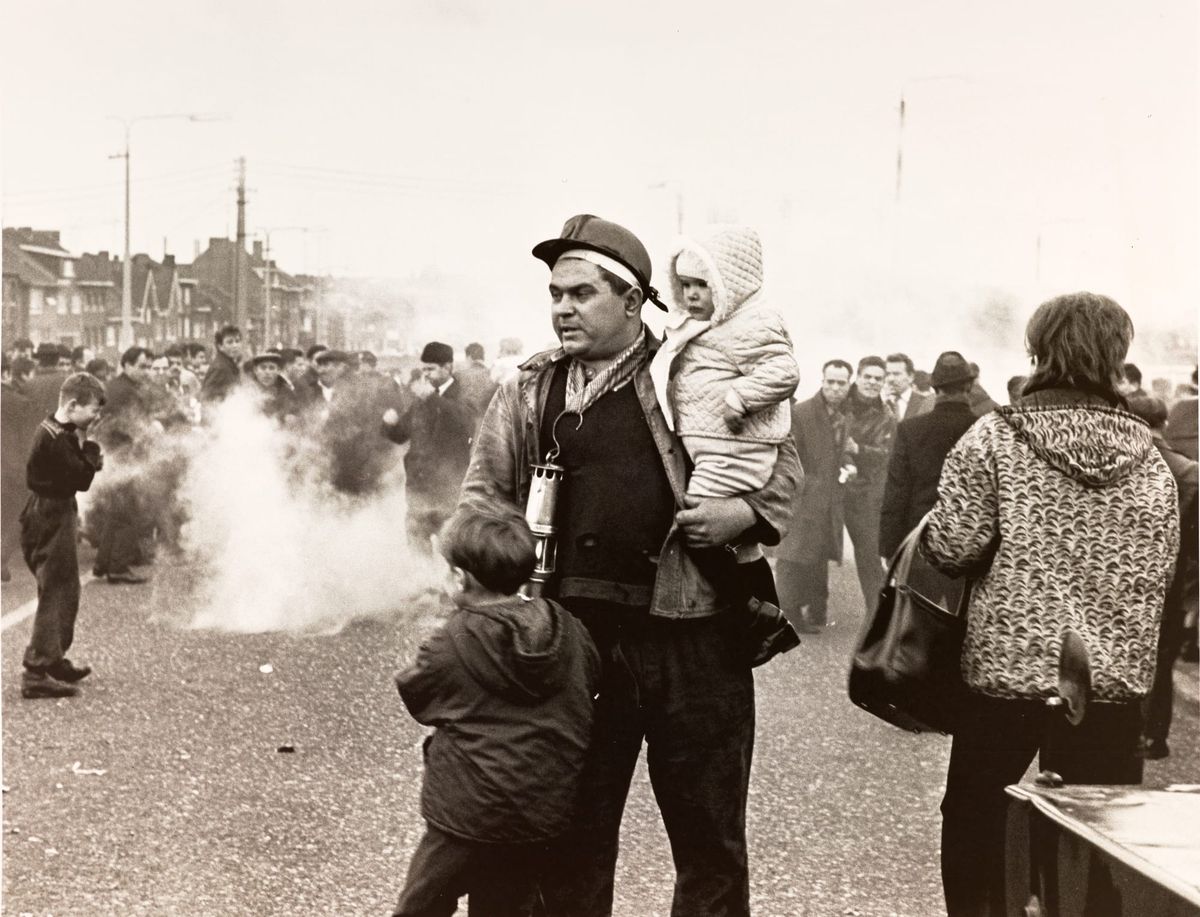
In the years following World War II, the Limburg mines experienced an unprecedented boom. Coal was the driving force behind Belgium’s booming economy, so the government stepped in to support the mining sector. Miners were portrayed in carefully crafted campaigns as saviors of the nation. As a tribute, their likeness appeared on the half-franc coins. They also effectively received improved status, with all sorts of benefits such as low-interest loans and exemption from military service. Production figures skyrocketed, with 1956 as the absolute record year. That year, the Limburg mines extracted 10.5 million tons of coal from the ground.
Yet dark clouds were gathering over the coal mines. Competition from foreign companies was intensifying, and oil was beginning to replace coal as the primary energy source.
The industry had to restructure. In late 1965, the government announced the closure of five mines in Wallonia and one in Limburg: Zwartberg. The announcement sparked violent protests and clashes with the Gendarmerie, who fired live rounds, resulting in two deaths. For a brief moment, Zwartberg made international headlines.
Through their protest, the miners were able to secure better working conditions, but the closure was inevitable. In October 1966, the mine effectively shut down. The flamboyant entrepreneur Marcel Wauters bought part of the land to open a zoo there in 1970. From then on, Zwartberg no longer made the news for its miners but for its elephants, bears, and monkeys. The closure of Zwartberg was a harbinger of the further decline of the Limburg mines.
Between 1987 and 1992, Waterschei, Eisden, Winterslag, Beringen, and finally Zolder also closed.

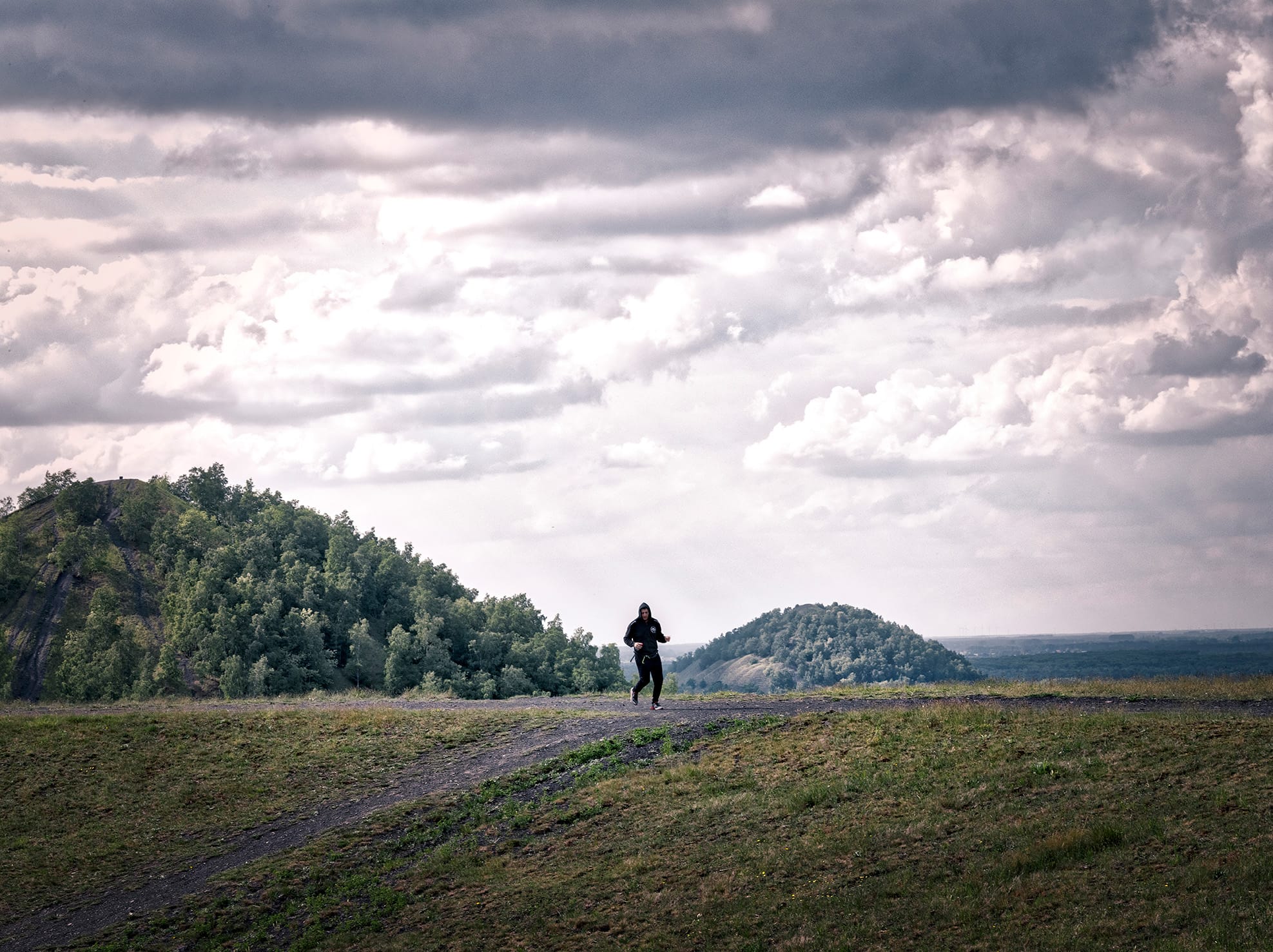
From left to right: Thor Park, featuring the historic main building of the Waterschei mine and the Steenmannetjes route in Genk. Many mine spoil heaps now resemble natural hills - Visit Limburg - Photos by L. Daelemans
The vast industrial sites were left abandoned, but gradually took on a new purpose. Just think of C-mine in Genk, the Luchtfabriek in Zolder, or Thorpark in Waterschei. The remaining mine spoil heaps were also repurposed as recreational areas or green spaces. The spoil heaps in Eisden have even become literal highlights of the Hoge Kempen National Park.
This story was created by Geheugen Collectief for FAAM – Virtual Museum.
 ErfgoedApp
 ErfgoedApp
 ErfgoedApp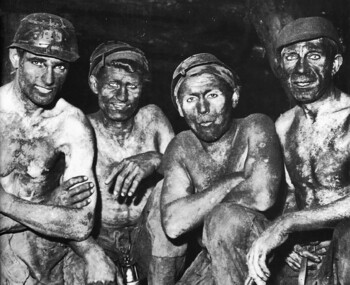
 ErfgoedApp
 ErfgoedApp
 ErfgoedApp