In 1885, Flemish, Walloon, and Brussels socialists united to form the Belgian Workers' Party (BWP). The party leadership deliberately avoided the loaded term "socialism."
She feared that otherwise she would scare off the workers. The main issue was universal suffrage. The first step in the right direction was the introduction of single-vote suffrage for men in 1919. Under this system, every man was allowed to cast one vote. It wasn’t until 1948 that women were also allowed to vote.
Colorful posters
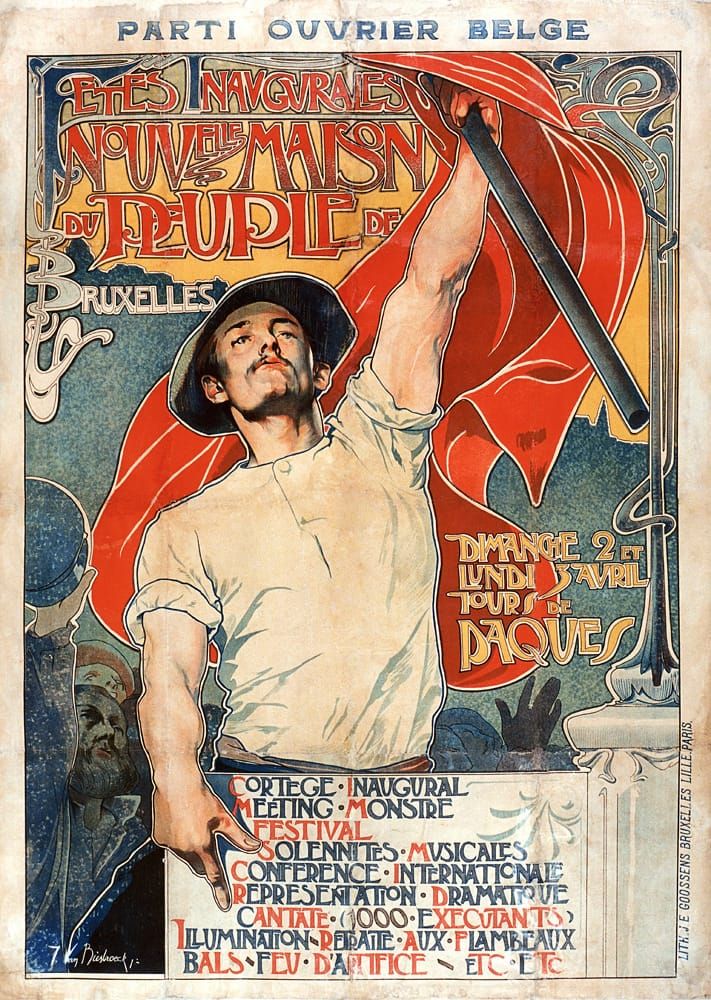
It was important for the new party to recruit new members from among the working class. To that end, they used colorful posters. These were more appealing than boring text-only posters. The designers regularly incorporated the ornamentation and lettering of the new Art Nouveau style. This made it visually clear that a new society was taking shape.
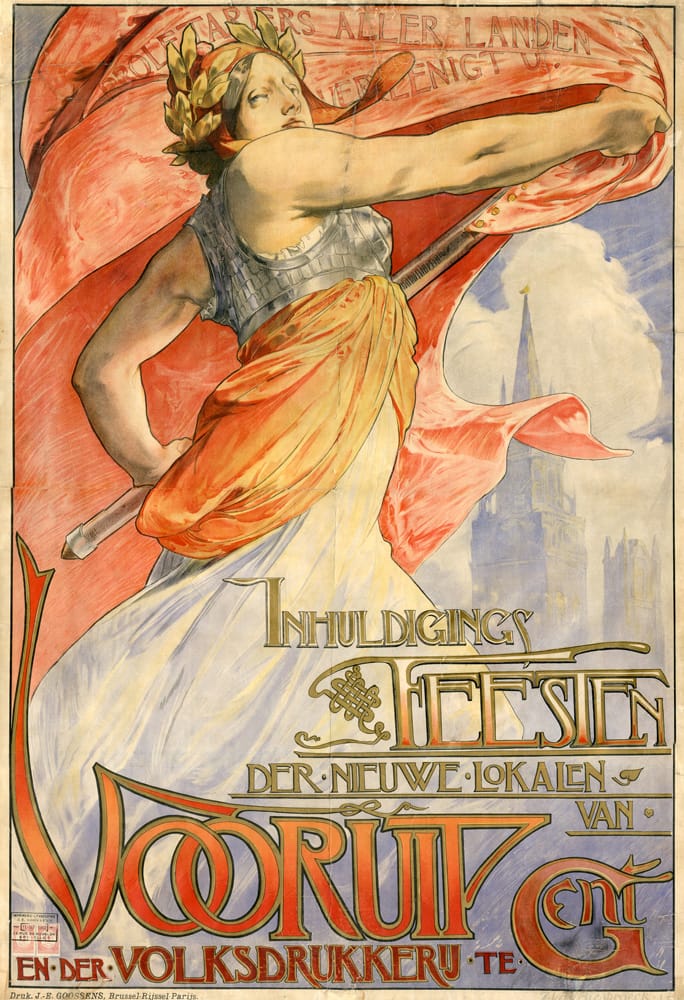
Bread and soap
The community centers also attracted members. There, the party could win over sympathizers during large gatherings. Thanks to a bakery, they were able to provide members with good-quality bread every day. Pastries and gingerbread were not yet available there. In 1882, Brussels’ first workers’ bakery even produced 3.6 million kilograms of bread. Members could go to a grocery store to purchase basic necessities. By selling inexpensive soap, the party hoped to improve its members’ hygiene.
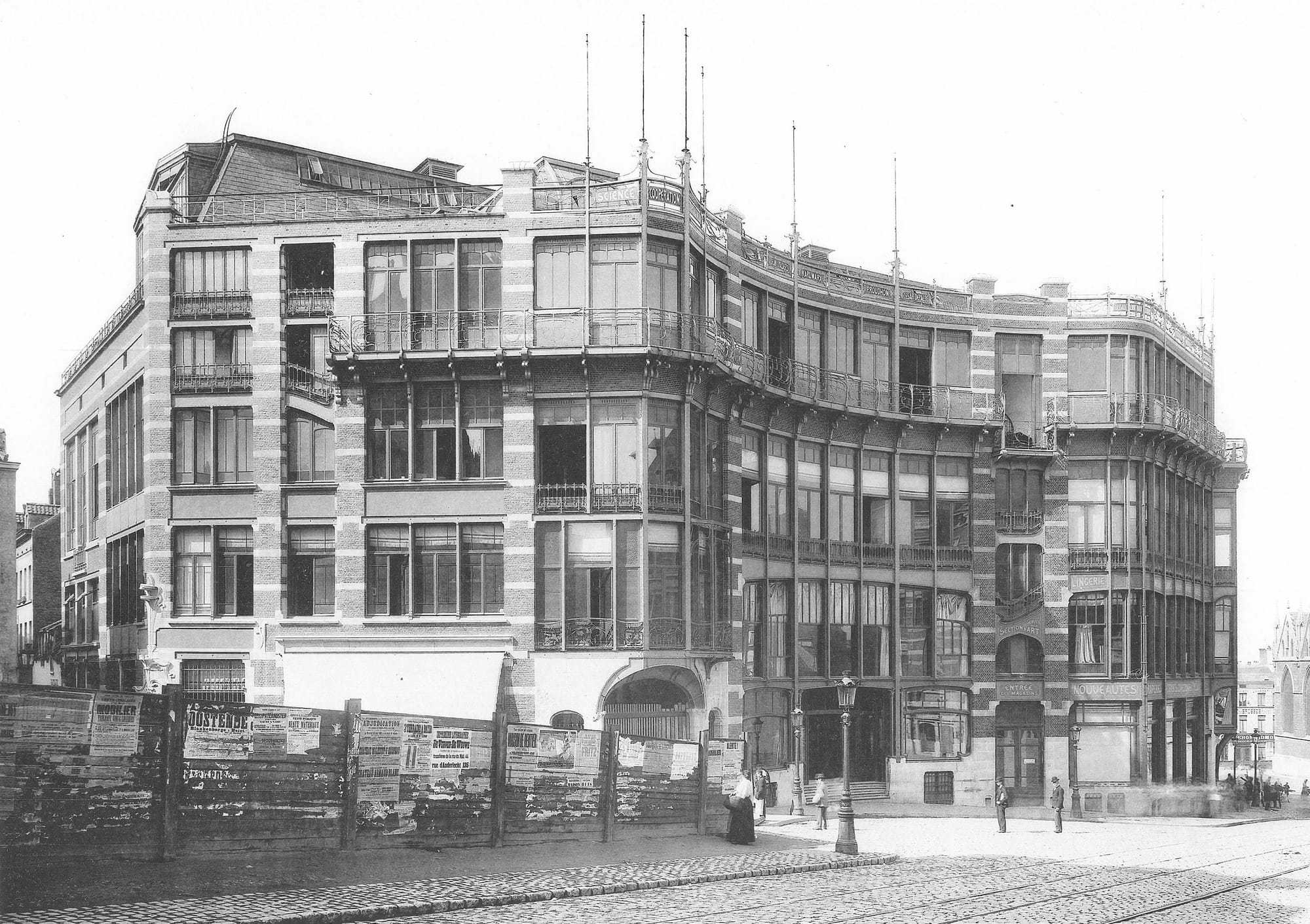
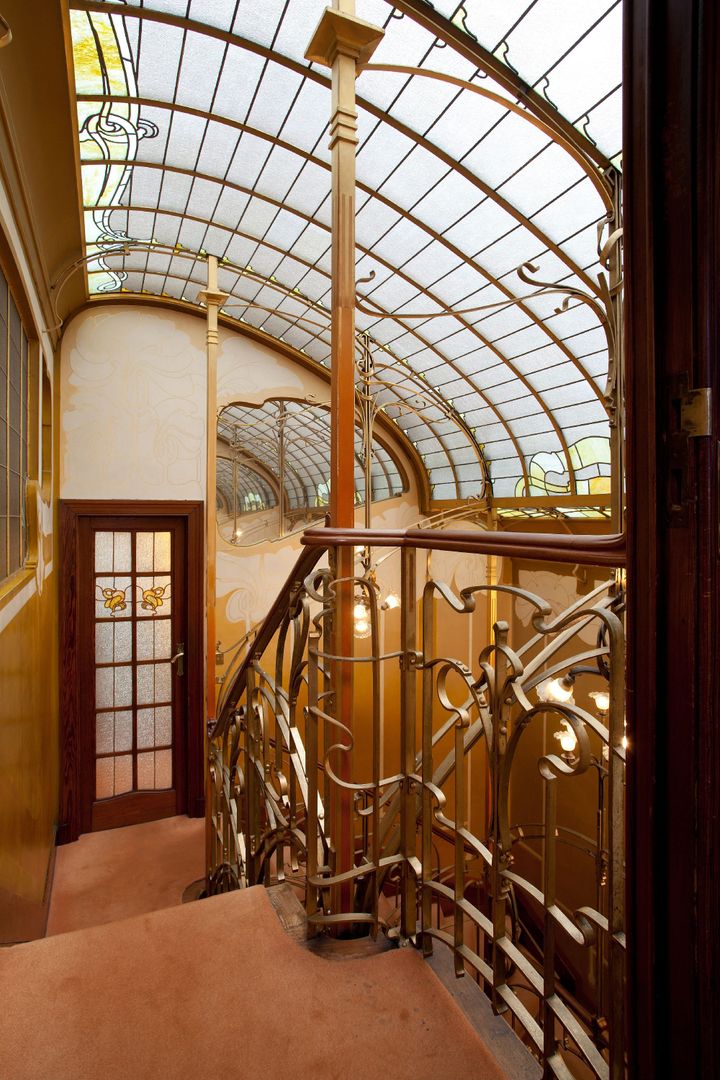
The first socialist community center in Brussels opened its doors in 1899. The Maison du Peuple was designed by the renowned Art Nouveau architect Victor Horta. It was demolished in 1965.
Fortunately, the Ghent community center Ons Huis (1897–1902) on the Vrijdagmarkt is still standing. Ghent socialists could also go to the Vooruit banquet hall (1911–1913) for relaxation and a delicious meal.
This story was created by OKV for FAAM - Virtual Museum.