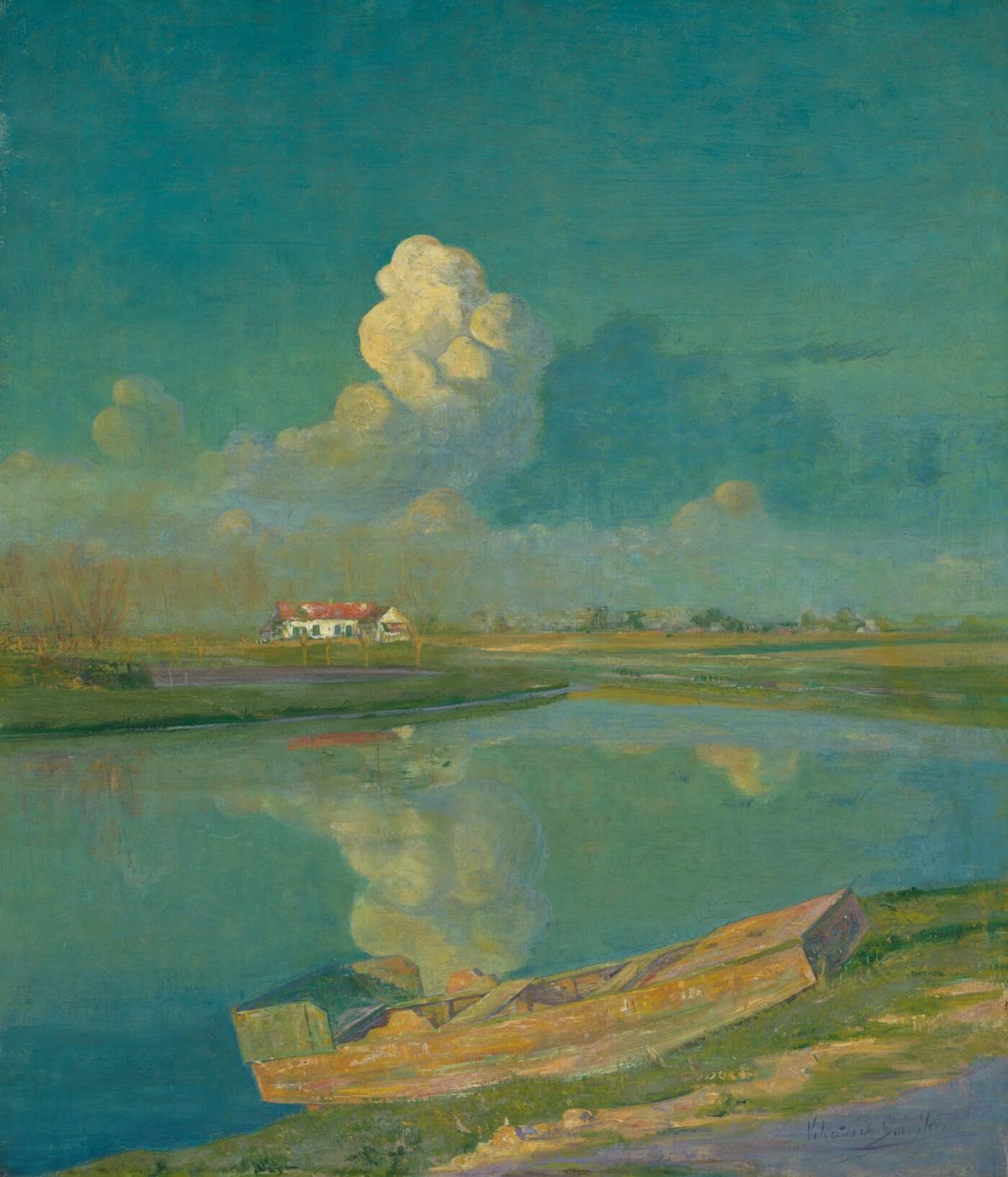
Sint-Martens-Latem is a picturesque village. It lies on the gently meandering Leie River, thirteen kilometers from Ghent.
At the end of the 19th century, many wealthy residents of Ghent built villas here. Busy city dwellers came here on weekends and during vacations to enjoy the peace and quiet surrounded by greenery.
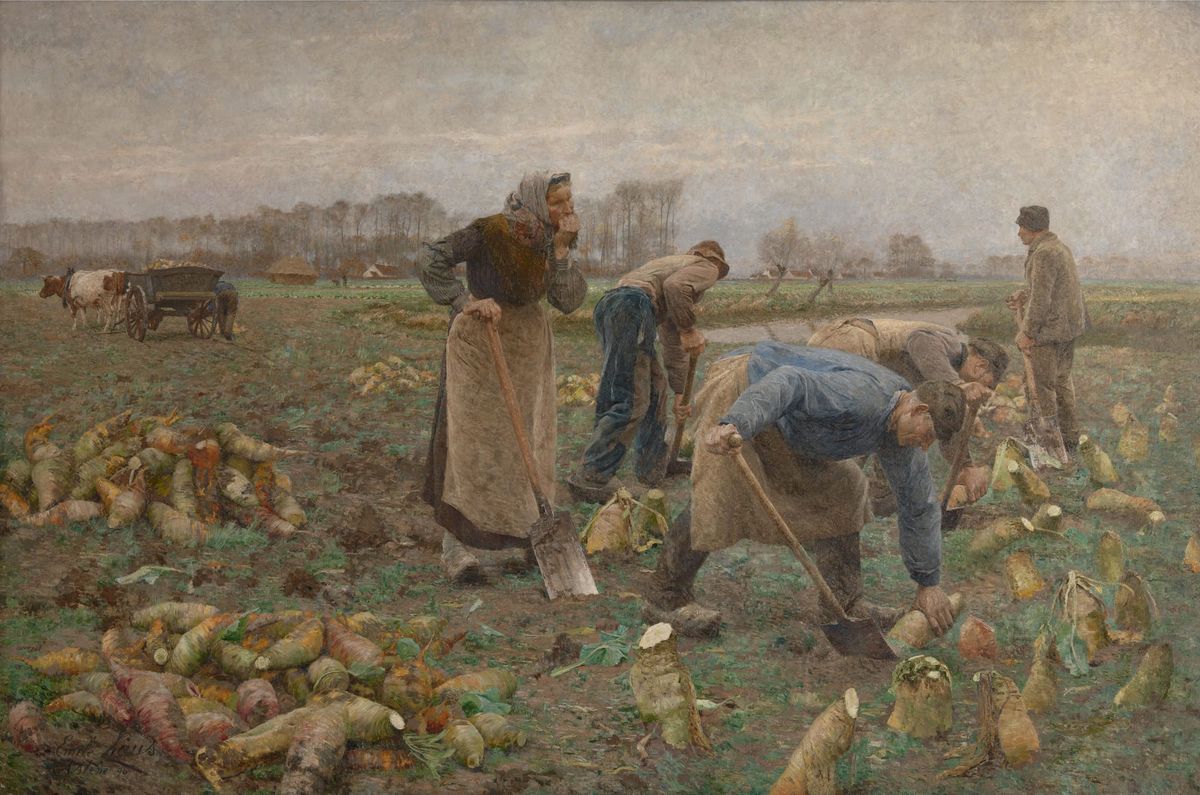
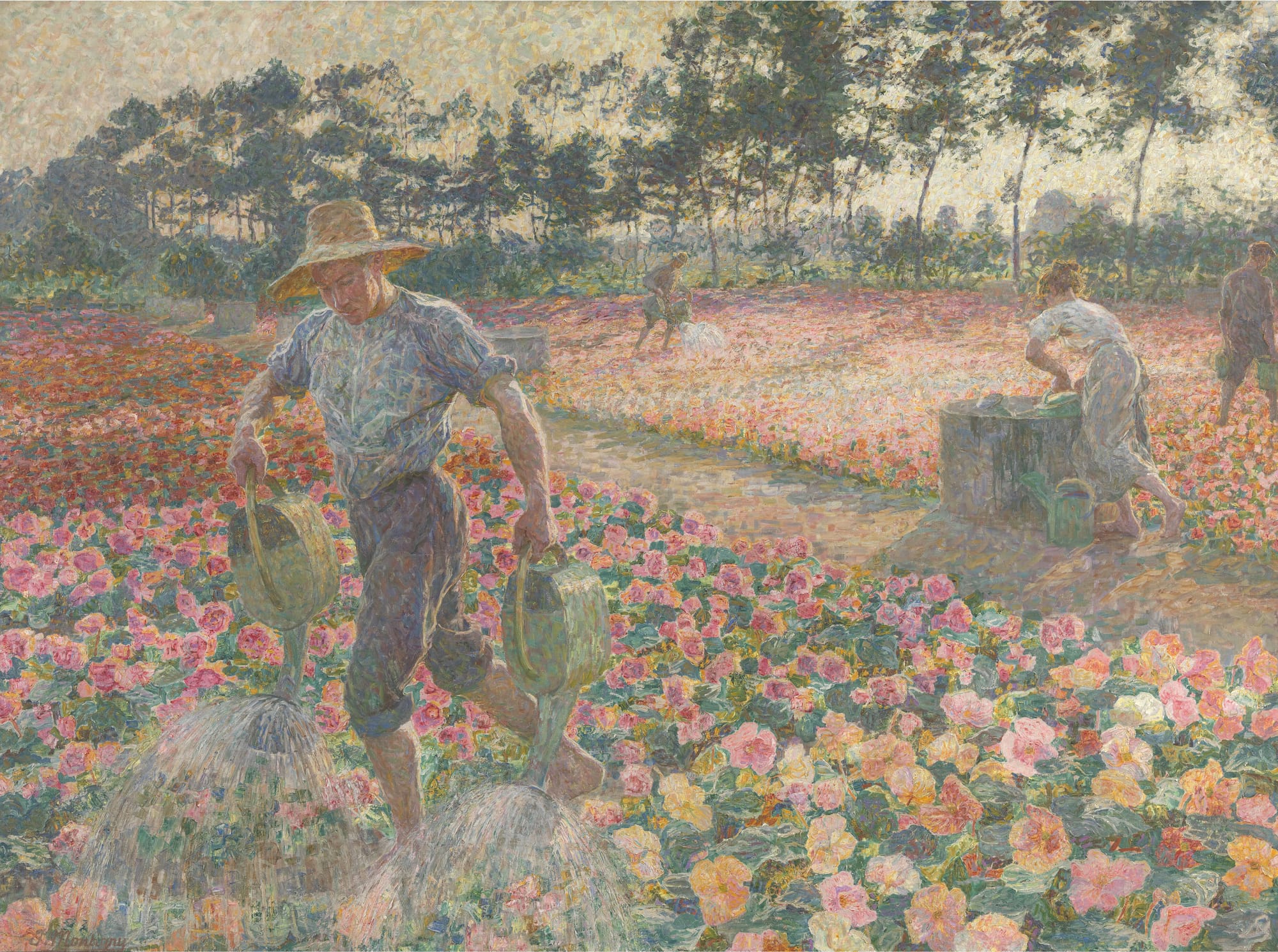
Even before the villa residents arrived, a few painters from Ghent had discovered this farming village. Here, they painted the countryside under a radiant sun. A unique variant of French Impressionism, known as Luminism, developed here. Through countless small brushstrokes, they captured the summer atmosphere. In the sunlight, the forms seemed to shimmer.
A few artists from Ghent decided to settle in Sint-Martens-Latem. They wanted to get away from the hustle and bustle of the city and were looking for a simple life among the local people. A small community of artists formed around the poet Karel Van de Woestijne and his brother, the painter Gustave. Together with the sculptor George Minne, they experienced nature and the world in a mystical way. They sought a profound force behind everyday reality.
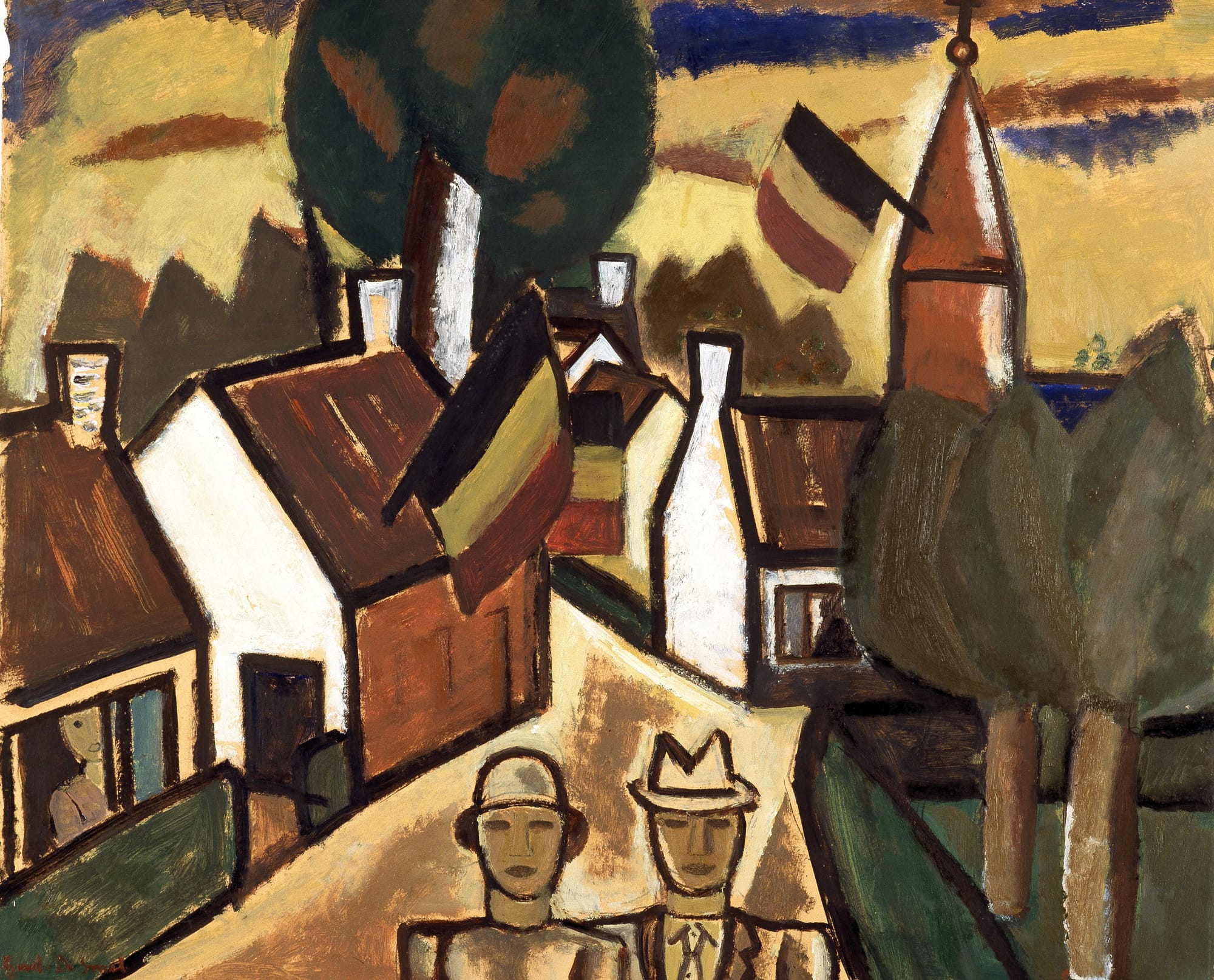
Starting in 1905, a new generation of painters began settling here, led by Gustaaf De Smet, Frits Van den Berghe, and Constant Permeke. The village buzzed with artistic activity well into the 1970s. Today, Sint-Martens-Latem is best known as a residential town with spacious villas set amid greenery.
The neighboring municipality of Deurle was also home to creative talent around 1900. The well-known author Cyriel Buysse settled here. In 1922, he had the destroyed mill on the Molenberg rebuilt in a smaller version. Nearby, he built a stilt house where he would retreat to write. In his novel*Zomerleven*, he glorified the peaceful life in Deurle.
This story was created by OKV for FAAM - Virtual Museum.
 ErfgoedApp
 FAAM
FAAM