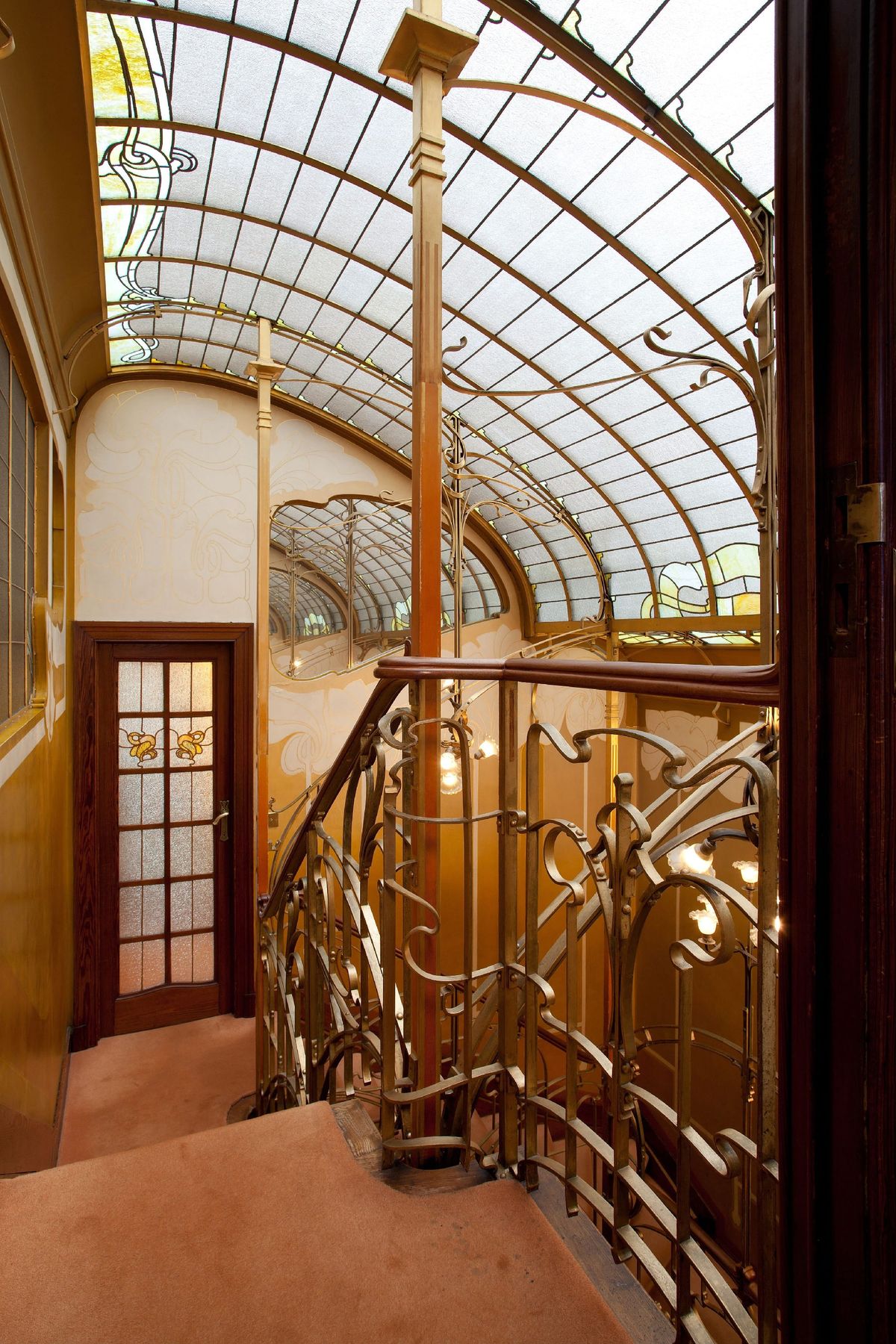
In 1893–1894, Victor Horta built a house in Brussels for Professor Emile Tassel. It was the world’s first Art Nouveau building.
Behind a fairly classic facade lay a remarkably sunny interior. Thanks to his ingenious use of cast iron and glass, Horta succeeded in creating an open structure. He had learned this during the construction of the royal greenhouses in Laeken, alongside Alphonse Balat.
Horta soon built up a clientele of wealthy Brussels residents for whom he designed luxurious townhouses. His clients were often members of the Socialist or Liberal parties. They sought to create a more democratic society. Horta’s bold, free-spirited architecture provided the ideal living environment for this progressive middle class.
In his studio-home (1898–1901), which was open to the public, in the Brussels borough of Saint-Gilles, Horta achieved a perfect balance. The building on the left was his home; on the right stood a studio with wide windows.
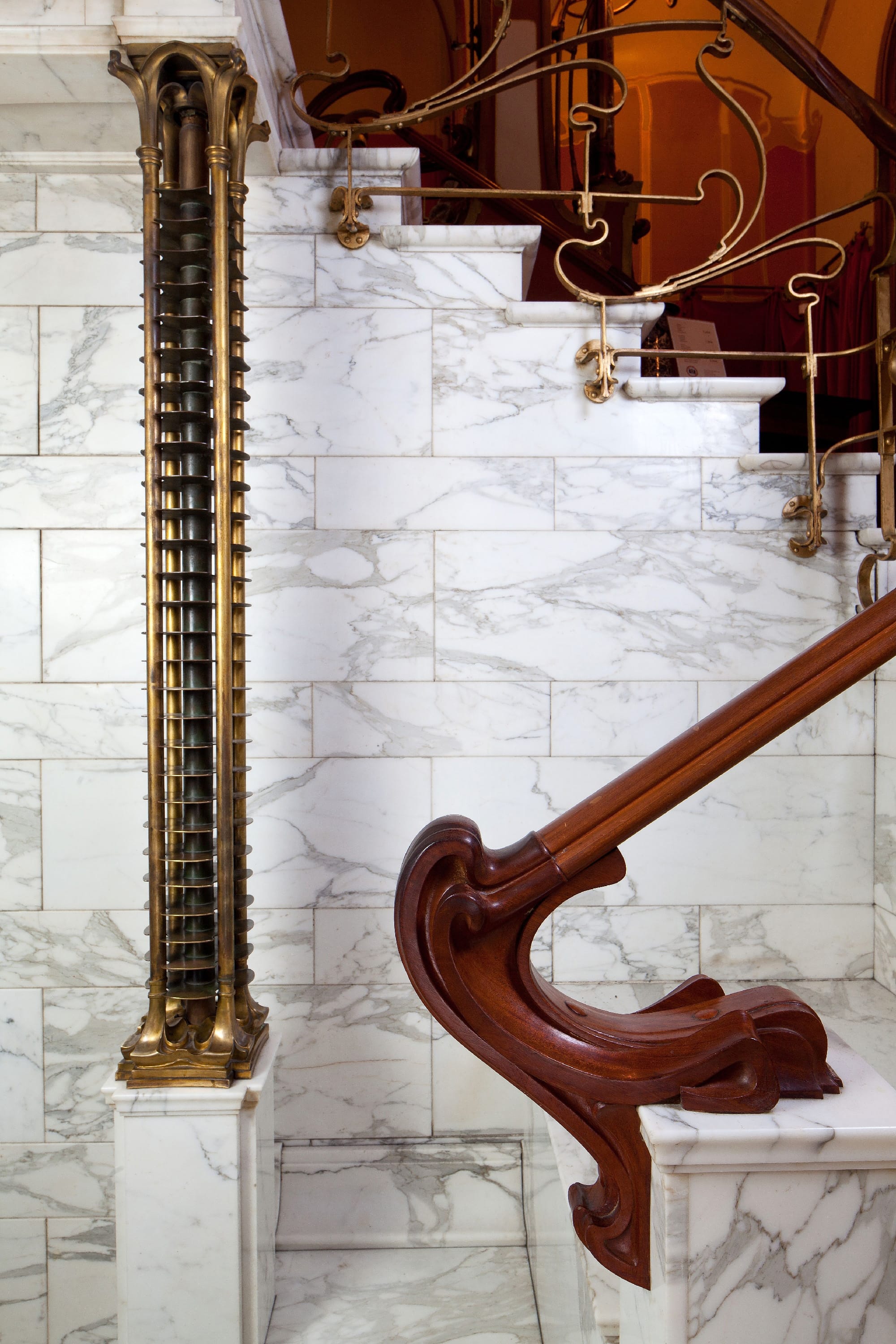
As with his other buildings, Horta designed every last detail. He even drew the plans for the furniture and floor rugs. The living areas were arranged around an open stairwell, which was brightly lit by a glass skylight. The residents and their many guests could move about freely in the sun-filled interior.
Inspired by greenhouses and train stations, the architect did not hesitate to leave the metal framework fully exposed. With his so-called “whip-stroke” ornamentation, he ensured that all elements of the interior were interconnected.
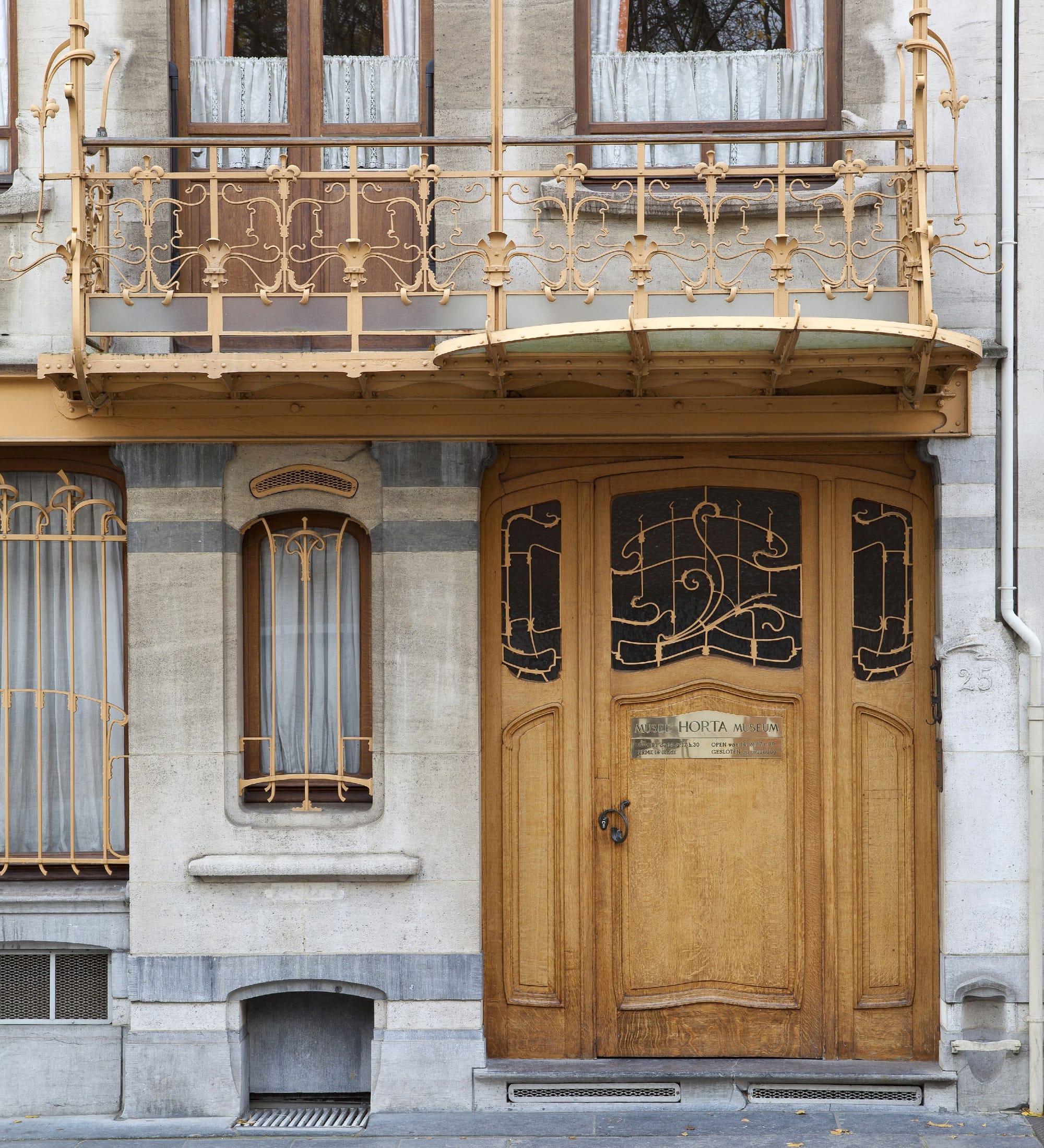
In 1911, Horta converted part of the ground floor of his studio into a garage. During World War I, he lived in England and the United States. After his return in 1919, he sold his house. Since 1969, the duplex has been transformed into the Horta Museum. The interior and furnishings have been largely preserved. Following a thorough restoration, Horta’s home has been restored to its former glory.
This story was created by OKV for FAAM - Virtual Museum.
 FAAM
FAAM