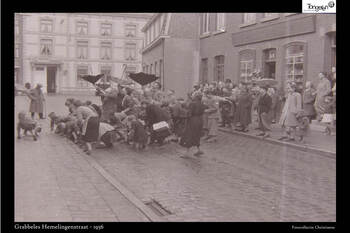
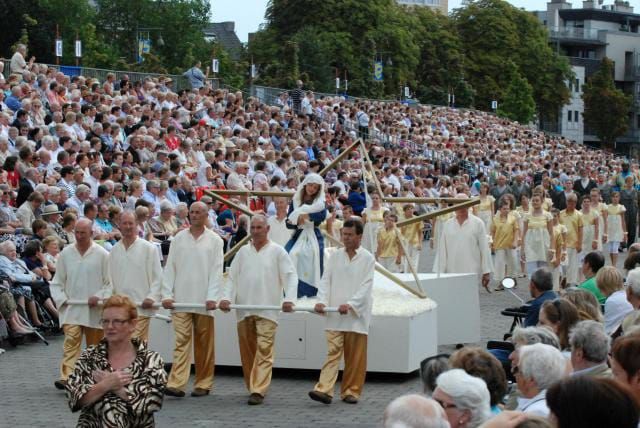
In Hasselt, a procession has been held every seven years during the month of August since 1682. The procession honors Virga Jesse, as Mary is known there. During the Virga Jesse festivities, the people of Hasselt carry a 14th-century oak statue of Mary through the decorated streets.
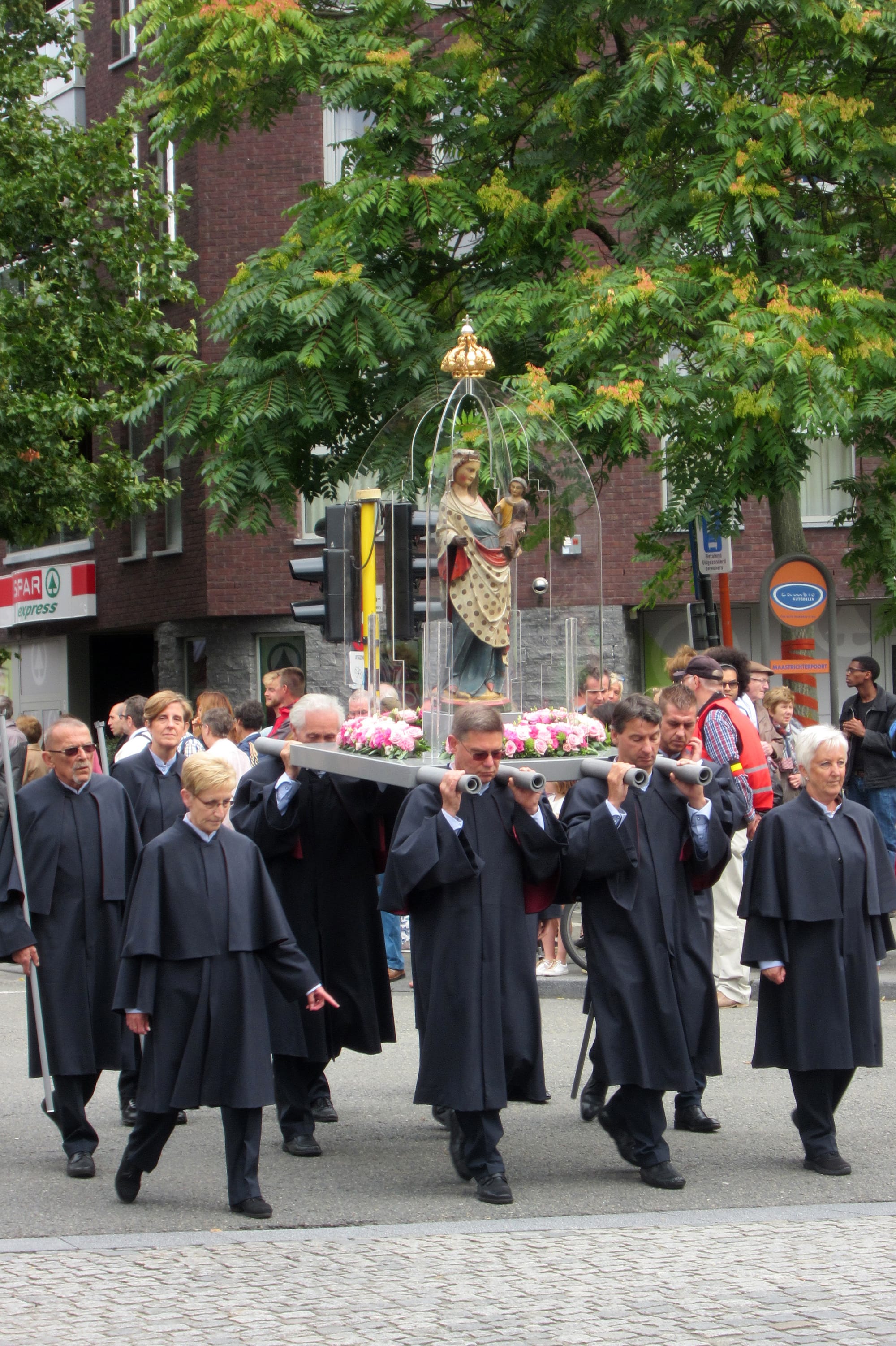
It is one of many examples of the rich tradition of processions and parades in the Flemish region.
In the 17th and 18th centuries, travelers described the region as the most Catholic in Europe, due to the large number of processions that wound their way through the streets and fields. During such processions, priests and laypeople would come together to sing, pray, play music, and sometimes dance in honor of God or a saint. The procession participants carried all manner of religious objects with them, such as crosses, statues, or relics.
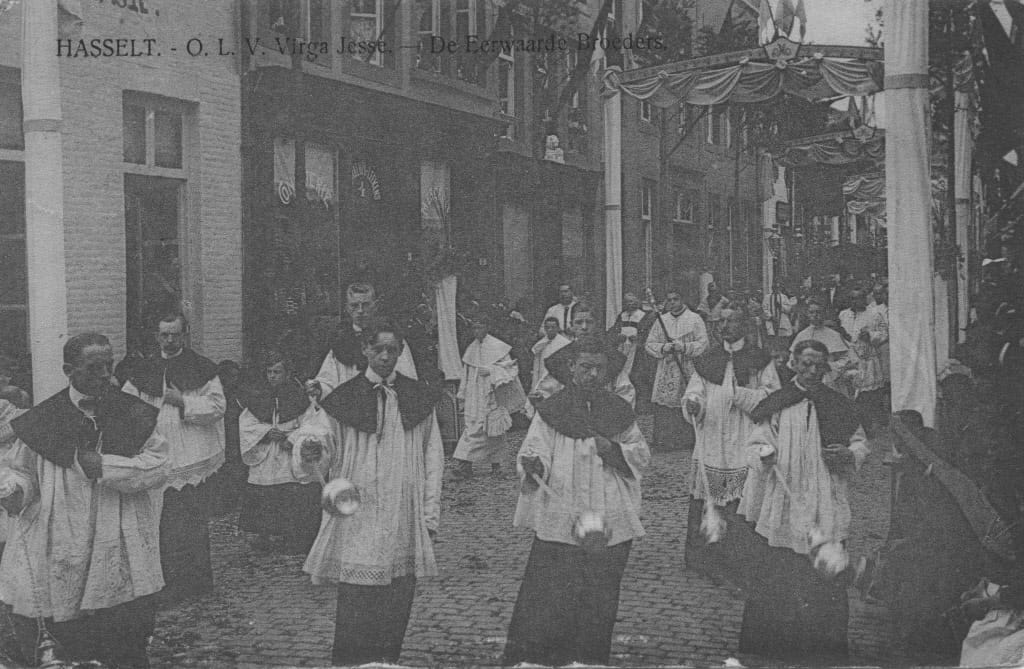
During the 6th century, processions featuring the relics of Christian saints began to emerge in various parts of Western Europe. From the late Middle Ages onward, these processions in the cities were increasingly expanded to include a civic parade, in which street theater, giants, and monsters played a significant role. To re-emphasize piety and devotion, the Church in the 17th century drew a distinction between these “processions for entertainment” (or parades) and religious processions. But often, both elements—the religious and the non-religious—remained intertwined.
The Virga Jesse Festivals are part of a unique tradition in the Meuse-Rhine region: that of the seven-yearly processions and festivals.
The festivities are accompanied by all sorts of local customs. Neighborhood committees reenact biblical scenes, Hasselt legends, or stories of miracles. One such legend tells of a child who died after falling from a window but came back to life after his body was brought to the statue of Virga Jesse.
And, as is customary at so many Flemish festivals, there is plenty of food. On the Monday following the first procession, pea soup is served—a tradition said to date back to the 16th century, when a Spanish nobleman distributed pea soup during a famine.
This story was created by Geheugen Collectief for FAAM – Virtual Museum.
 ErfgoedApp
 ErfgoedApp