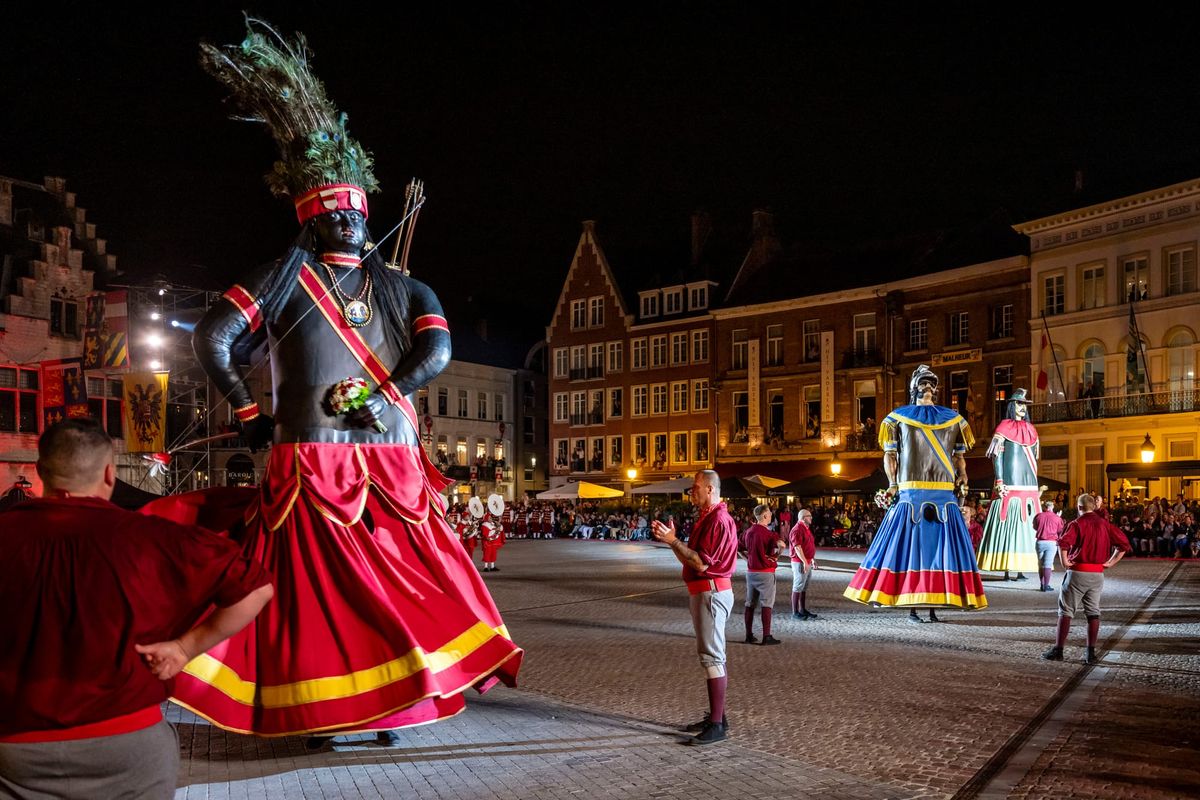
Since the 16th century, the "Song of the Giants" has been sung in various places throughout Flanders:
When the big bell rings, the bell rings, the giant comes out. Turn around, giant, giant, turn around, giant gum…
Most giant parades originated as religious processions. Starting in the late 14th century, these often evolved into full-scale spectacles in the cities, featuring theater, giants, monsters, and (mythical) animals. Originally, the procession was intended to teach the public about Bible stories or the lives of saints. From the 16th century onward, the giants were primarily used to entertain the people.
Giants have captured the imagination for centuries. They appear in fairy tales, myths, and legends all over the world. In Belgium, there are an estimated 1,500 giants—enormous puppets that have been paraded through towns and villages at regular intervals since the Middle Ages. Because they continue to fascinate people and usually only come out once a year, they often draw large crowds.
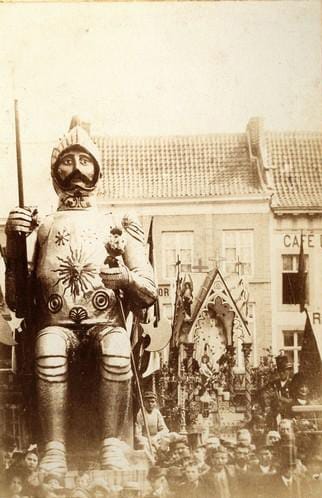
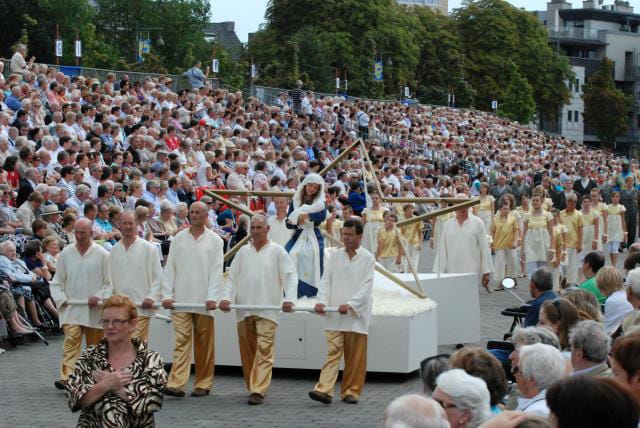
Every last Thursday in August, tens of thousands of people gather in Dendermonde to watch Indiaan, Mars, and Goliath dance through the streets.
During this giant parade, known as “Katuit,” the city giants are joined by other folkloric figures. Among them are the “knaptanden”: people dressed in wolf costumes who scare onlookers. The procession also includes floats, marching bands, and about a thousand participants in historical costumes.
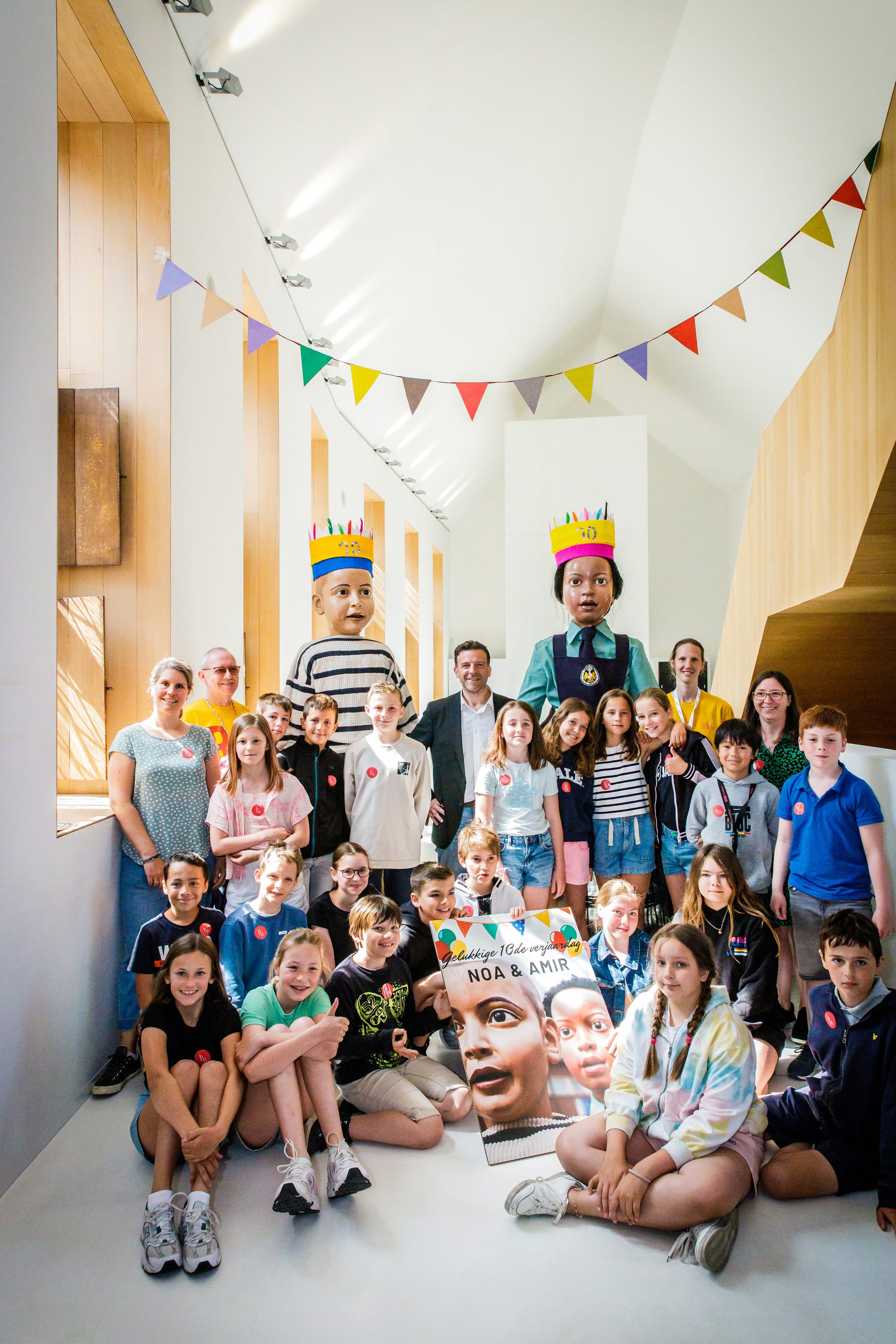
Giants, just like people, have a life cycle. At their “birth,” they are baptized and given a godmother and a godfather. Giants can also marry and have children. In Mechelen, the 15th-century Giant acquired a wife in 1549 and three giant children in 1618. In 2013, the city registered Noa and Amir in the population registry. These new giants symbolize the multicultural character of Mechelen. In this way, the giant tradition evolves alongside society.
This story was created by Geheugen Collectief for FAAM – Virtual Museum.
 ErfgoedApp
 FAAM
FAAM