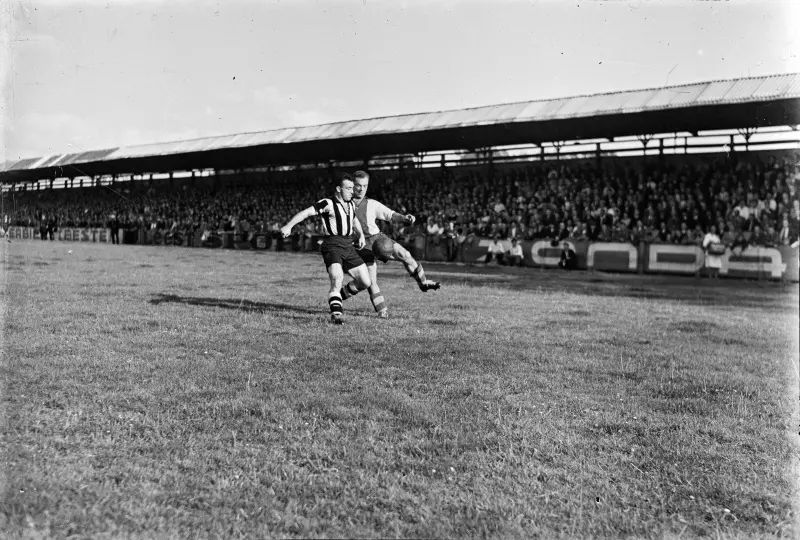
Anyone in Mechelen who asks about Achter de Kazerne will immediately know if they’re talking to a KV Mechelen fan. For them, the soccer club’s stadium is a place full of memories.
Achter de Kazerne opened in 1911, seven years after KV Mechelen was founded. At the time, it was known asFootball Club Malinois, because, like most clubs, it was run by wealthy French-speaking members of the community.
The stadium got its name because there were military barracks nearby.
Behind the Barracks, the supporters of “Malinwa” experienced both highs and lows. Such as the three league titles the club won in the 1940s. Or the golden 1980s, with another national title and victories in both the European Cup Winners’ Cup and the European Super Cup. But there were also dramatic episodes, such as the bankruptcy in 2003.
KV Mechelen is a fine example of Flanders’ rich and diverse soccer heritage. It all began in 1863, when an Irish student at the college in Melle brought a ball to school.
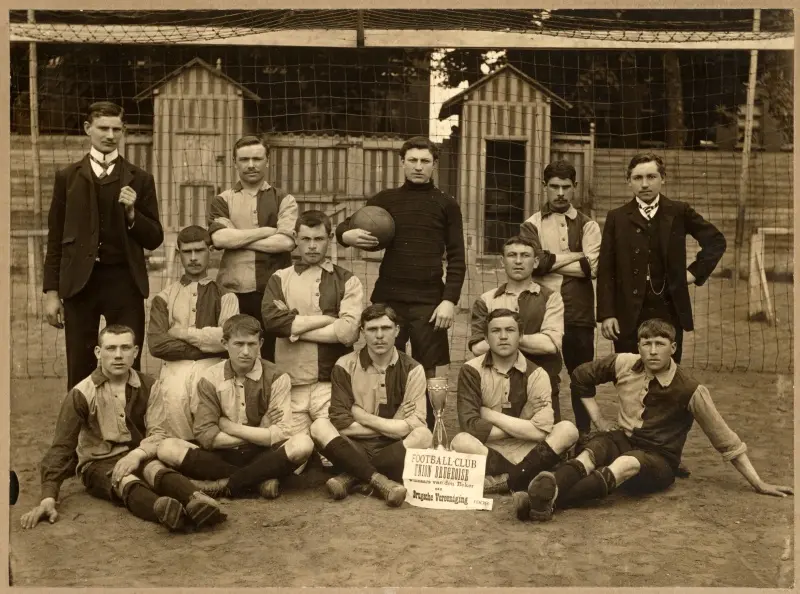
After 1880, the first clubs began to emerge in major cities such as Antwerp and Brussels, but the sport really took off after World War I. The Red Devils’ gold medal at the 1920 Antwerp Olympics served as ideal publicity. Sports newspapers likeSportwereld carriedmore soccer news, and the number of clubs in cities and towns skyrocketed. Often, there was more than one team, as rival political groups each founded their own squad. For example, KV Mechelen was a Catholic response to the liberal Racing Mechelen, which was also founded in 1904.
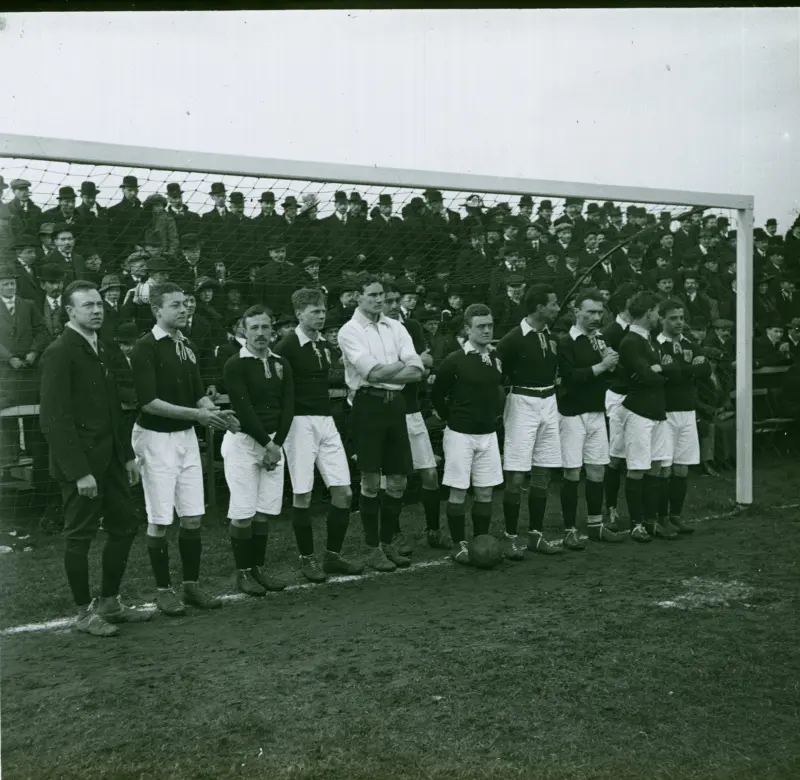
After World War II, soccer became increasingly popular and professional. In the 1970s and 1980s, Belgian clubs such as Club Brugge even regularly made a name for themselves in European competitions. More recently, women’s soccer has established itself. In 2003, Mechelen also got a women’s team. It was the very first to have its own fan club, Gloria.
This story was created by Geheugen Collectief for FAAM – Virtual Museum.
 ErfgoedApp
 ErfgoedApp
 Bram
Bram