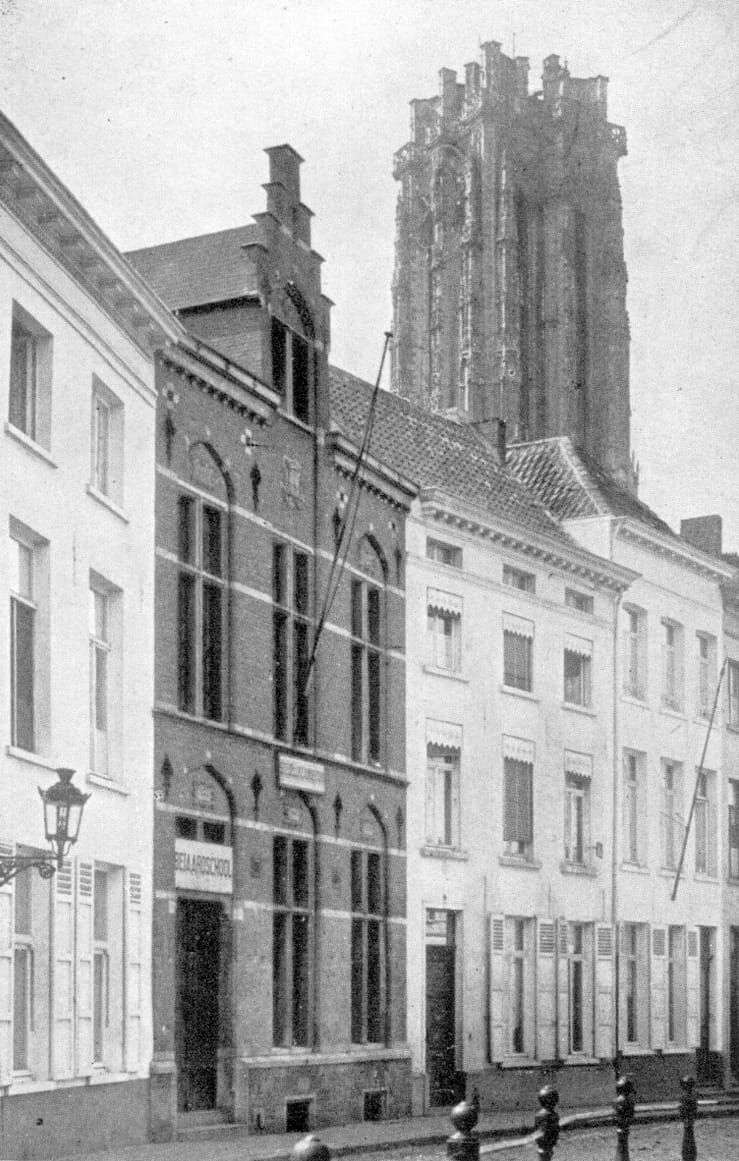
Matthias Vanden Gheyn was a well-known figure in Leuven during the 18th century. Yet he had a profession that rarely makes the headlines today: city carillonneur. From the time of his appointment in 1745, he played the bells of St. Peter’s Church for forty years on weekly market days and on special occasions such as processions, fairs, guild parades, and celebrations at the Catholic University. He was also a talented organist and composer. His virtuosity earned him the nickname “Bach of the carillon.” He was the first to write original compositions for the carillon. His 11 preludes are performed worldwide.
When Governor Charles of Lorraine broke ground on the Leuven Canal in 1750, Matthias marked the occasion with his carillon. In short, the city carillonneur was deeply involved in Leuven’s social and cultural life. He was rewarded for this with a statue on the facade of City Hall, an honor no other musician has received. But what exactly is a carillon, and where does it come from?
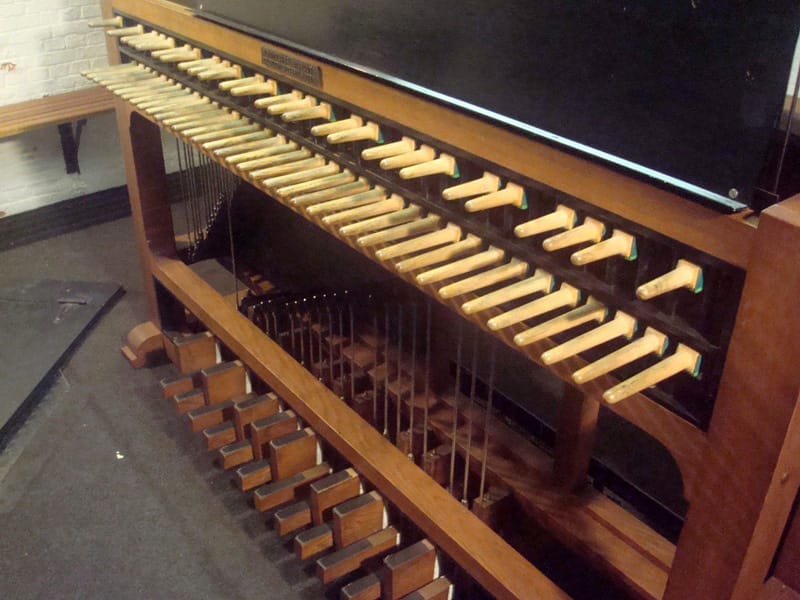
The carillon is an instrument consisting of (tower) bells that is played with the fists on a keyboard equipped with wooden mallets and pedals. The first recorded mention of it dates back to 1510, in Oudenaarde. It is said that a set of bells was connected to a keyboard there for the first time.
Carillon culture spread from Flanders throughout the Low Countries. There are still 180 carillons in the Netherlands and 72 in Flanders. In Leuven, Matthias’s hometown, there are no fewer than five!
Carillon playing is far from a thing of the past. In 2014, UNESCO recognized carillon culture as a best practice in safeguarding intangible cultural heritage. You can also still train to become a carillonneur.
This story was created by Geheugen Collectief for FAAM – Virtual Museum.
 ErfgoedApp
 ErfgoedApp