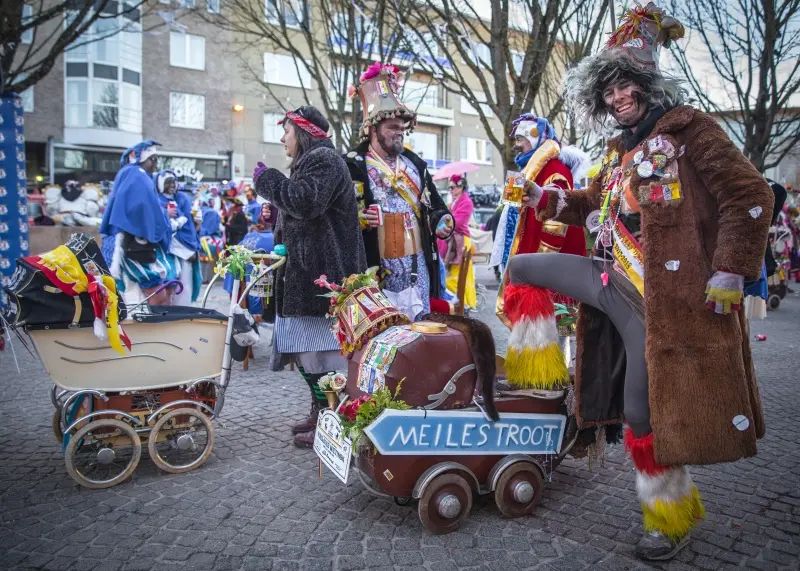
Aalst is home to the annual highlight of the Flemish carnival. People parade through the streets in costume. Everyone eats and drinks to their heart’s content—alcohol for the adults and candy for the children. An ordinary man is crowned prince. With the help of masks and costumes, people can briefly become someone else.
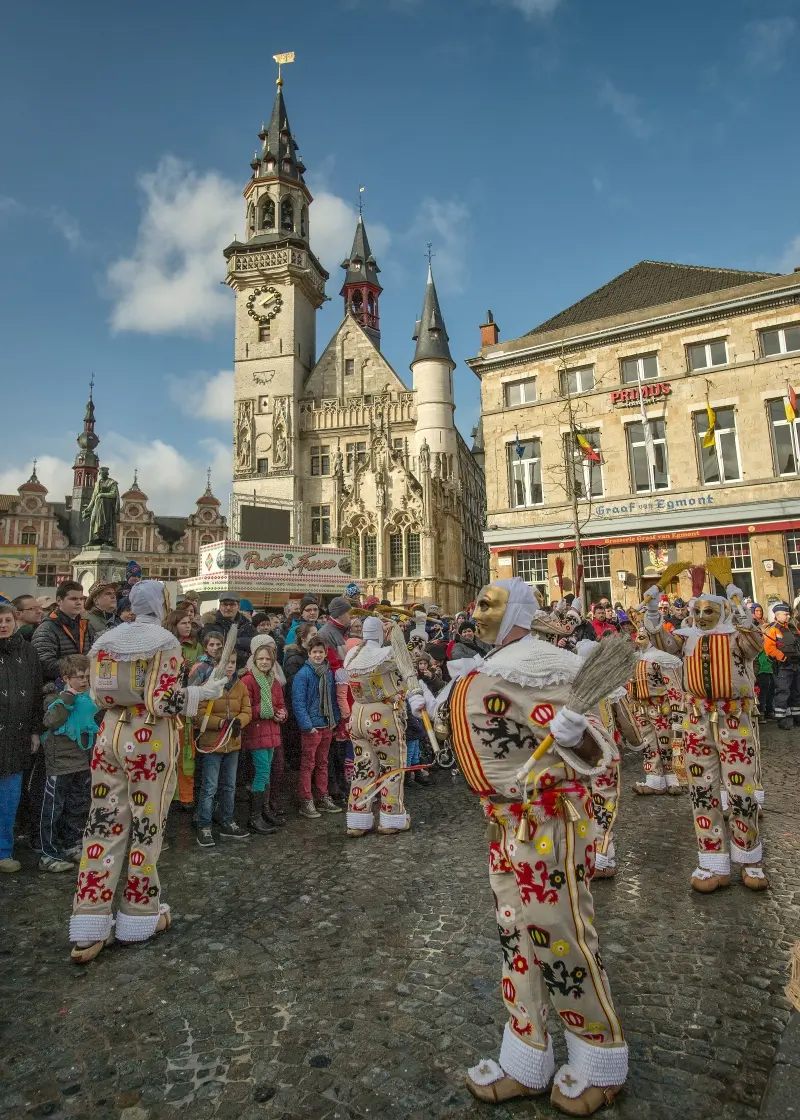
Social roles, norms, and values are temporarily reversed. Those at the bottom of the social ladder are allowed to poke fun at those in power for a while.
Like many festivals in Flanders, Carnival has its roots in the Catholic festive tradition. It is celebrated on the Sunday, Monday, and Tuesday immediately preceding Lent. It was a final indulgence of abundance before the scarcity of Lent began. Carnival actually dates back even further, as the Catholic Church drew inspiration for the festival from the Roman Saturnalia, a pagan festival. That Roman carnival turned the world upside down for a moment: servants became masters, and women and men swapped roles.
The Aalst Carnival is the best-known and largest carnival celebration in Flanders. Its origins date back to the Middle Ages.
In its current form, it dates back to 1851, when the carnival parade took place for the first time. Men who couldn’t afford a costume dressed up in their wives’ hand-me-downs, which earned them the nickname “Voil Jeanet.” Over the years, the “Voil Jeanet” acquired a few signature accessories: a fur coat, a baby carriage, a birdcage with a herring…
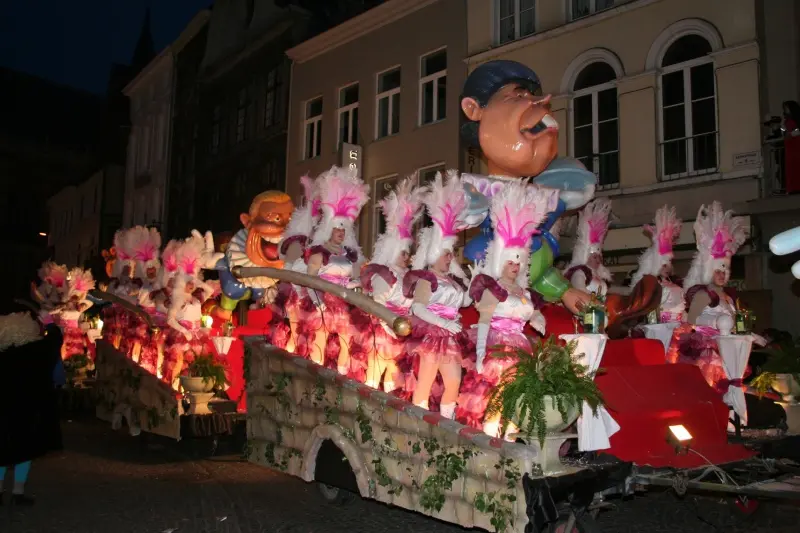
Other recurring figures include the Aalst city giants, such as “Ons Paula” and the “Ros Balatum” (a parody of Dendermonde’s Ros Beiaard). The Aalst Gilles stand out. They originated in the late 1920s, modeled after the Gilles of Binche. There, these characters have been around for centuries. With the sound of their clogs, bells, and drums, they announce three days of carnival. They wear masks and hats adorned with ostrich feathers and throw oranges around.
This story was created by Geheugen Collectief for FAAM – Virtual Museum.
 ErfgoedApp
 ErfgoedApp
 ErfgoedApp