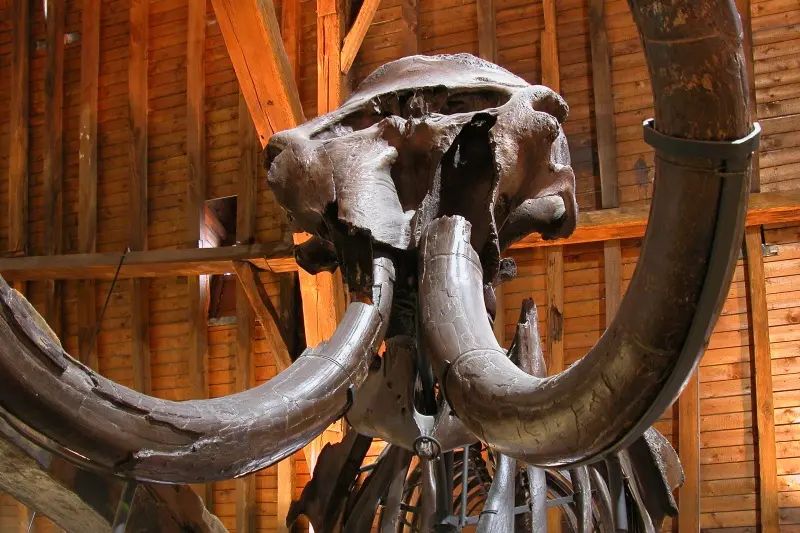
A crate of beer. That’s what it took to convince Hugo De Potter, a crane operator, to help retrieve a giant mammoth skull from a sand quarry in Dendermonde in the late 1960s. Today, that skull completes the mounted mammoth at the Vleeshuis Museum in Dendermonde.
The Dendermonde mammoth isn’t the only piece of animal heritage in Flanders. Countless museums and scientific institutions have extensive collections of animal remains that they display and study. These remains don’t even have to be from extinct species. For example, the AfricaMuseum boasts a stuffed elephant. In Bokrijk, on the other hand, live farm animals are part of the museum’s scenery.
Animals also hold cultural heritage value in other ways. They play a crucial role in many intangible traditions: finch-setting in West and East Flanders, the dog swim in Sint-Baafs-Vijve, the horse race at Waregem Koerse... Although these sometimes centuries-old traditions are increasingly being adapted into more animal-friendly forms—often following protests by animal rights organizations. For example, since 2026, Geraardsbergen has replaced the drinking of live fish during the Krakelingenfeest with an alternative.
Many animal breeds were historically of great economic importance, but this is no longer the case today. For many tasks, we no longer use animals, or we use different breeds instead. As a result, these animal breeds are at risk of disappearing—something that heritage organizations are trying to prevent.
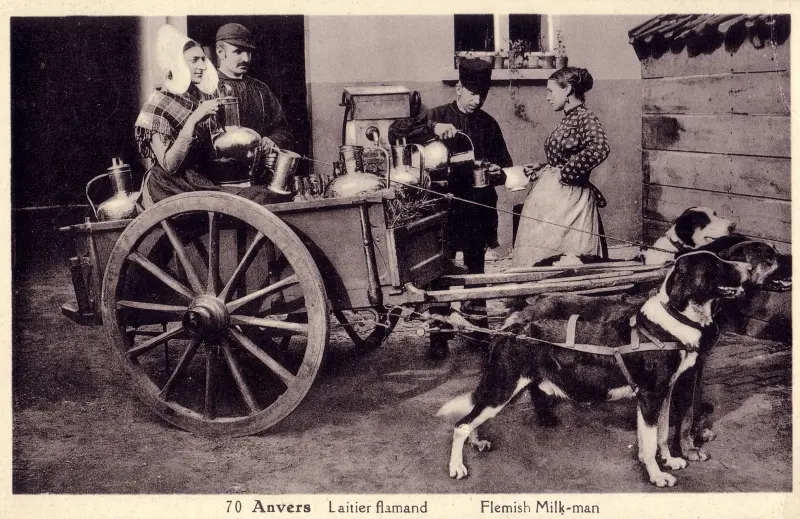
For example, around 1900 there were as many as 150,000 draft horses in Belgium, which were used to haul carts carrying milk and other products.
After World War II, motorized vehicles took over their role. Today, organizations such as the Center for Agricultural History tell the story of these vanished draft animals. The non-profit organization De Belgische Mastiff is attempting to reintroduce the extinct Belgian draft dog through breeding.
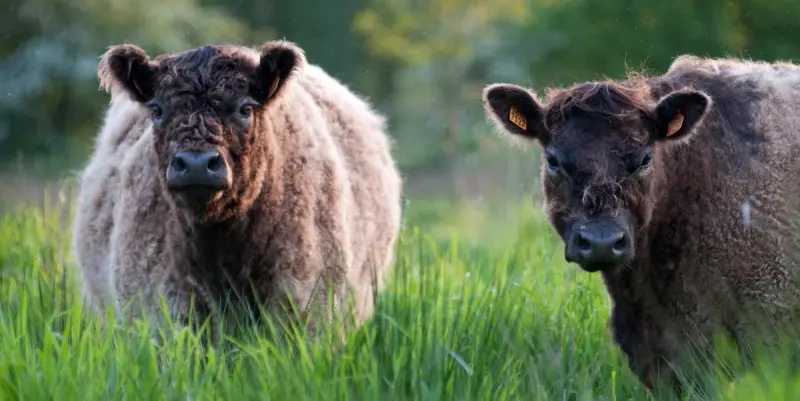
Finally, there are also animals that help preserve cultural heritage. Cattle and sheep graze on cultural landscapes such as the heathlands of the Kempen to restore or preserve their historic appearance. Trained birds of prey rid churches and other monuments of pigeons that leave behind kilos of acidic droppings everywhere. Animals can therefore also cause damage to heritage. For example, woodworms eat their way through a great deal of immovable heritage.
This story was created by Geheugen Collectief for FAAM – Virtual Museum.
 ErfgoedApp
 ErfgoedApp
 ErfgoedApp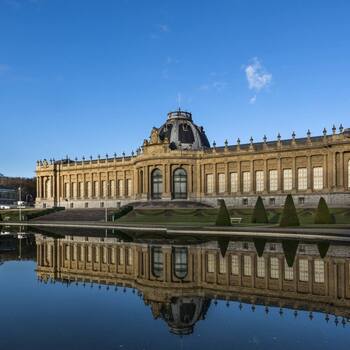
 ErfgoedApp
 ErfgoedApp