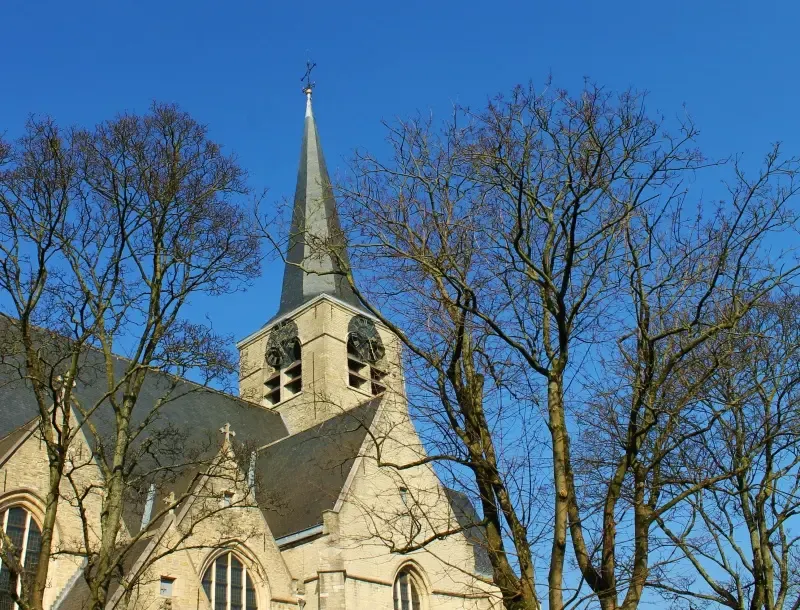
A beautiful Baroque painting in a simple village church—you don’t see that everywhere. Anthony van Dyck (1599–1641) was only twenty years old when he ended up in Zaventem.
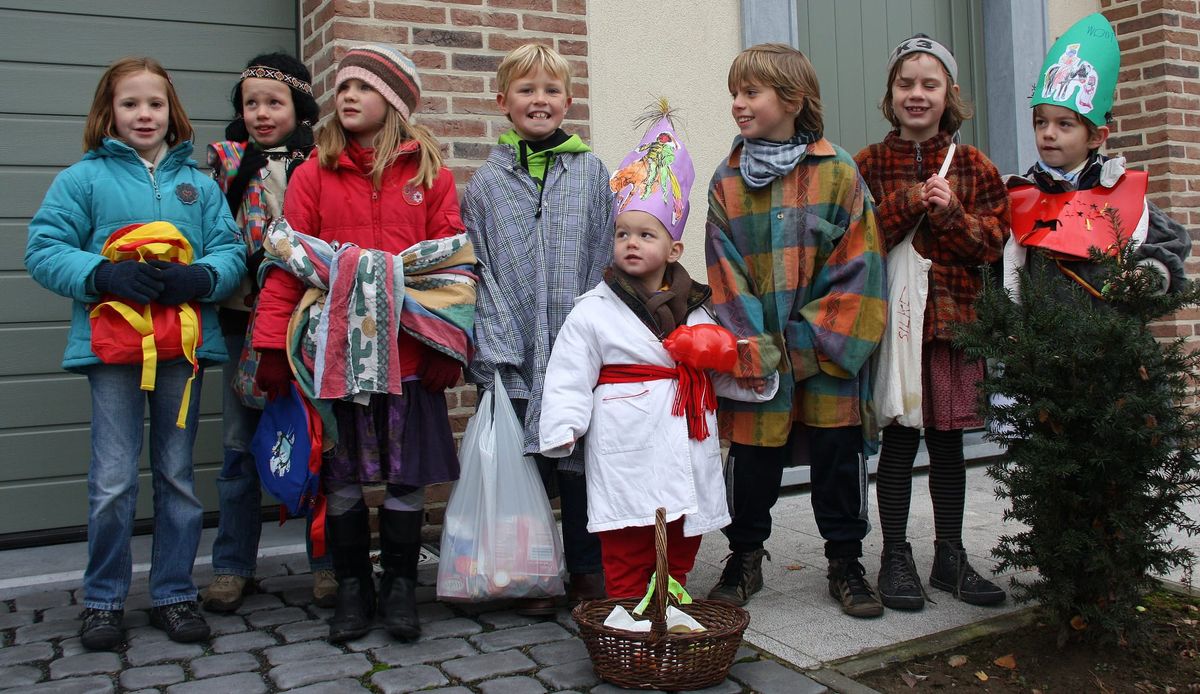
He was on his way to Italy, but fell in love with a woman who lived near the church: Isabella. To convince her father, he painted the church’s patron saint—Martin of Tours—for free. Martin was a young Roman officer. One chilly evening, he saw a half-naked beggar sitting by the city gate. He took pity on him and cut his red woolen cloak in half so the poor man could keep warm. Saint Martin is still celebrated in our region on November 11.
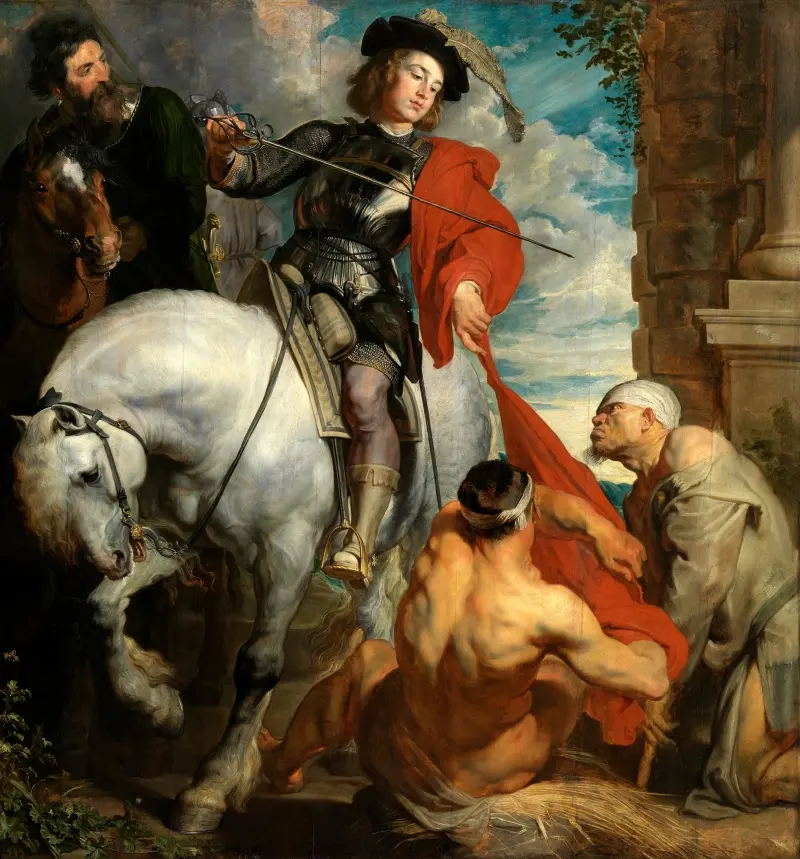
Unfortunately, Anthony Van Dyck was unable to convince Isabella’s father. He traveled on to Italy, where he studied the paintings of the Italian masters. There, he laid the foundation for his career. He eventually became the most important painter in Antwerp and, later, in England. Every English nobleman and noblewoman wanted him to paint their portrait. He no longer worked for free.
Van Dyck’s *Saint Martin* has hung in the church in Zaventem for four hundred years. The residents have remained proud of it all this time. In 1739, there were plans to sell the painting. The parishioners then resisted the men who came to collect it with force and the ringing of church bells. And they won.
This story was created by OKV for FAAM - Virtual Museum.
 ErfgoedApp
 ErfgoedApp
 FAAM
FAAM