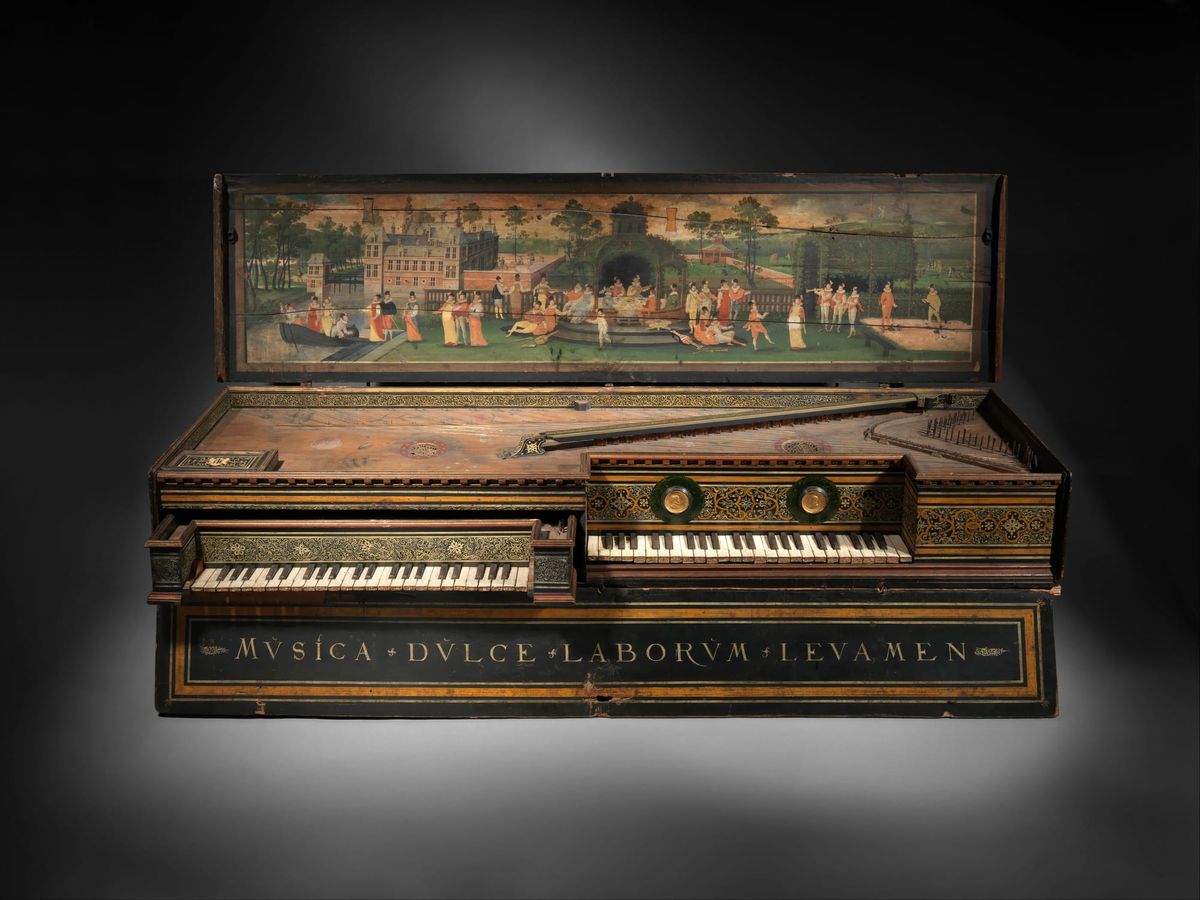
In 16th- and 17th-century Antwerp, one family was as pivotal to the development of keyboard instruments as the Italian Stradivarius was to stringed instruments. His family likely came from Germany, but Hans Ruckers was born in Mechelen. Around 1575, he moved to Antwerp. He built virginal and harpsichords—simple keyboard instruments that were the precursors to the piano. Ruckers not only played an important role in the technical evolution of the instrument but also became known for the elegant design and rich finish of his harpsichords. And, of course, their excellent sound. His signature “HR” became a true mark of quality.
In the 15th and 16th centuries, the Low Countries were true trendsetters in the European music world. When the Eighty Years’ War threw the Low Countries into turmoil starting in 1568, many composers and musicians sought refuge elsewhere. Italian music subsequently took the lead. However, instrument makers and music publishers remained highly influential in major trading cities such as Antwerp.
Wealthy—and even less wealthy—citizens increasingly surrounded themselves with art, and music was part of that.
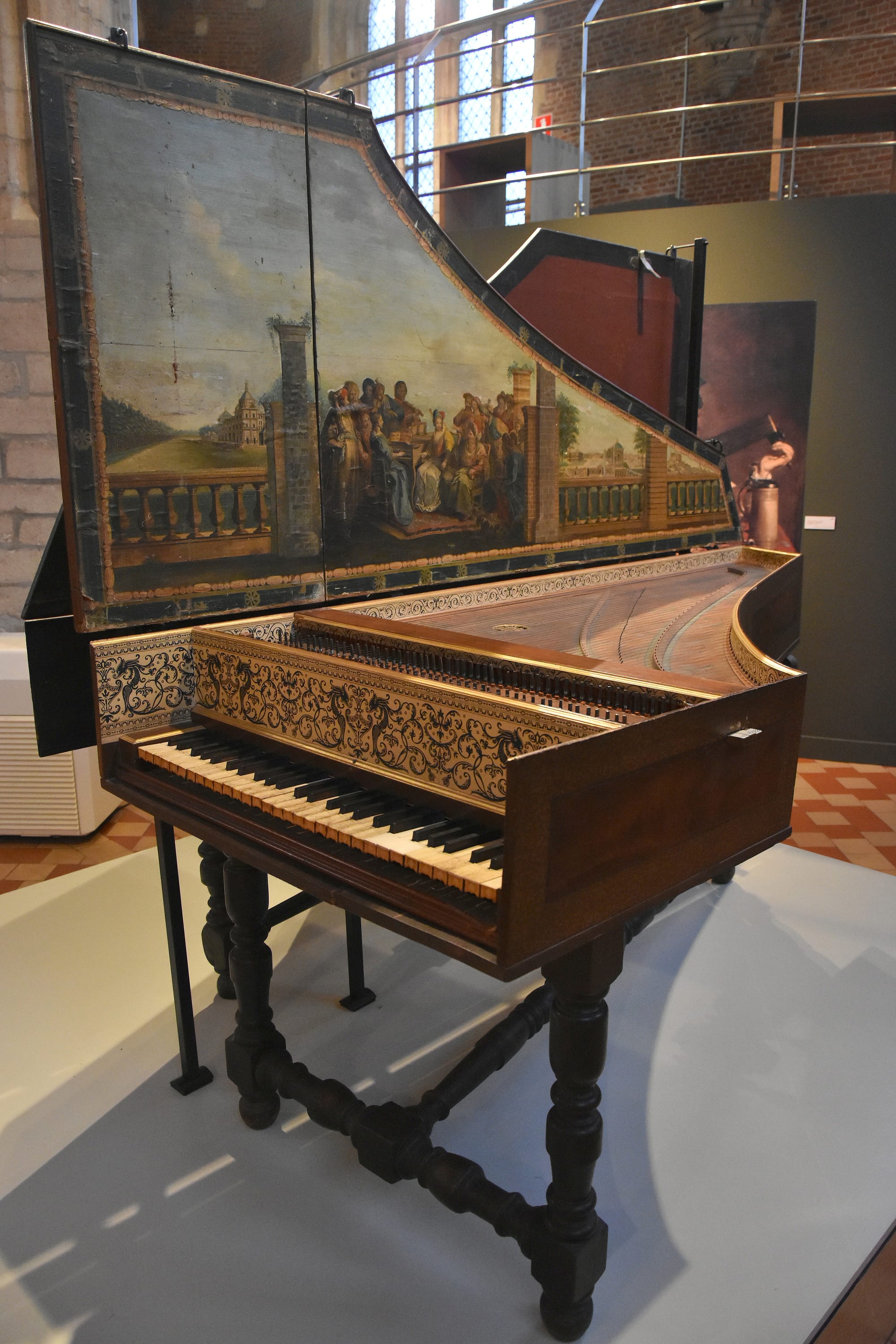
The sounds that had previously been heard mainly in churches and at the great courts now found their way into domestic settings. Ruckers’ virginal and harpsichords were, by definition, domestic instruments: they are depicted in numerous paintings and engravings from that period in a bourgeois setting. Even rebels such as the Geuzen presented themselves as amateur musicians, often performing in the vernacular.
Hans Ruckers established a well-organized workshop. His eldest son, Joannes, later took over. Some 1,500 instruments were crafted in the workshop. About 130 of them have been preserved. You can admire them in music museums all over the world. Around the middle of the 17th century, the family’s golden age came to an end, but their instruments remained highly sought after throughout Europe until the end of the 18th century thanks to their exceptional tonal beauty. After that, the piano increasingly took center stage.
This story was created by Geheugen Collectief for FAAM – Virtual Museum.
 ErfgoedApp