Those who go to live abroad may also die there. It is no coincidence that perhaps the oldest physical trace of the Jewish presence in Belgium is a tombstone dating from 1255–1256. It was found in Tienen and bears a Hebrew inscription: ‘A stone was engraved and placed at the head of Lady Rebecca, daughter of Moses. She died in 5016. May she rest in the Garden of Eden.’
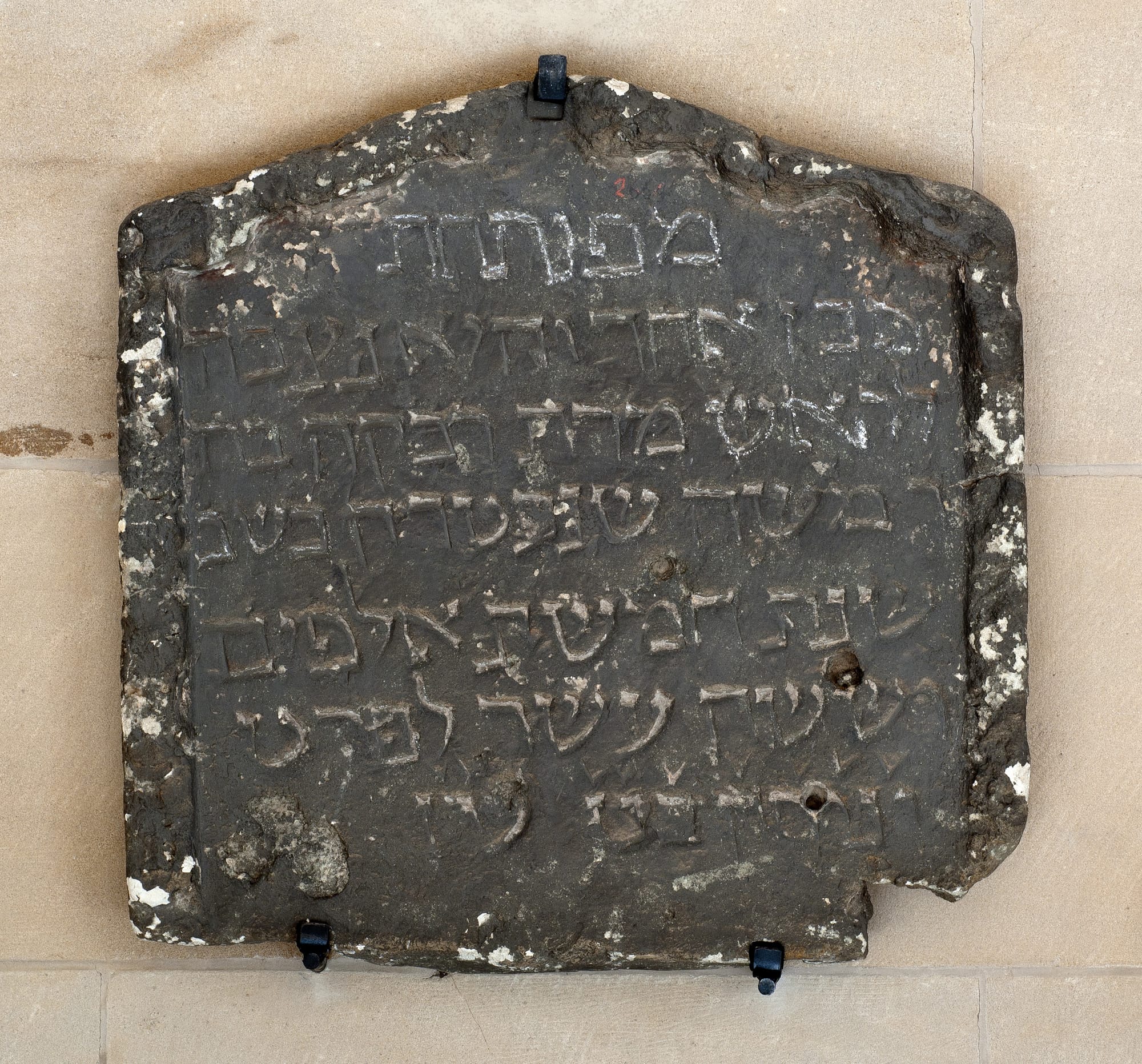
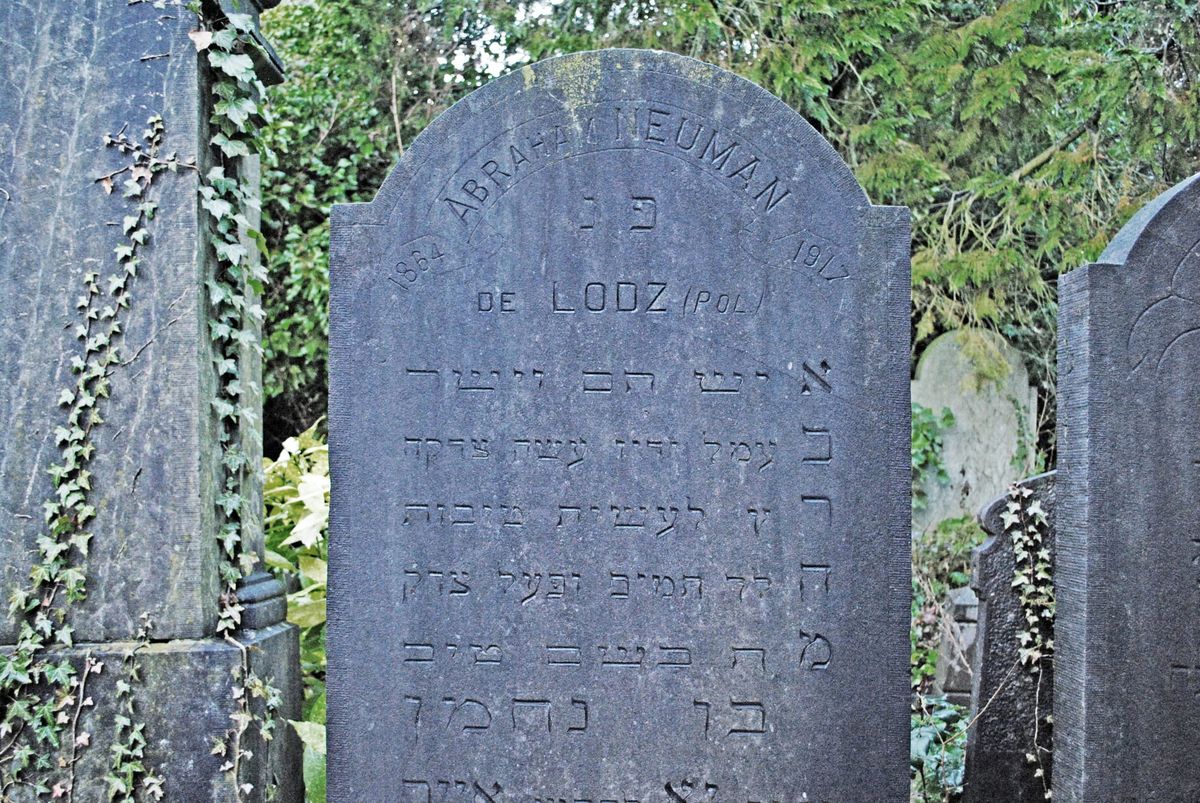
There are physical traces of a Jewish presence in Belgium during the Middle Ages. Place names such as “Jodenveld” and official archival documents do attest to the existence of Jewish cemeteries. An archaeological find like the one in Tienen is rare. For the 19th and early 20th centuries, however, there is one place that tells us something about the lives of Jews through the dead: the cemetery on Dieweg in Uccle.
Since 1879, it has had a Jewish section, where nearly 2,500 people from 15 countries have found their final resting place. There you will find epitaphs in Dutch, French, English, German, Hebrew, and Yiddish. They include sayings from the Talmud as well as literary quotations.
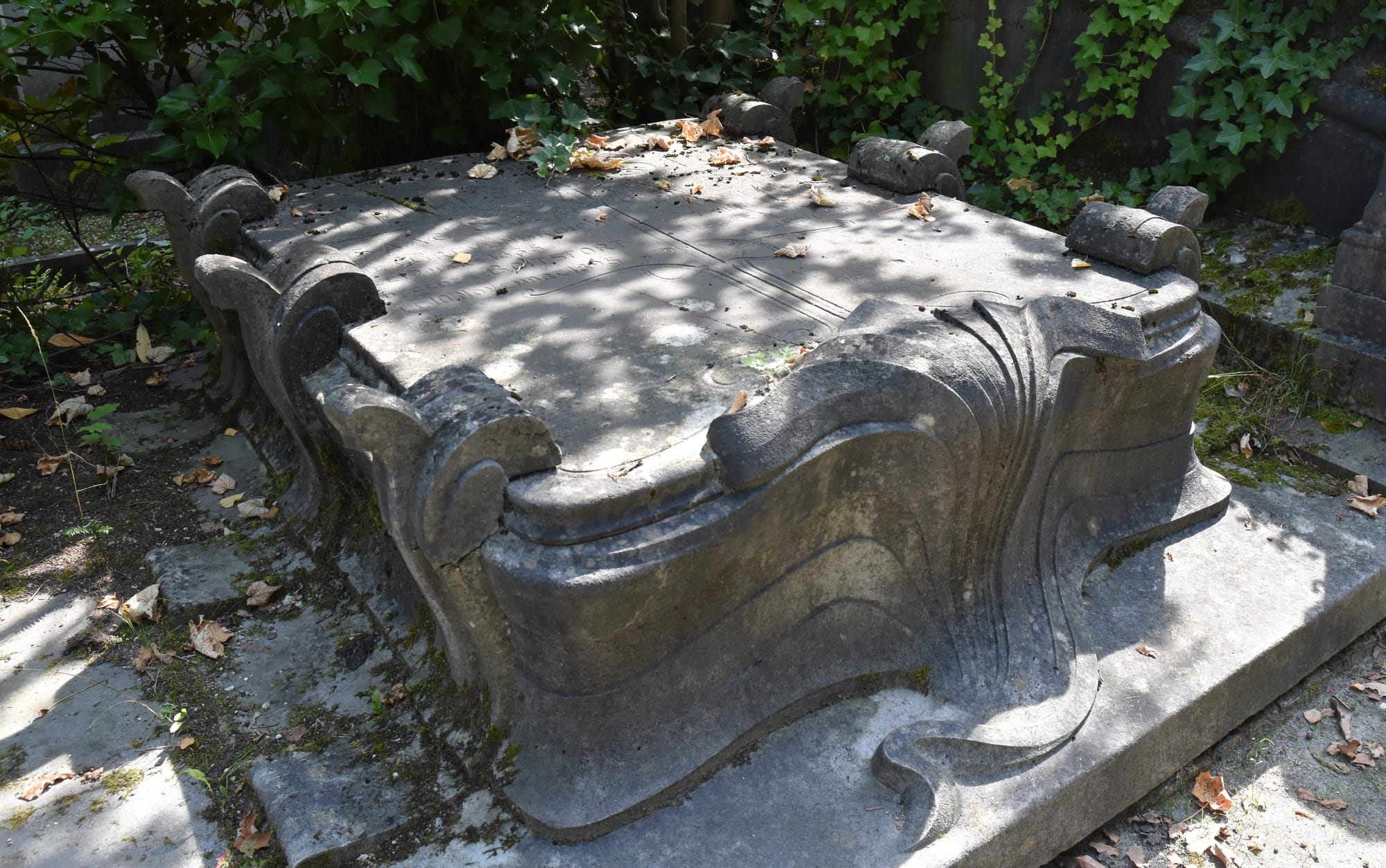
This street bears witness to the diversity of the Jewish community before and after 1900. Here you’ll find the grave of the assimilated Rodolphe Lévy, who was killed on the Yser Front in April 1918, as well as simple gravestones of Orthodox Jews who had just immigrated from Eastern Europe. Others, however, flaunted their worldly success, such as the Stern couple, who commissioned Art Nouveau architect Victor Horta to design an elegant gravestone.
For many Orthodox Jews, the “eternal resting place” is to be taken literally.
However, in Belgium, a burial plot is only granted for a maximum of 50 years. That is why most Jews from Antwerp choose to be buried in the Netherlands (Putte): there, it is possible to obtain a permanent burial plot.
The Dieweg Cemetery has been out of use since 1958. It was designated a protected site in the late 1990s.
This story was created by Geheugen Collectief for FAAM – Virtual Museum.
 ErfgoedApp
 ErfgoedApp
 ErfgoedApp