
The Catholic Church and the fishing industry have had a strong connection for centuries. Fishing was a dangerous profession, and fishermen often sought solace in their faith. Coastal residents, for example, often prayed to Mary, whom they called Our Lady of the Dunes.
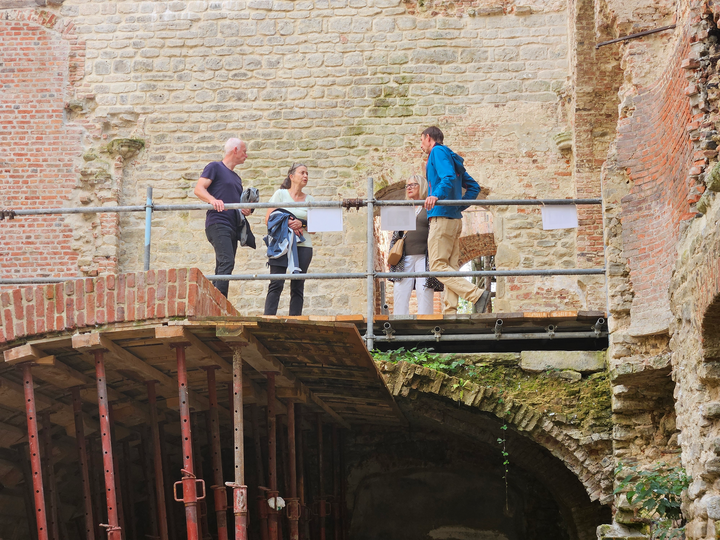
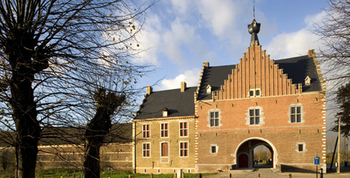
Conversely, the Church itself was actively involved in fish farming. This was certainly true of the Cistercian nuns of Herkenrode Abbey, near Hasselt. The abbey was founded in 1182 by the Count of Loon. Especially from the 16th century onward, it grew into a large, wealthy community of nuns.
Abbeys such as Herkenrode owned extensive lands. They leased these out for farming, livestock raising, and fish farming. After all, fish was an important part of the sisters’ diet, as they were not allowed to eat meat on Fridays or during Lent. Thanks to fish farming, they always had a supply of fresh fish. They sold the surplus to bring in additional income.
Starting in the 13th century, the nuns of Herkenrode had artificial ponds, or “wijers,” built around their abbey to raise carp.
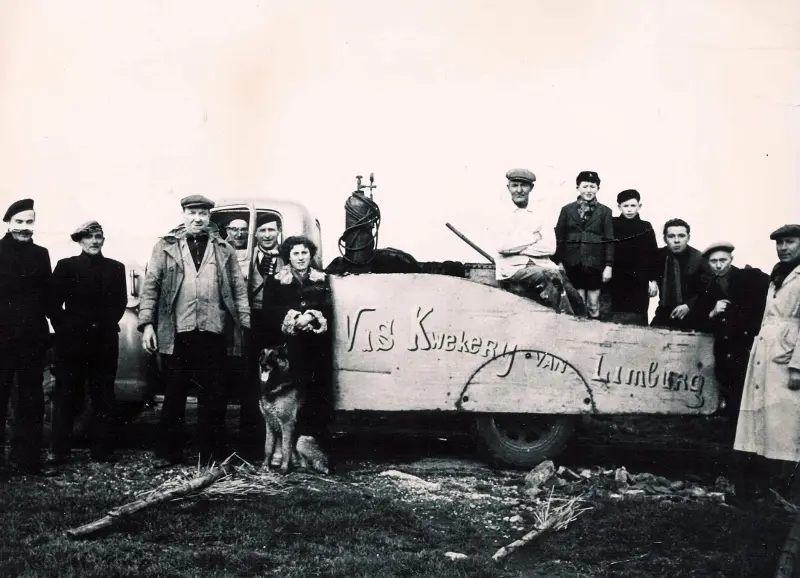
Wells left behind in the landscape by peat or iron ore mining were often used for this purpose. Water was channeled from the Demer River via canals. The abbey also owned fish ponds elsewhere in Limburg, such as on the “Bouckrak” estate—later known as Bokrijk.
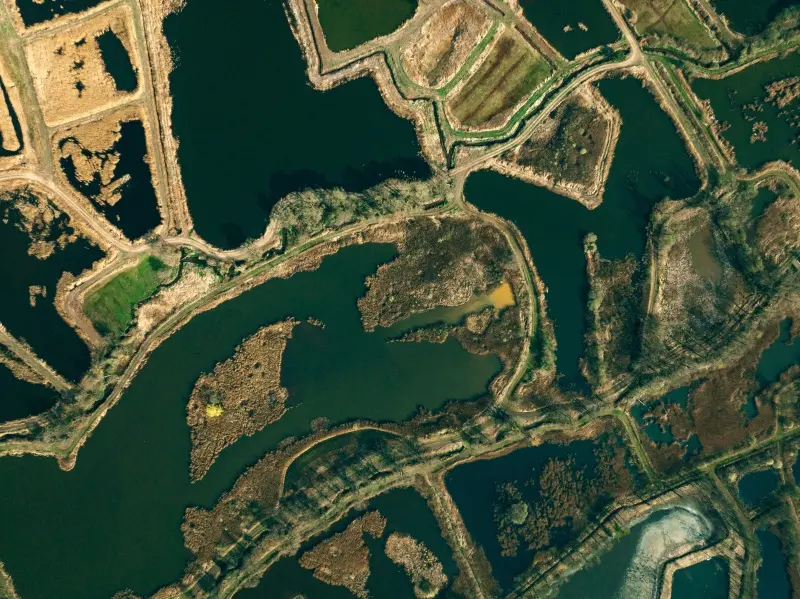
During the French Revolution, the abbey closed and was sold. The ponds of Herkenrode disappeared. Nevertheless, the sisters’ fish farming had a major impact on the surrounding landscape. In the 19th century, commercial fish farmers continued the tradition of fish farming. The area around the former abbey is still crisscrossed with (former) fish ponds, known as “wijers.”
This story was created by Geheugen Collectief for FAAM – Virtual Museum.
 ErfgoedApp
 ErfgoedApp
 ErfgoedApp
 ErfgoedApp