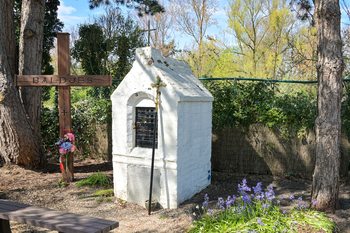
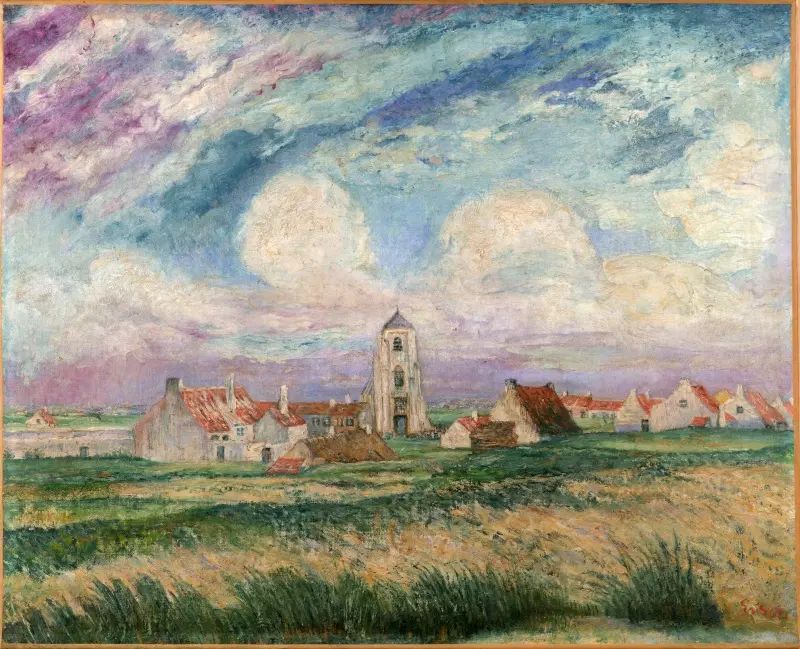
The Church of Our Lady of the Dunes in Mariakerke, Ostend, dates back to the 11th century. During the 19th and 20th centuries, this picturesque little fishing church set against the backdrop of the dunes attracted the attention of many artists, who immortalized the church and its surroundings on canvas.
The Ostend painter James Ensor is even buried there in the cemetery.
The church also has a long-standing connection to fishing. For centuries, it stood at the heart of a thriving fishing community. An old fisherman’s cottage still stands near the church building, and inside the church you’ll find an altar topped with a beautiful 17th-century wooden statue of Mary. It is surrounded by photos of fishing boats and messages of gratitude from fishermen.
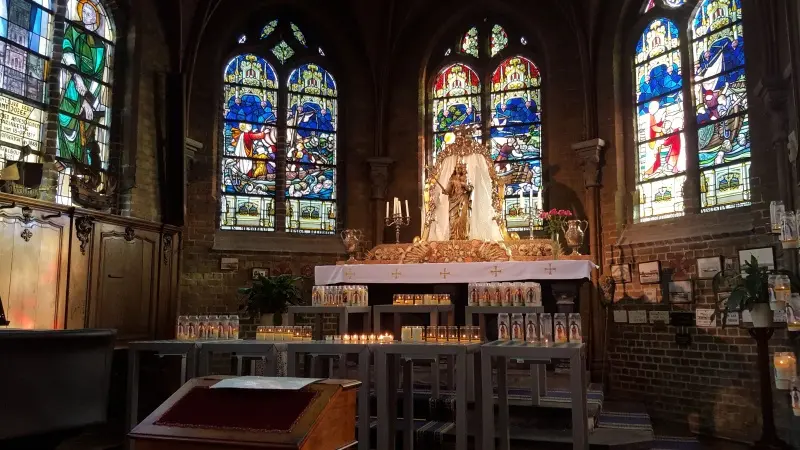
Known as Stella Maris—Star of the Sea—Mary has been the patroness of fishermen since the Middle Ages. Fishing was a dangerous profession, in which men often drowned or ships were lost. Any protection was welcome. According to a folk tale, this church was even built by a fisherman who had prayed to Mary for help during a storm and returned home safely.
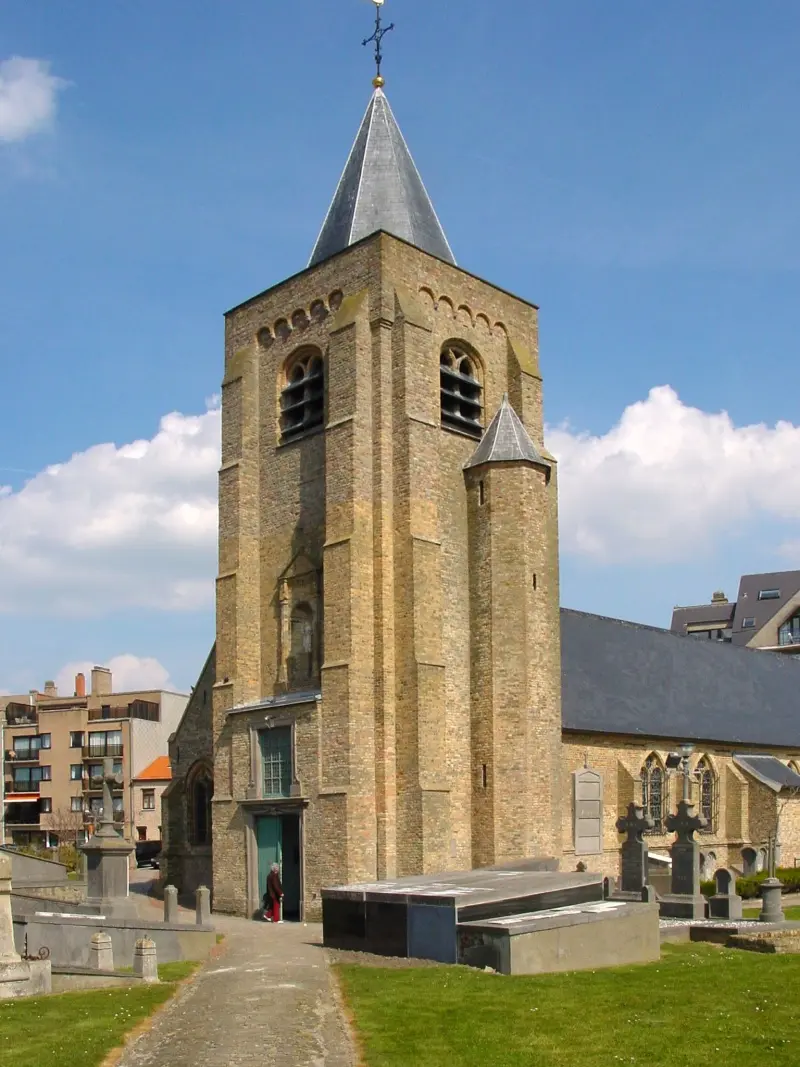
Along the Flemish coast, you’ll find several small churches and chapels dedicated to Mary, often named Our Lady of the Dunes. But fishermen also prayed to other saints for a good catch or a safe journey. One such saint was Saint Idesbaldus, a former abbot of Ten Duinen Abbey in Koksijde. The shrimp fishermen on horseback from Oostduinkerke, on the other hand, would head to the local St. Nicholas Church. After all, St. Nicholas—Sinterklaas—is also a patron saint of fishermen. The Catholic Church also had close ties to fishing in other ways. For instance, many abbeys and monasteries in the Southern Netherlands were actively involved in fish farming themselves.
This story was created by Geheugen Collectief for FAAM – Virtual Museum.
 ErfgoedApp
 ErfgoedApp
 ErfgoedApp