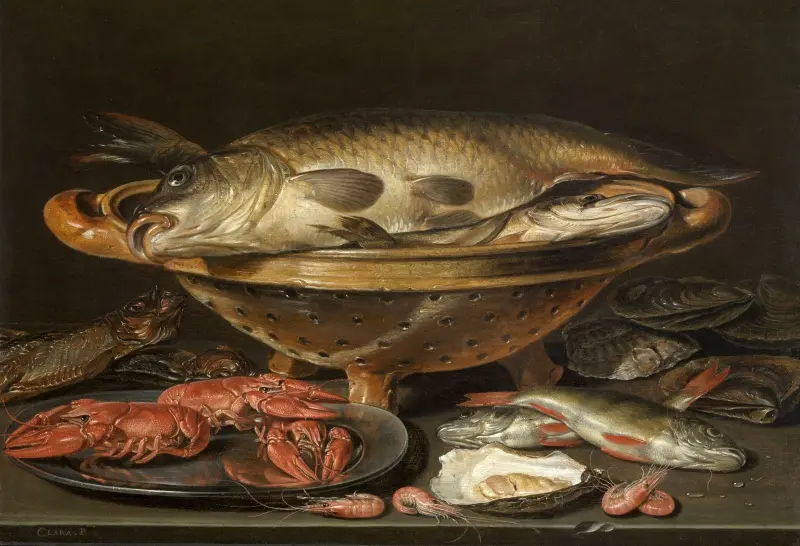
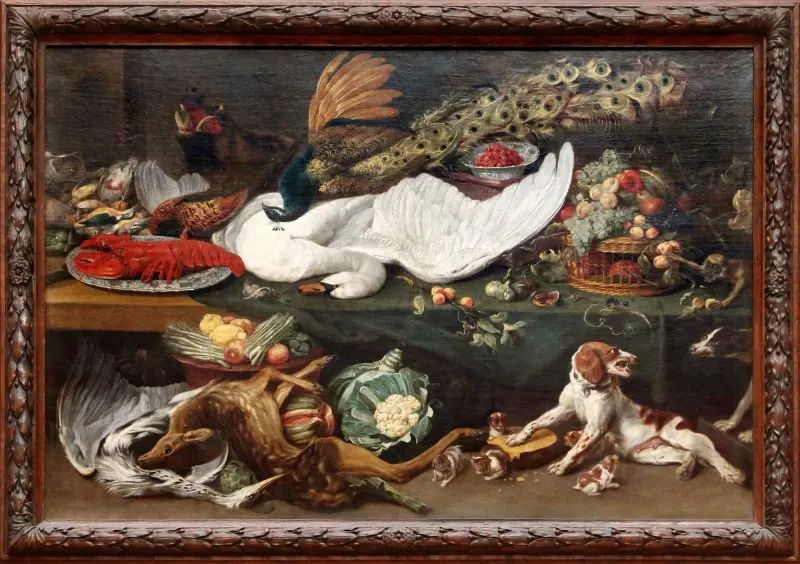
Wild boars and deer, fighting for their lives during the hunt. Lavish still lifes depicting catches of fish and hunting trophies. In the 17th century, painters such as Frans Snijders and Clara Peeters began to focus on animals for the first time. Animal art developed into a genre in its own right.
Humans and animals have lived together for millennia. Over the centuries, animals have held various meanings for us: a source of food, a danger, a companion to whom we’ve grown attached… Because animals are so important to humans, it’s no surprise that they’ve inspired a great deal of art. But until the 16th century, animals played a supporting role in art in our region. They could be found in the background of paintings, adorned buildings, or appeared in the margins of books. Often, they symbolized something negative.
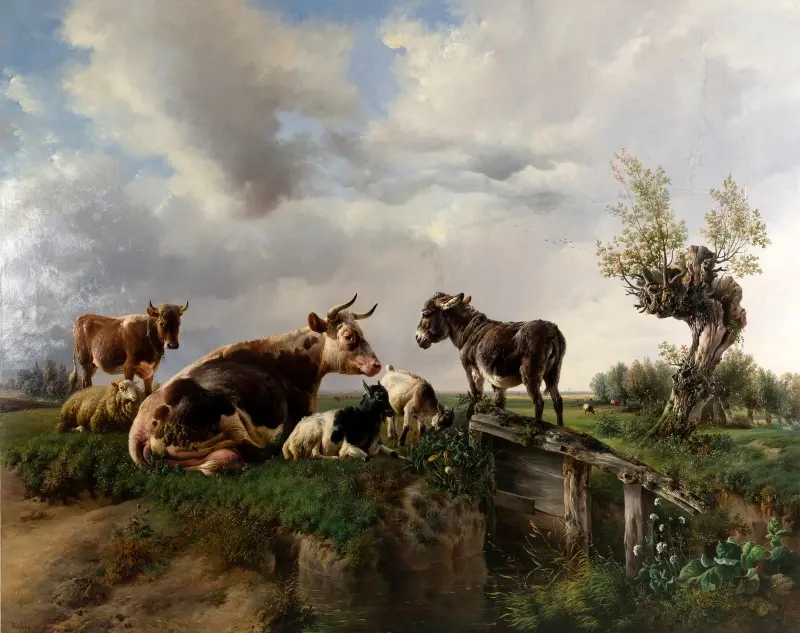
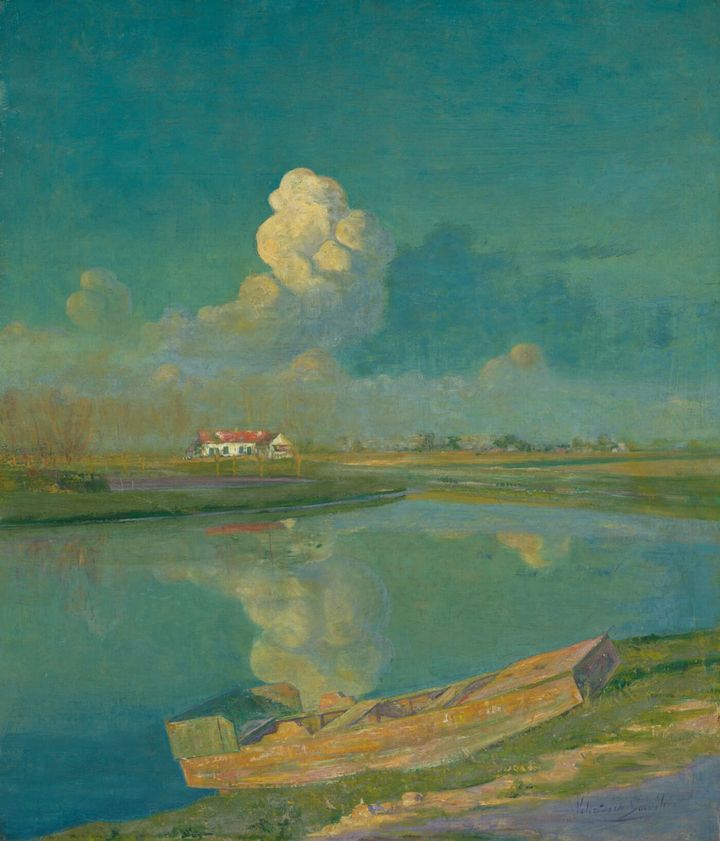
In the 19th century, animal art experienced a second golden age. Sculptors such as Josuë Dupon and painters such as Louis Robbe depicted animals in their natural habitats and in rural settings.
That animal art was romantic art. It was tailored to the urban middle class, who were fascinated by life outside the modern city.
But animals in the city were also popular. For example, Henriëtte Ronner-Knip was known for her paintings of domestic cats.
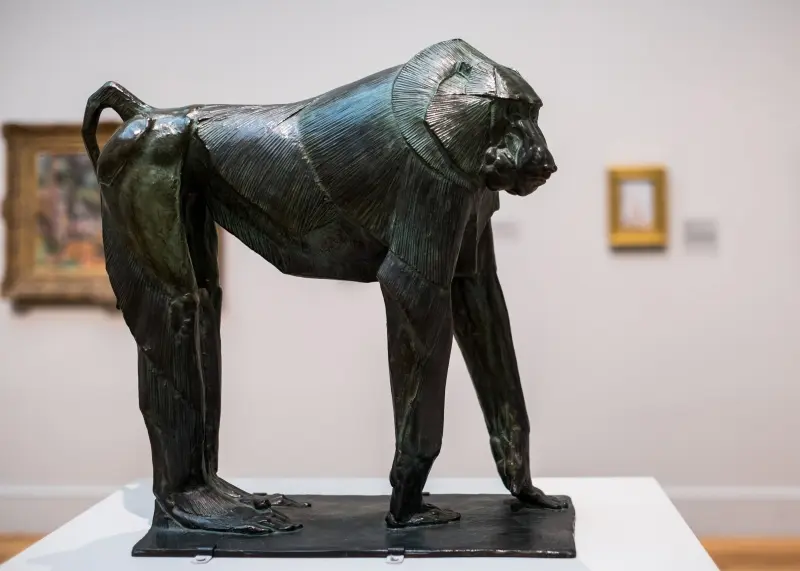
In addition to Flemish meadows and forests, zoos were the prime locations where 19th-centuryanimal painterssuch as Karel Verlat found inspiration and drew from live models. Their 17th-century predecessors had already done the same. For example, Jan Brueghel used the animals from the private collection of Archdukes Albrecht and Isabella in Brussels as models.
Animal art experienced a decline in the 20th century. Artists such as Alfred Ost—who loved to paint draft horses—kept the genre alive. To this day, there are artists who place animals at the center of their work.
That’s how Koen Van Mechelen became world-famous with hisCosmopolitan Chicken Project. The goal? To crossbreed all the chicken breeds in the world to create the universal chicken.
This story was created by Geheugen Collectief for FAAM – Virtual Museum.
 ErfgoedApp
 ErfgoedApp
 ErfgoedApp
 ErfgoedApp
 FAAM
FAAM