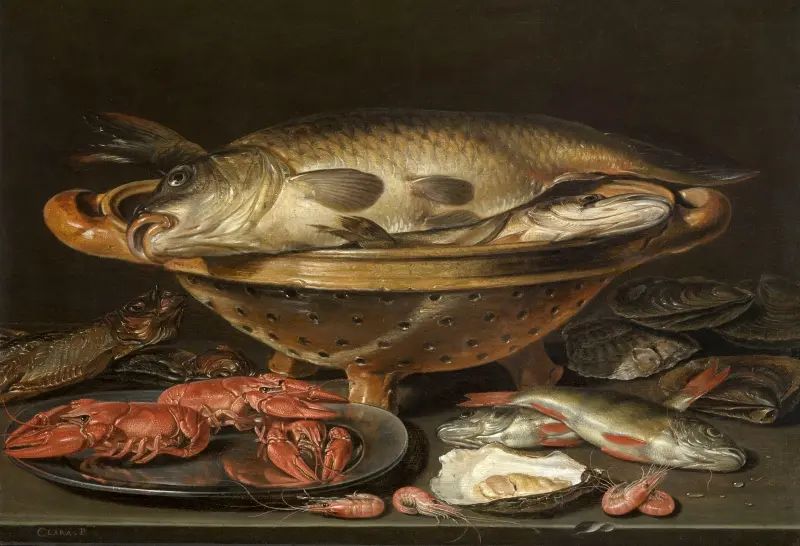
A pike, perch, oysters… this 17th-century painting depicts a whole menu of fish. You can almost smell the distinctive aroma. What makes this work special?
The painter is a woman, Clara Peeters. Historians know little about her, even though she was one of the few leading female painters of her time.
Her works were successful from her hometown of Antwerp all the way to Spain. Peeters mainly painted still lifes—carefully selected compositions featuring objects such as flowers, plants, or food. After all, women were not allowed to study painting and therefore did not learn to paint human models. That is why painting genres such as scenes from the Bible were off-limits to them.
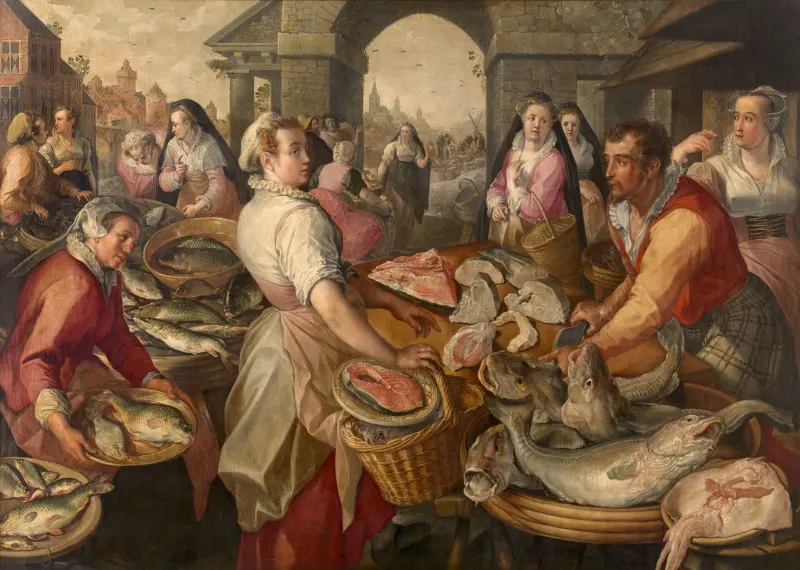
Clara Peeters wasn’t the only painter who had a soft spot for fish. Starting in 1550, artists regularly depicted these creatures in their paintings, for example when portraying a bustling city market. After 1600, still lifes became increasingly popular.
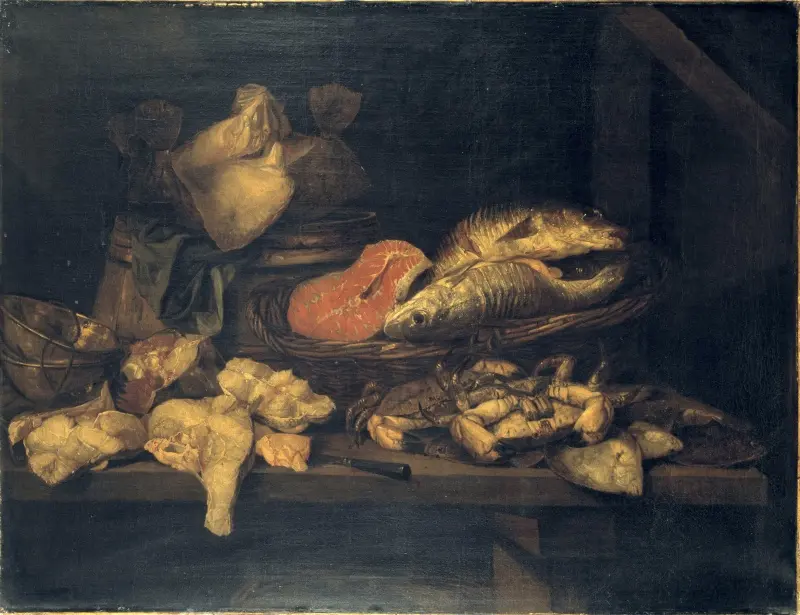
Why the preference for fish? Animals from the seas and rivers were a popular food source in the Southern Netherlands during this period. Large abbeys raised freshwater fish such as carp in their own ponds. This was more profitable than agriculture.
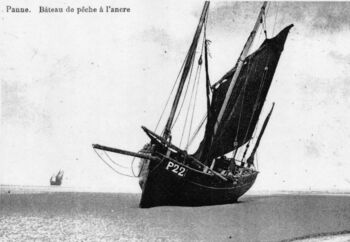
Along the coast, fishing boats caught herring, the only saltwater fish to feature in Peeters’ work. Just like the one in the painting, they were often smoked to extend their shelf life. Shrimp, such as those in the foreground of Peeters’ work, were caught by fishermen on horseback, who plowed through the North Sea surf with their nets.
This story was created by Geheugen Collectief for FAAM – Virtual Museum.
 ErfgoedApp
 ErfgoedApp
 ErfgoedApp
 ErfgoedApp