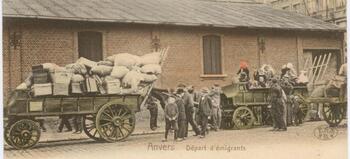
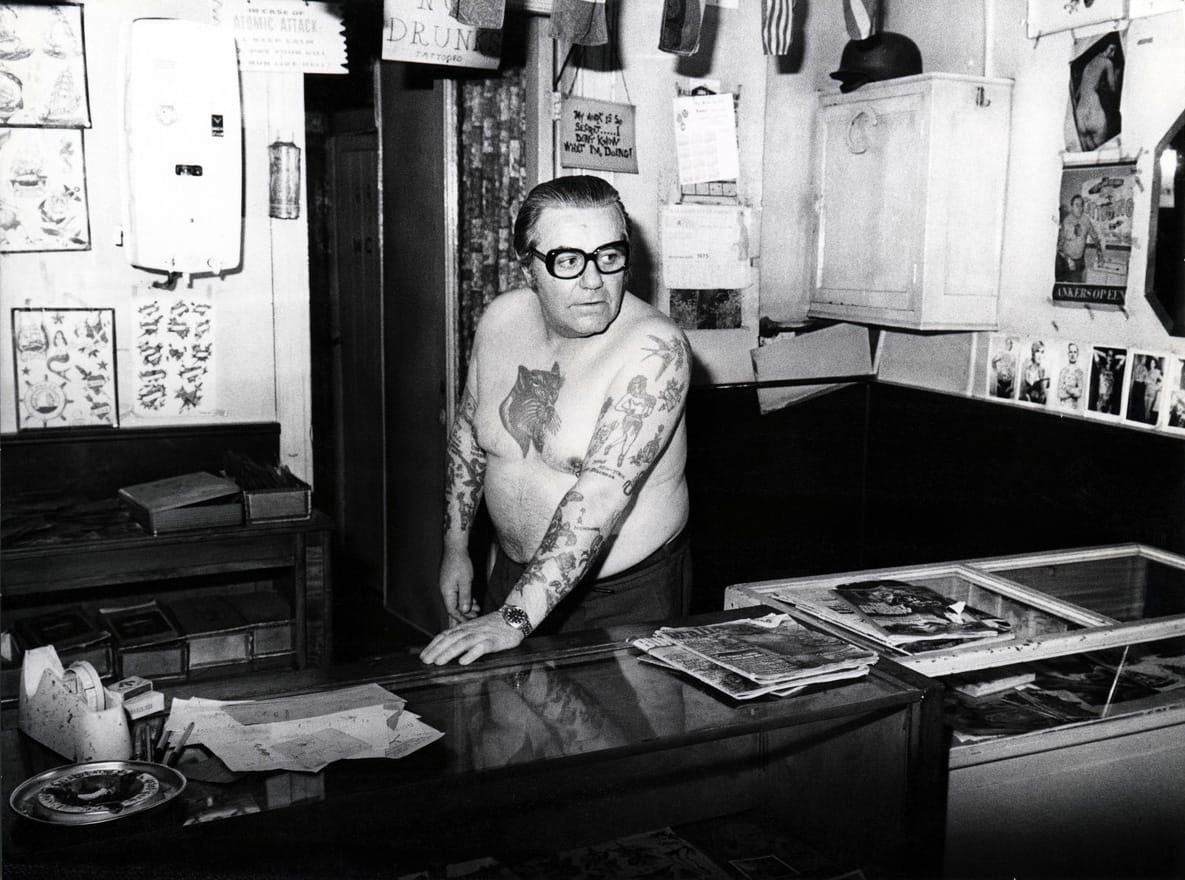
One of the first tattoo parlors in Belgium was Joe Pancho’s, which opened in 1943 on Schippersstraat in Antwerp. He was originally from Chicago and had several nicknames: Professor Tattoo, Sailor Pancho … It was no coincidence that his shop was located in Antwerp’s harbor district.
Over the centuries, public opinion has associated tattoos with various groups: criminals, soldiers, circus performers (“freaks”), or motorcyclists. But perhaps most of all with sailors.
European sailors initially tattooed one another on the ships themselves or in major port cities. Starting in the 15th century, they also came into contact with cultures around the world where tattooing had been practiced for centuries. Well-known are the voyages of James Cook in the 18th century to Polynesia, where he and his crew observed how body adornments held ritual, religious, or social significance. This is how the Polynesian word for tattoo entered the English language and later other Western languages as well.
With the invention of the electric tattoo machine in the late 19th century, the first specialized shops or studios began to appear in port cities, often run by former sailors such as Joe Pancho in Antwerp.
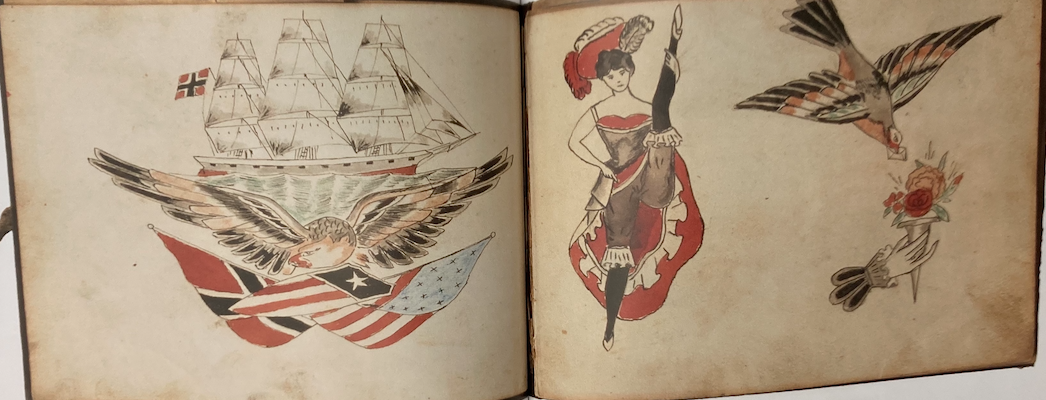
Tattoos featuring recurring motifs can serve to reinforce one’s identity as a member of a group. For example, in the 19th century, soldiers often had the names of places where they had served immortalized on their bodies as mementos. Sailors often chose tattoos of anchors, swallows, roses, or three-masted ships.
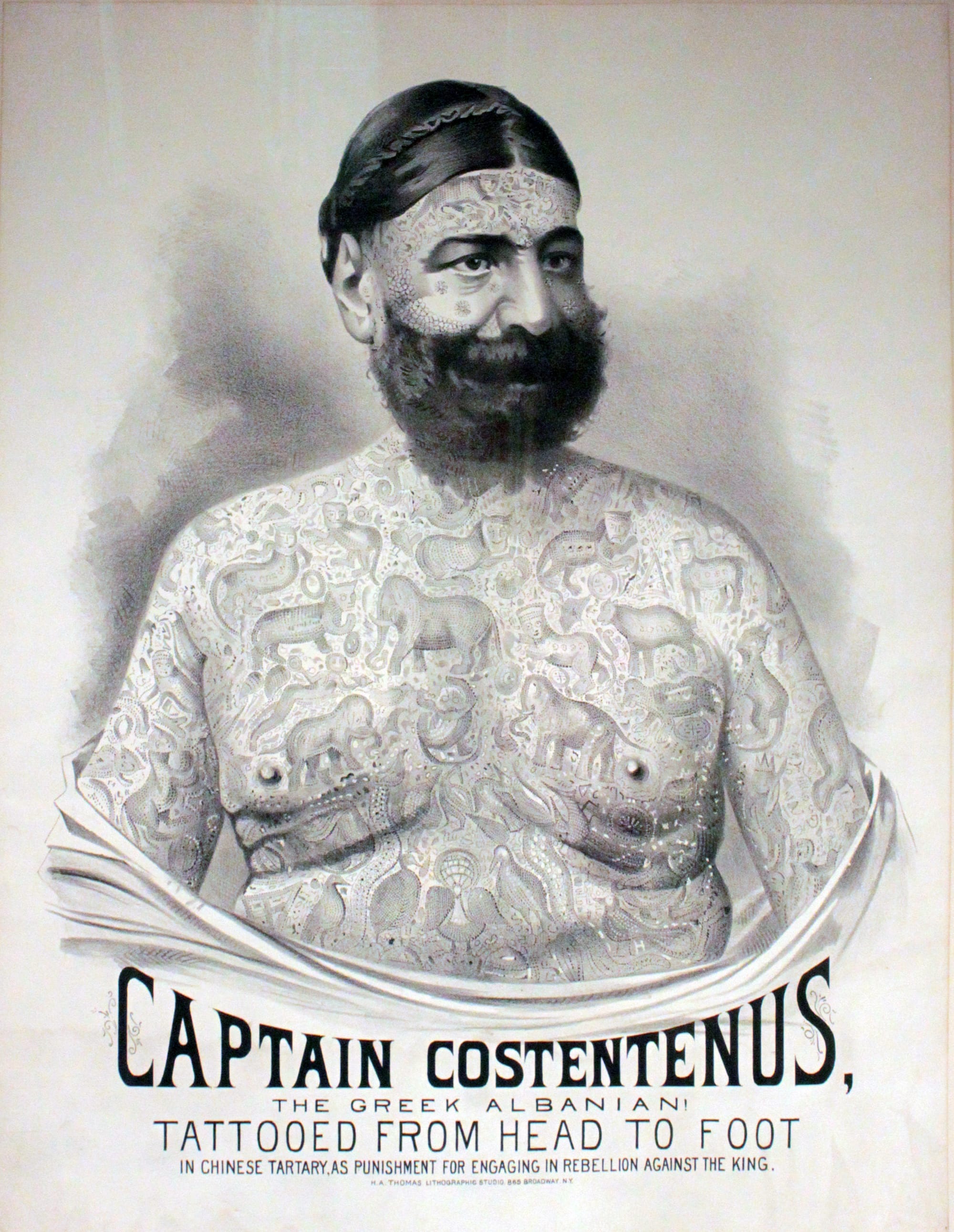
Tattoos could also serve the opposite purpose of helping people stand out as individuals. In the late 19th century, numerous heavily tattooed circus performers traveled the world and amazed audiences with their unique appearance.
When Janis Joplin and other rock stars began openly showing off their tattoos in 1970, it was also a form of individual self-expression. Unfortunately, throughout history, tattoos have also been used for the opposite purpose: to strip someone of their personality. The horrific camp tattoos that the Nazis applied to prisoners’ arms at Auschwitz are a testament to this. In this way, they literally reduced their victims to a number.
This story was created by Geheugen Collectief for FAAM – Virtual Museum.
 ErfgoedApp
 ErfgoedApp