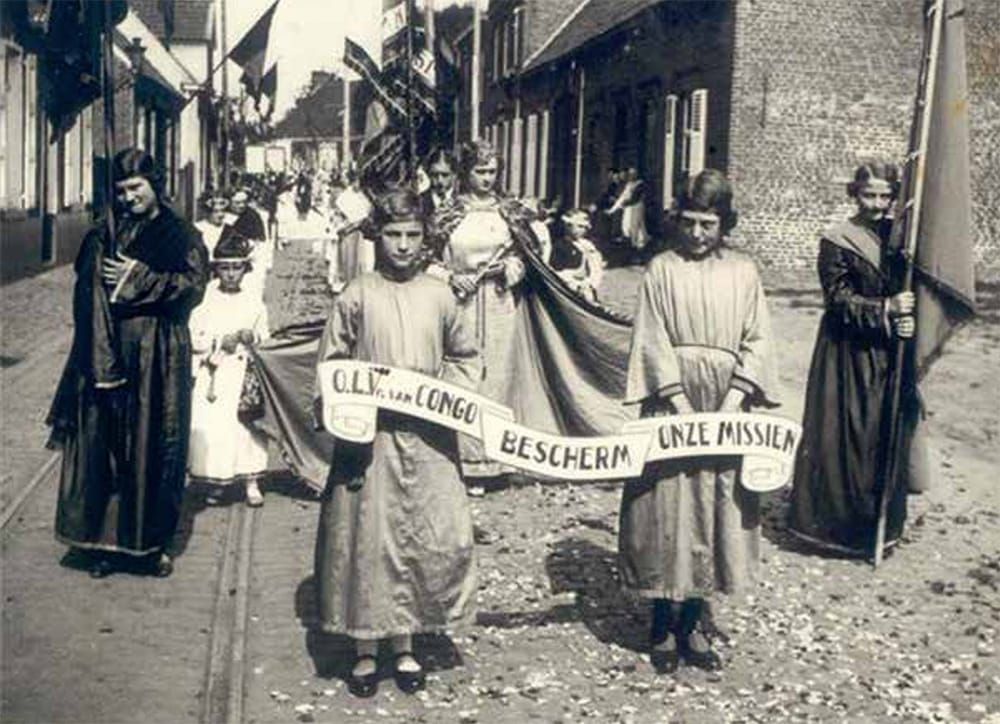
In the first half of the twentieth century, Flemish children collected the silver foil in which chocolate bars were wrapped. They brought it to school, where it was collected to support missionaries in the Congo.
The actual purpose of that silver paper is unclear. Did they ship that silver paper to the Congo, where it served some mysterious purpose for Congolese children? The actual purpose of that silver paper remains unclear. It is said to have been sold to dealers, who recycled the tin from the paper. The proceeds from the sale went to missionary work. But no trace has ever been found of factories that melted down silver paper. It is also said that collecting silver paper was actually an awareness-raising campaign. By collecting silver paper, Belgians felt connected to the colony. The nodding black child figurine, into which children could insert a coin, also contributed to this. Today, it is primarily a symbol of racism.
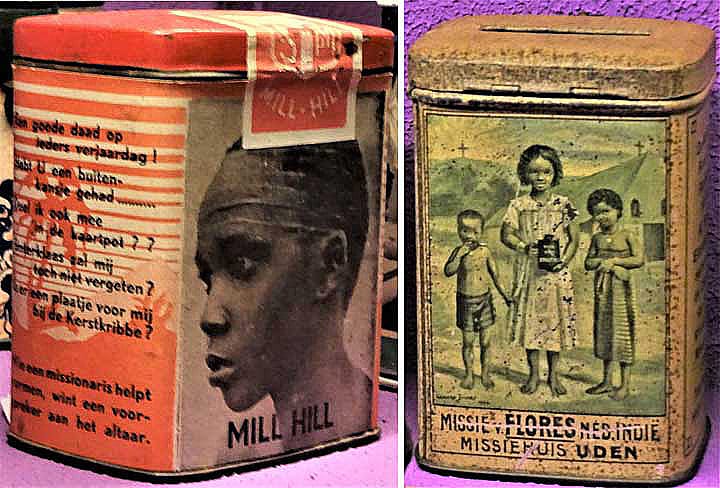
Children who saved the silver foil from their candy wrappers were engaging in small-scale charity. This practice was not limited to Belgium or Flanders. It also took place in the Netherlands, both for religious missionary work and for local charities such as children’s hospitals, summer camps, guide dog training programs, and tuberculosis prevention efforts.
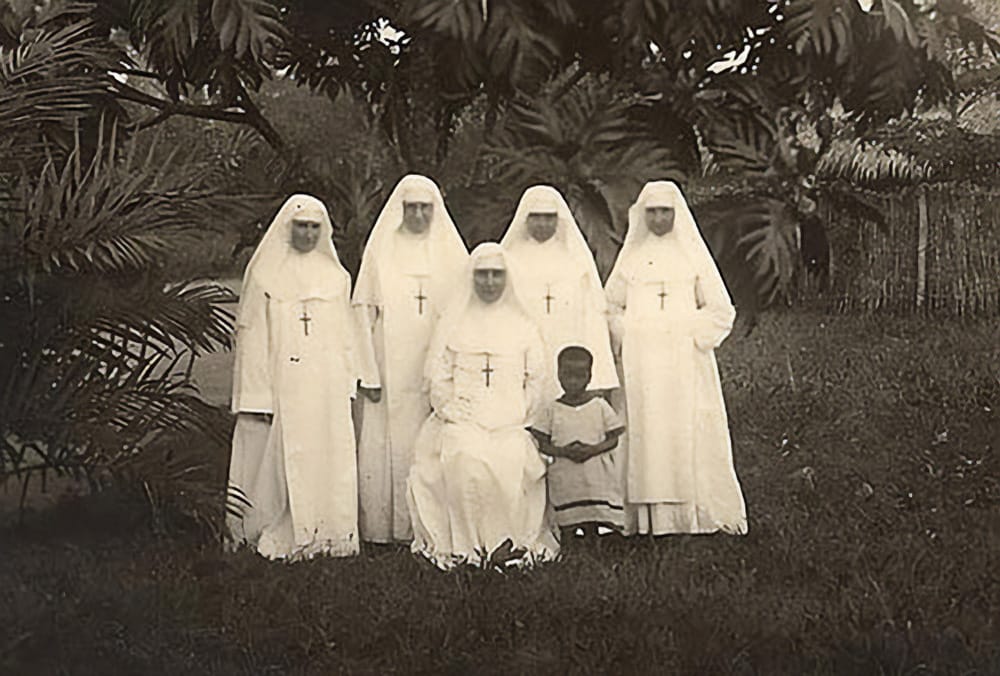
Despite the fond memories many Flemish people have of the fundraising campaigns, that missionary work was primarily part of the colonization of the Congo. The priests and nuns participated in the “civilizing” mission. They viewed the European way of life as superior to the African way.
There were already mission stations when the Congo was a private colony of King Leopold II. When the Belgian Congo was established in 1908, the mission stations became truly popular. The priests and nuns wanted to forcibly convert the Congolese people to Christianity. They also established hospitals. Until the 1950s, nearly all schools were run by missionaries. They preferred not to provide higher education to the Congolese people. In this way, the missionary work contributed to the exploitation and oppression in the Belgian colony.
This story was created by OKV for FAAM - Virtual Museum.
 ErfgoedApp
 ErfgoedApp
 ErfgoedApp
 ErfgoedApp
 FAAM
FAAM
 FAAM
FAAM