As a child, you're happy when you find a coin on the street—the start of a fortune. Fruit grower Raf Jansen was even luckier.
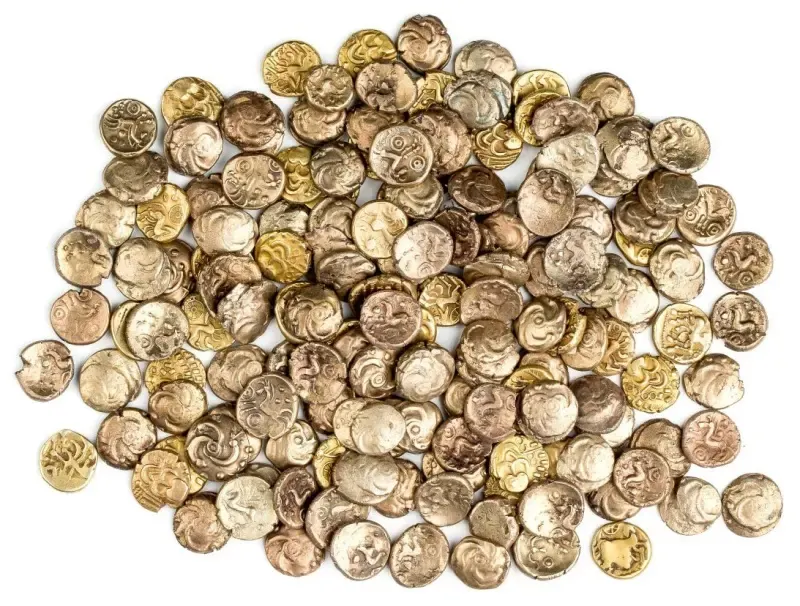
In 2000, he found 102 Gallic gold coins in his orchard in Vechmaal. Twenty years later, he found another 65 there. Two-thirds of them were minted by the Eburones in the first century B.C. The coins were likely minted during the reign of Ambiorix, their famous leader. The hoard may have been hidden when Ambiorix rebelled against the Roman conqueror Julius Caesar.
It is likely that the Gauls did not have their own currency before the arrival of the Romans. During the Gallic Wars (58–51 BC), the tribes used their new coins to pay soldiers or mercenaries.
After the war, the Roman occupiers put an end to Gallic coinage. The gold coins were replaced by smaller Roman bronze coins, which were better suited for purchasing everyday food or items.
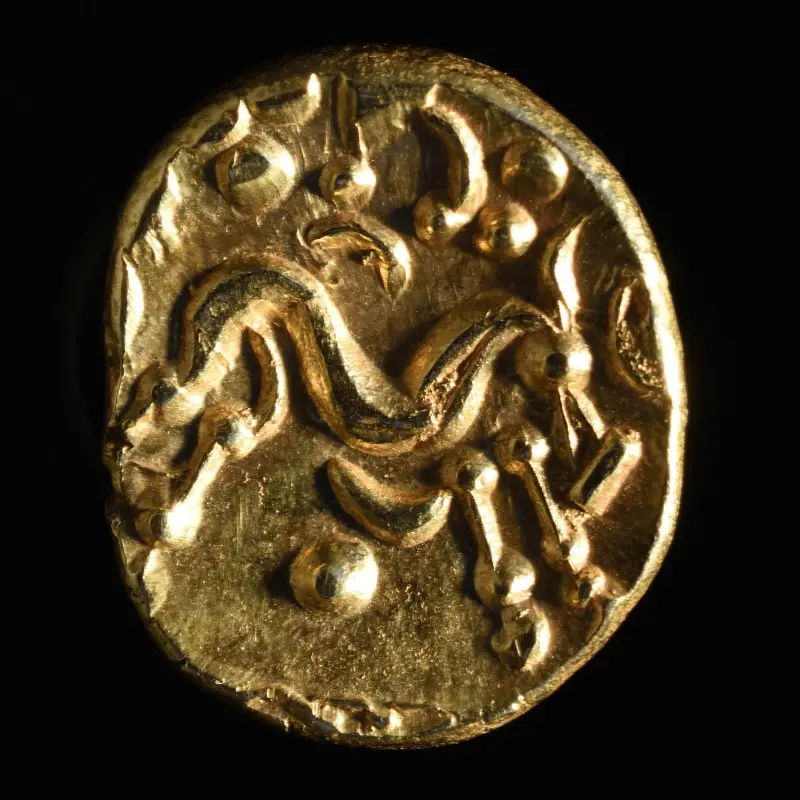
The Gallic coins were inspired by Roman or Greek examples. On the obverse, you can sometimes recognize the head of the Roman god Apollo. At other times, the head of the Macedonian king Philip II is completely distorted. The reverse often features a leaping horse, which symbolizes the skilled Gallic horseman.
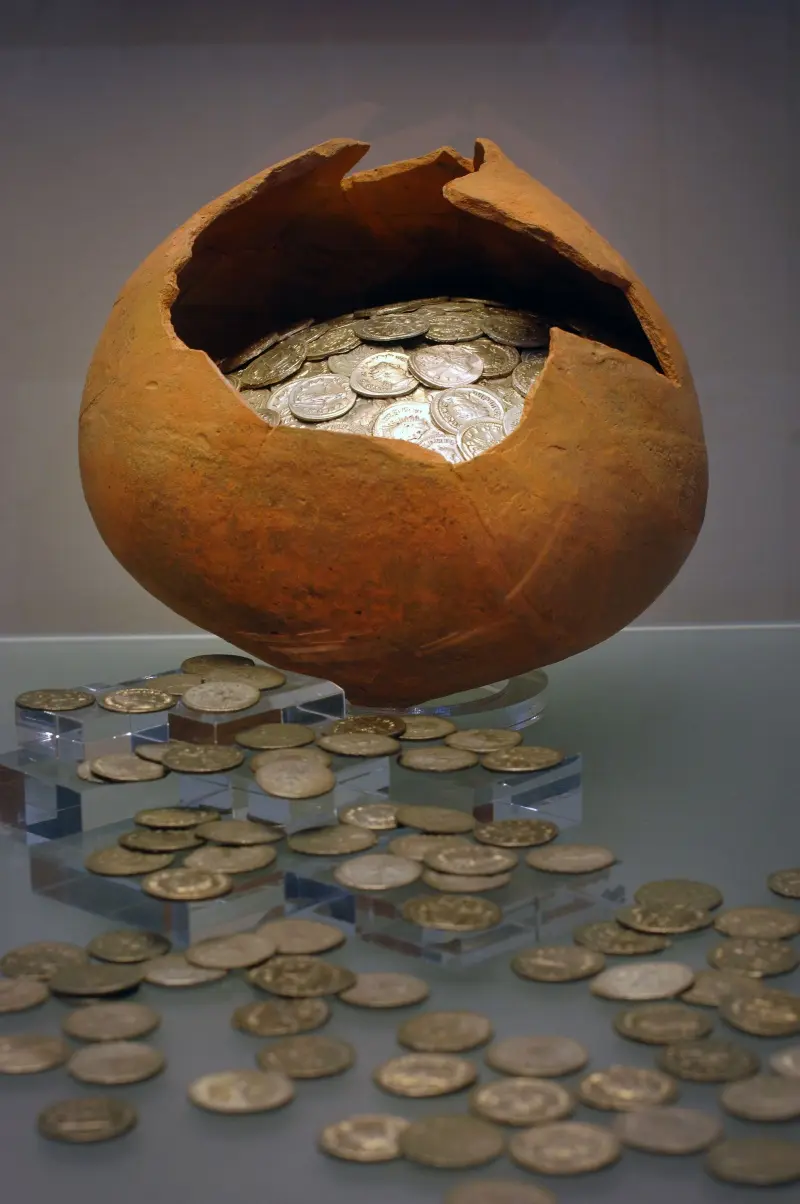
In turbulent times, the Gauls hid coins and valuable objects in a ceramic or metal pot or jug buried in the ground. As soon as the war was over, the owner would dig up his precious possessions. But sometimes he no longer had the chance to do so. He had fled with his family and never returned, or had been killed.
This story was created by OKV for FAAM—a virtual museum.
 ErfgoedApp
 ErfgoedApp
 ErfgoedApp
 ErfgoedApp
 FAAM
FAAM