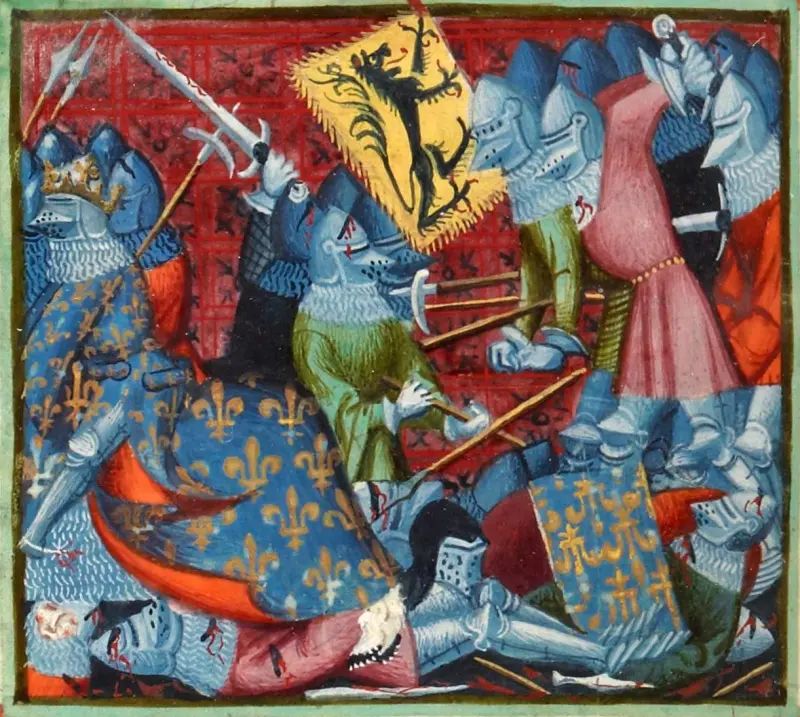
On July 11, 1302, an army of Flemish townspeople defeated the powerful French knightly army in the Battle of the Golden Spurs near Kortrijk. The battle was a high point in the larger conflict between the Count of Flanders, Guy of Dampierre, and the French king, Philip the Fair.
Since 1297, the latter had annexed large parts of the County of Flanders. Most nobles and patricians sided with the French. These patricians had often become wealthy through the cloth trade and controlled the city councils.
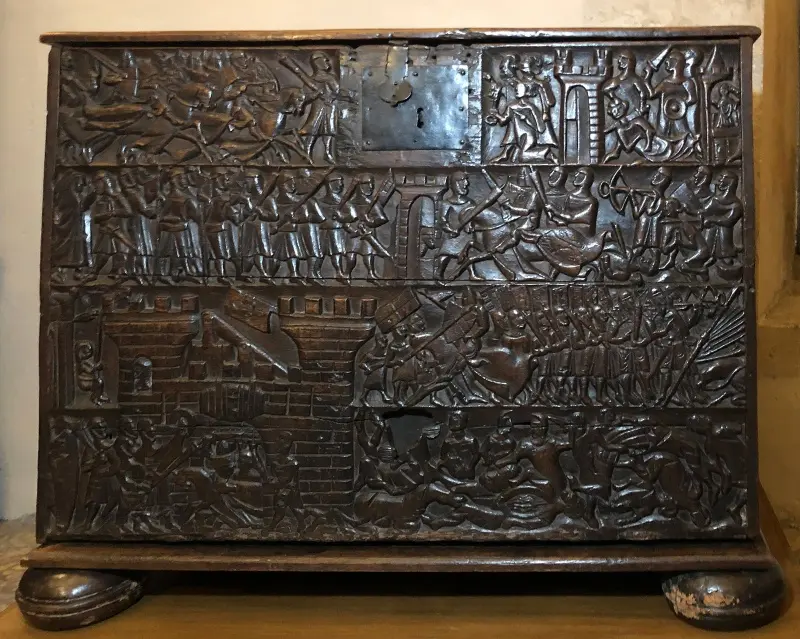
The count found an unexpected ally in the urban middle and working classes, organized into craft guilds (medieval trade associations). These were particularly active in the thriving textile sector. In the major cities of Flanders—Bruges and Ghent—a social struggle had been raging for some time against the ruling patricians, who imposed high taxes. Thanks to this alliance, the count could count on an army consisting largely of artisans. They faced off against the mighty French knightly army in the Battle of the Golden Spurs in 1302.
Success: for the first time since Roman times, an army of infantry managed to defeat armored cavalry.
The Battle of the Golden Spurs was later, in the 19th century, interpreted as a “national” struggle by the Flemish against a foreign ruler. In reality, it was a social and democratic struggle for greater autonomy, within the context of the feudal relationship between the French king (the feudal lord) and the Count of Flanders (his vassal).
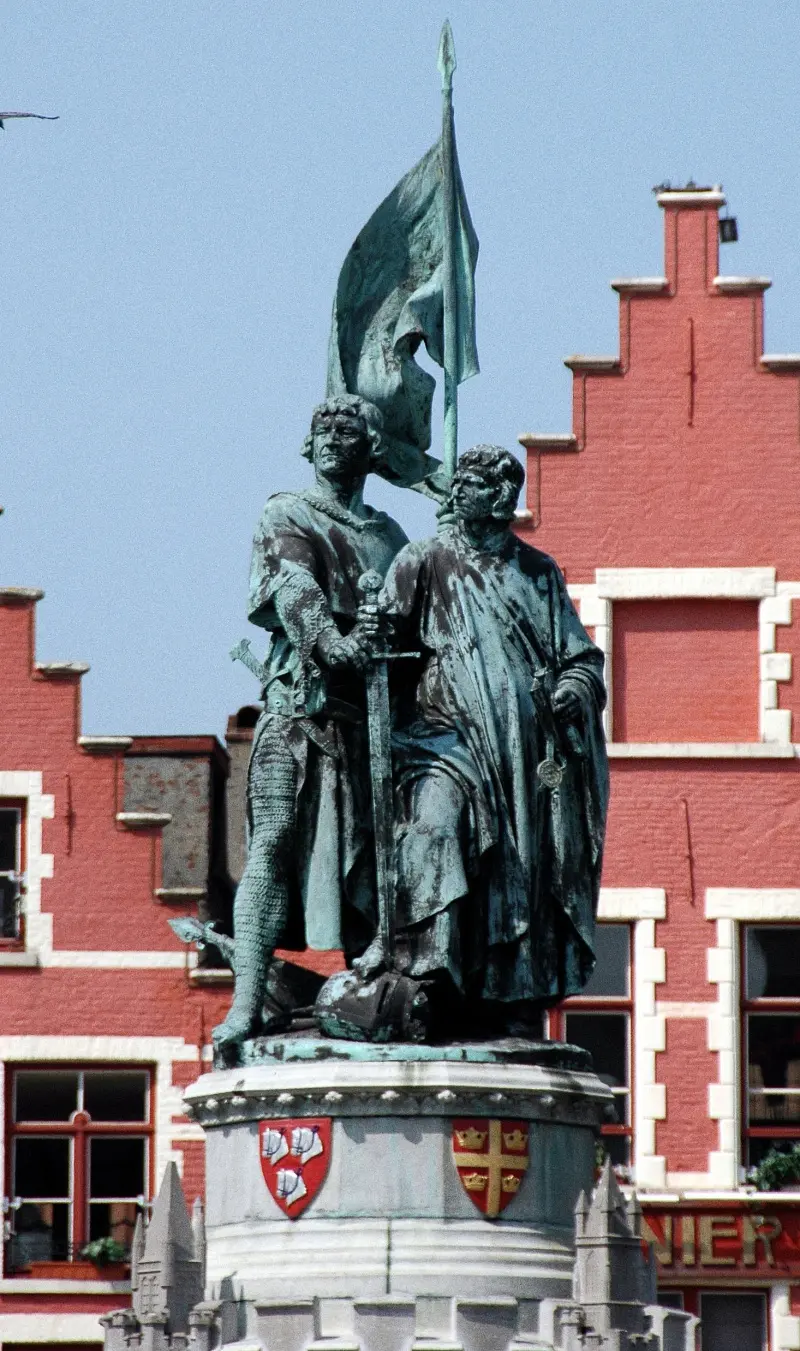
The military success of “the common people” in Flanders reverberated throughout Europe and struck fear into the hearts of the nobility and the political elite. Although the French king later largely restored his authority, the Count of Flanders remained powerful. At the local level, the Battle of the Golden Spurs ensured that the craft guilds gained a say in the municipal government of Flemish cities such as Bruges and Ghent, as well as in Brabant cities such as Mechelen.
This story was created by Geheugen Collectief for FAAM – Virtual Museum.
 ErfgoedApp
 ErfgoedApp
 ErfgoedApp