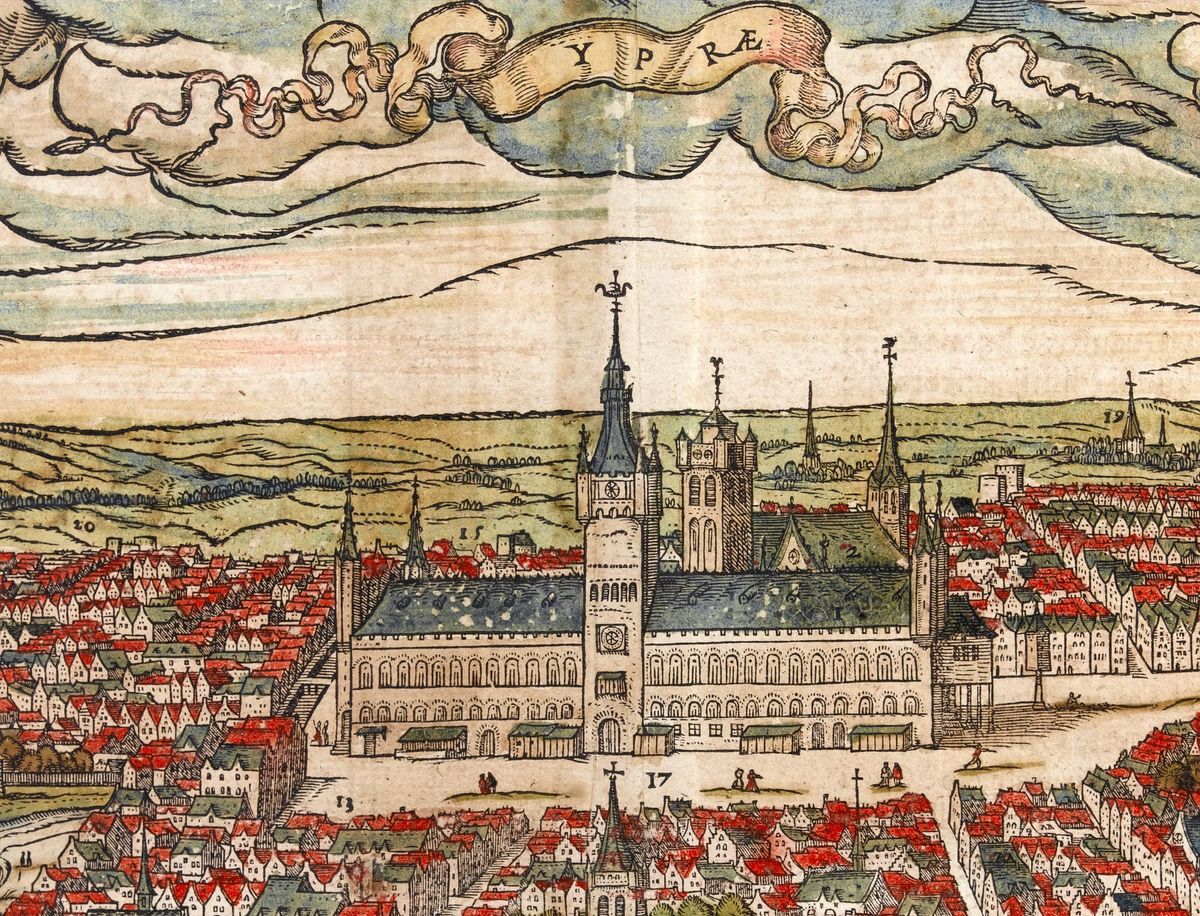
In the Middle Ages, one economic sector in particular was responsible for the growing prosperity of Flemish cities such as Ypres, Bruges, and Ghent: the cloth industry. Wool was needed to make cloth. Initially, most of it came from sheep in the coastal region.
Starting in the 12th century, the textile industry grew so large that wool had to be imported from Scotland, Spain, and especially England.
The processing of wool into cloth gave rise to an entire industry, in which countless men and women were employed. In the cities, they organized themselves into craft guilds, such as those of spinners, weavers, fullers (who felted the cloth into a sturdy, water-repellent fabric), dyers, and others. Cloth merchants in the major port cities made their fortunes by exporting the finished products throughout Europe—and even beyond.
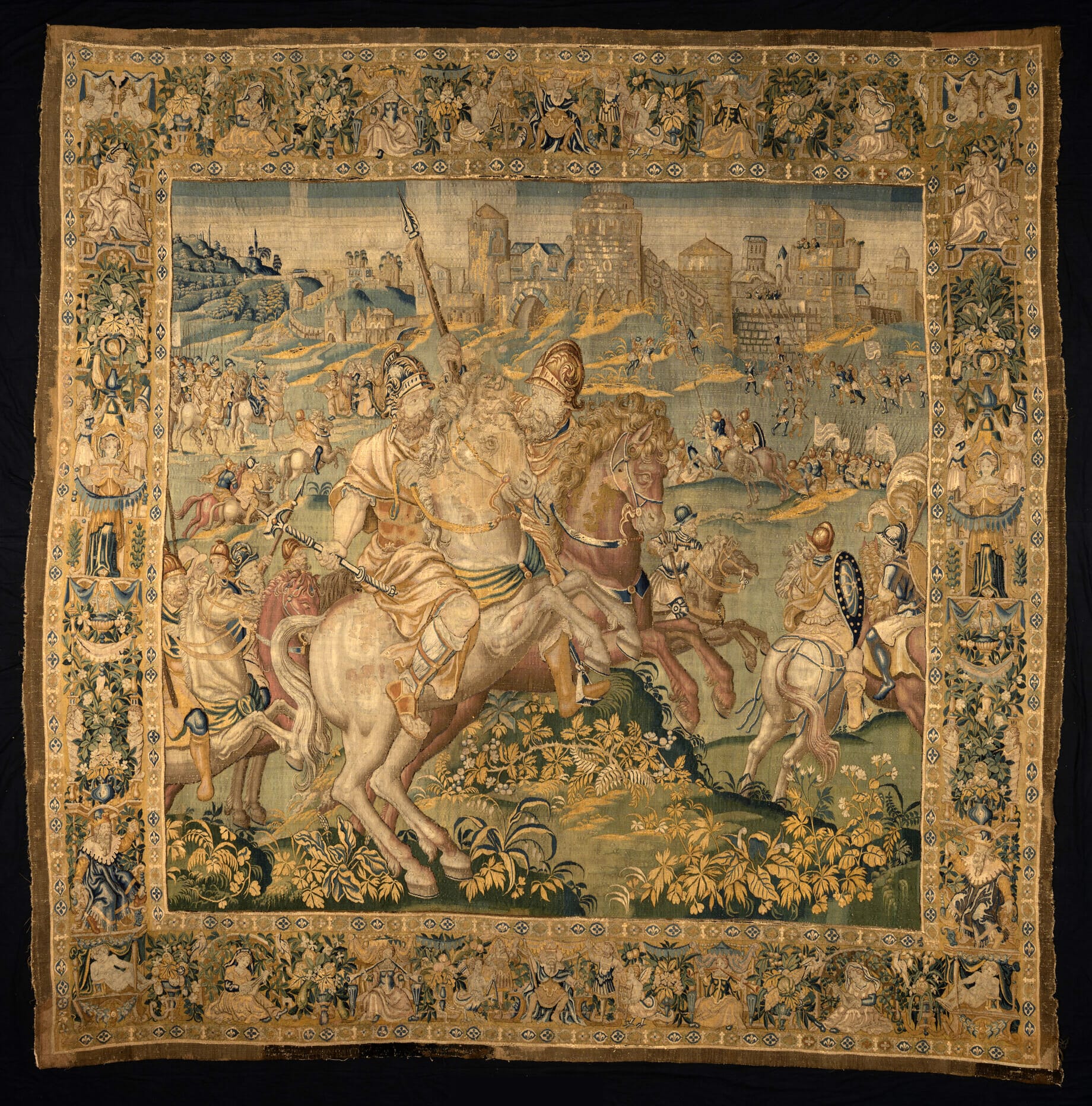
The cloth industry was initially concentrated mainly in the county of Flanders, but quickly spread to the rest of the Southern Netherlands. Through their contribution to the prosperity of the cities, the craft guilds were able to exert influence on economic regulations and secure political representation. This occurred particularly after the Battle of the Golden Spurs in 1302, in which the urban artisans formed an alliance with the Count of Flanders in his struggle against the King of France.
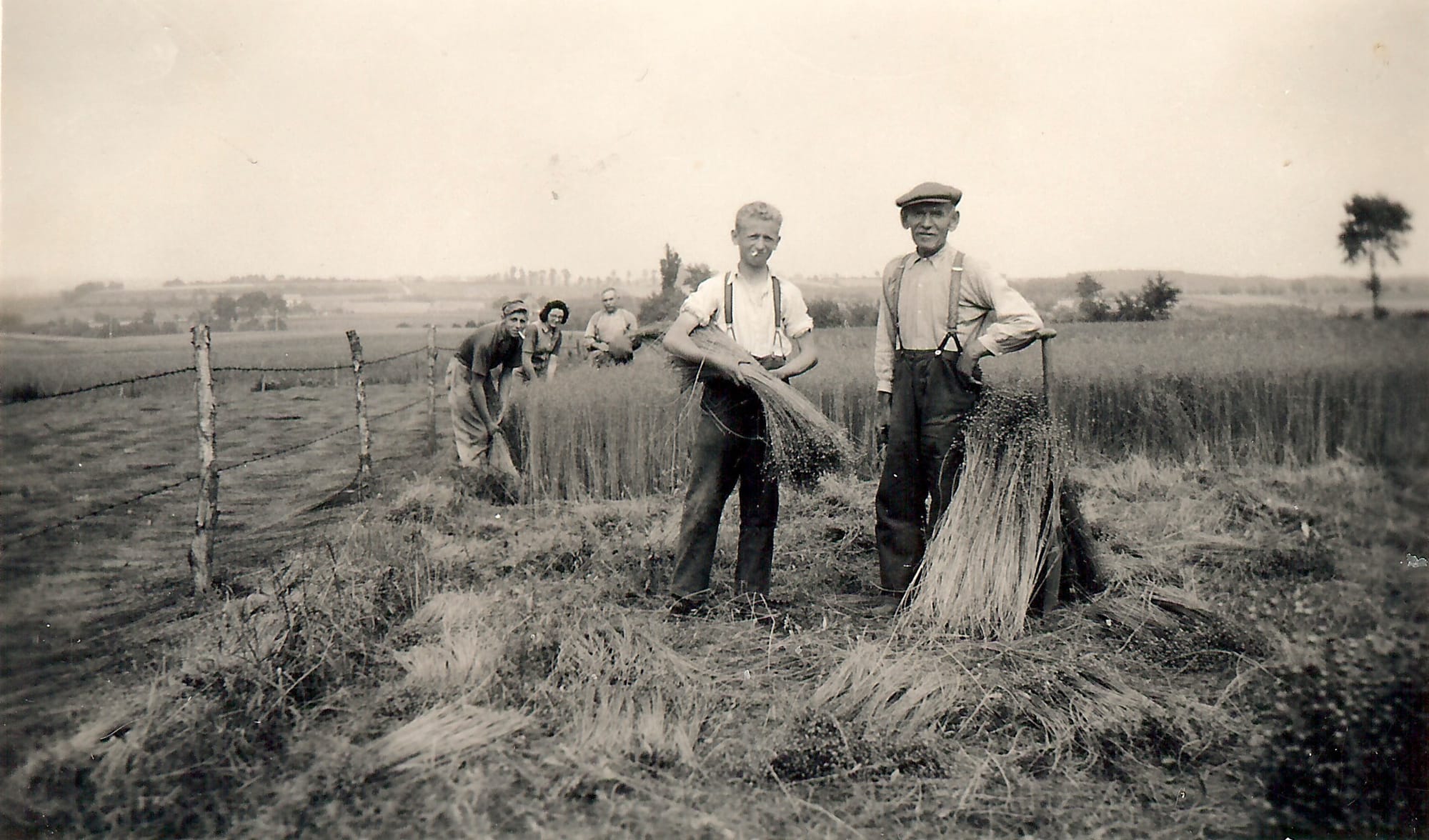
Even after the Middle Ages, textiles remained important in the Southern Netherlands. Textiles were even one of the key sectors of the Industrial Revolution in 19th-century Belgium. Not only wool, but also flax and, later, cotton and synthetic fabrics were now being processed. Today, various cities and regions are known for their textile heritage. The tapestries from Oudenaarde (16th–18th centuries) and the flax and linen industry in the region around Kortrijk in the 19th century are examples of this.
This story was created by Geheugen Collectief for FAAM – Virtual Museum.
 ErfgoedApp
 ErfgoedApp
 ErfgoedApp
 ErfgoedApp