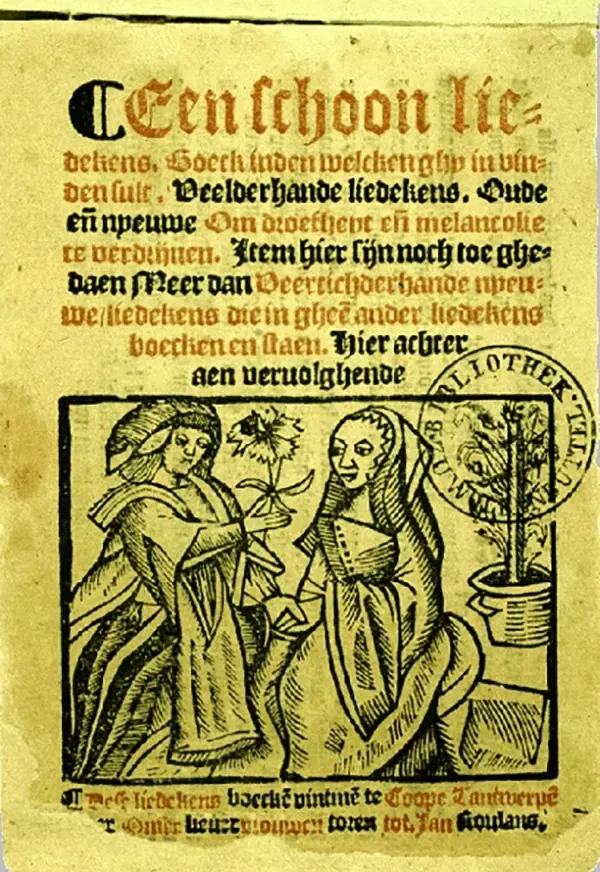
In 1544, the Antwerp printer Jan Roulans published a small book containing the lyrics of 221“beautiful songs,old and new, to dispel sadness and melancholy.” It included political songs, but also bawdy ones in which monks and nuns engaged in licentious behavior.
The church authorities therefore disapproved of the booklet and placed it on the Index of Prohibited Books in 1546.
Roulans continued to print booklets clandestinely and eventually died in prison. In his songbook, he distinguished between old and new songs. The old ones had been known for a long time.“Het daghet in den oosten”was one such song. It is a medieval song about a young woman who enters a convent after the death of her beloved. Like many other old songs, it first appeared in print in the Antwerp Songbook.
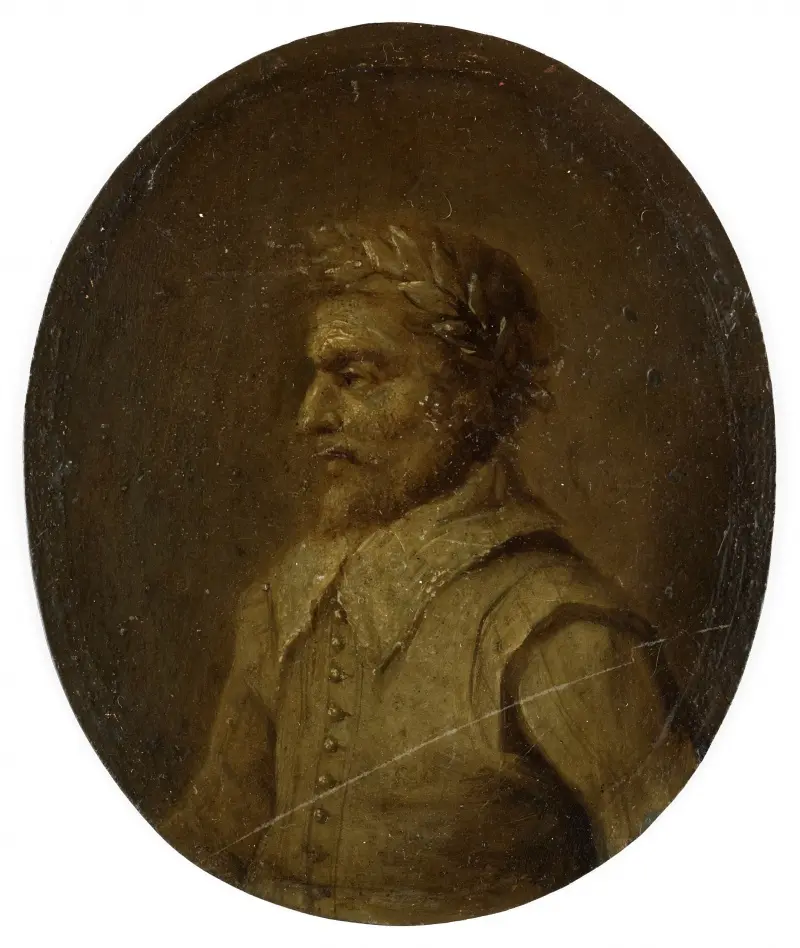
The authors of most of these texts are unknown, with the exception of Matthijs de Castelein, a rhetorician from Oudenaarde. The rederijkers were townspeople who, starting in the 15th century, formed associations known as rederijkerskamers throughout the Low Countries. There, they practiced poetry and recitation together. Many of the new songs in the Antwerp Songbook were in the style of the rederijkers, featuring complex rhyme schemes.
While Latin was sung in church, secular music primarily used the vernacular.
In the 16th century, Dutch-language music flourished alongside French and Italian music. This was not limited to “folk music”; even the polyphonists, who composed polyphonic music for the church and the nobility, sometimes used Dutch.
Only one complete copy of the Antwerp Songbook has survived. In the 19th century, it caught the attention of researchers interested in folk songs. During the folk revival of the 1970s, a new generation of Dutch-language singers found inspiration in this unique source.
This story was created by Geheugen Collectief for FAAM – Virtual Museum.
 ErfgoedApp
 ErfgoedApp
 ErfgoedApp