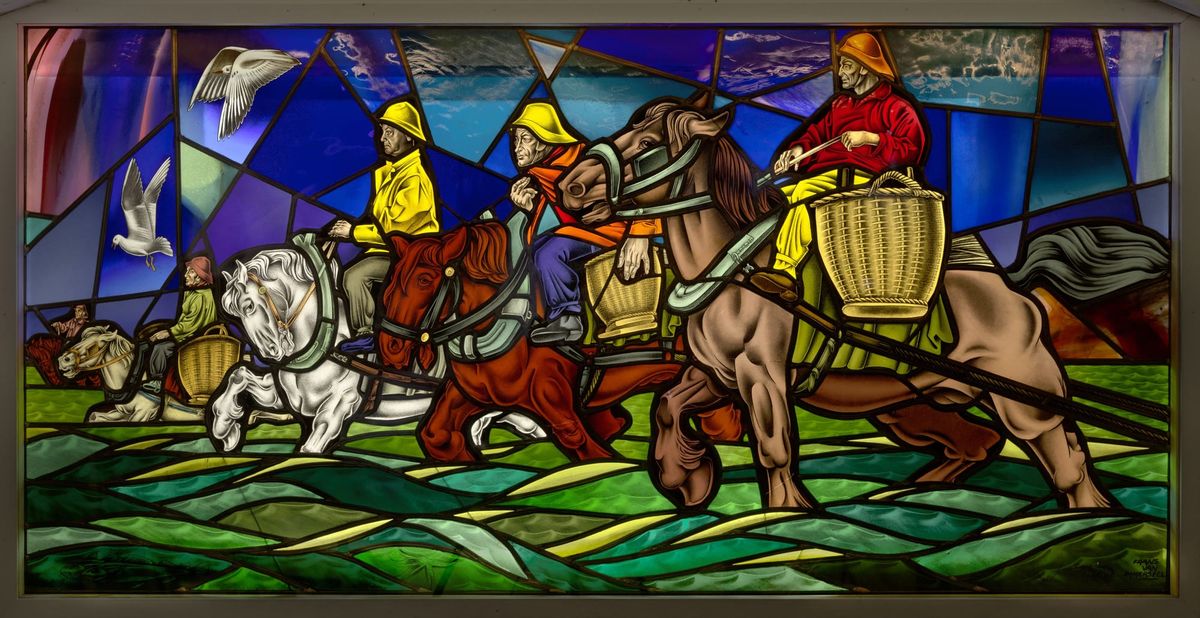
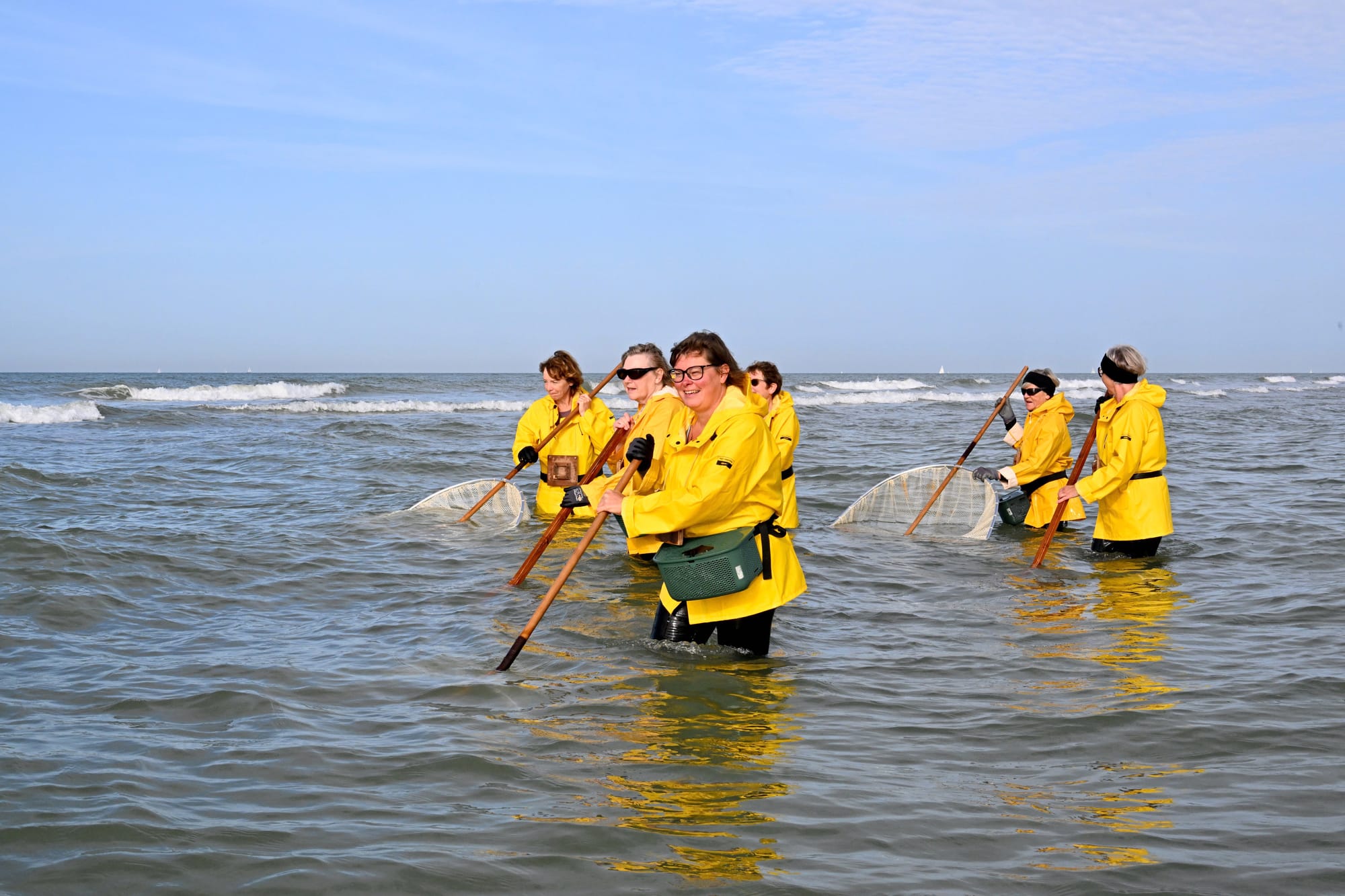
In Oostduinkerke, you can witness a unique spectacle in the spring and fall. Around low tide, fishermen ride Brabant draft horses out into the waves. Along the coastline, they catch kilos of delicious shrimp with their trawl nets.
Shrimp fishing, or “kruien,” was already practiced along the North Sea coast as early as the 16th century.
Shrimp fishermen were true craftsmen, with a deep understanding of the sea. And while the men rode their horses into the water, their wives waded through the surf on foot to catch shrimp.
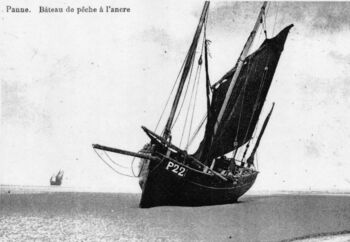
For many poor fishermen, shrimp fishing was originally a way to earn some extra money during the winter months. The rest of the year, they fished in the North Sea using herring boats, a special type of vessel designed for catching herring. The shrimp also helped supplement their often meager diet, especially on Fridays, when the Catholic Church forbade the faithful from eating meat.
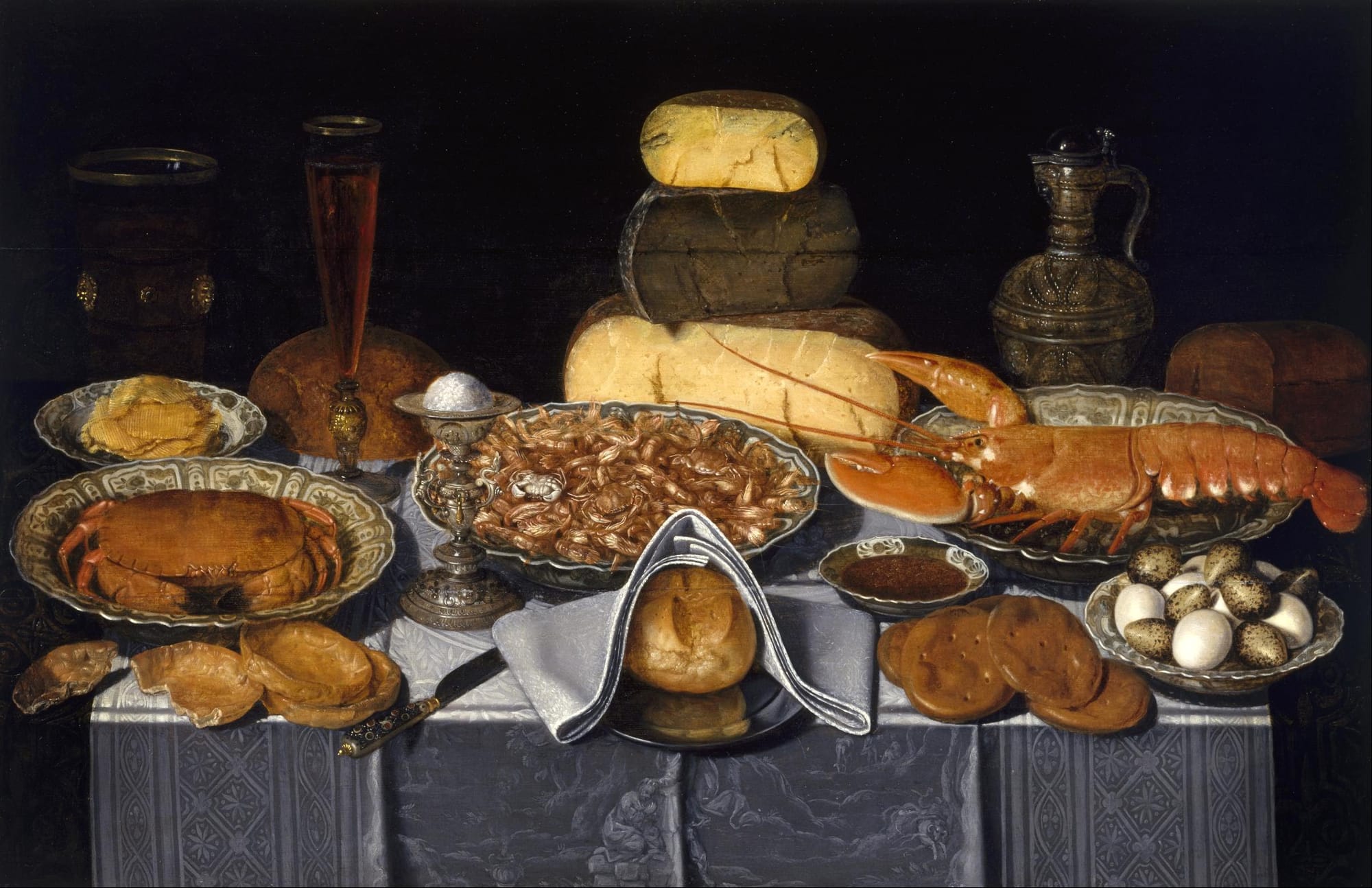
Inland, shrimp had a very different status. Because they spoiled quickly, it was difficult to transport these crustaceans over long distances. That made them both expensive and exclusive. From the 14th century onward, shrimp were therefore served as a delicacy to nobles and monarchs, such as the Dukes of Burgundy. In the 17th century, these creatures became a popular subject among still-life painters. Such paintings often adorned the walls of wealthy townhouses.
Starting in the 20th century, more people could afford shrimp. However, fewer and fewer shrimp were coming from the nets of fishermen on horseback. Today, only about 16 traditional shrimp fishermen remain active in Oostduinkerke. Since 2013, their craft has even been recognized as a UNESCO Intangible Cultural Heritage. Shrimp fishing on foot is also making a comeback in Oostduinkerke. The women of De Stienestekers are breathing new life into the tradition.
This story was created by Geheugen Collectief for FAAM – Virtual Museum.
 ErfgoedApp
 ErfgoedApp
 ErfgoedApp
 ErfgoedApp