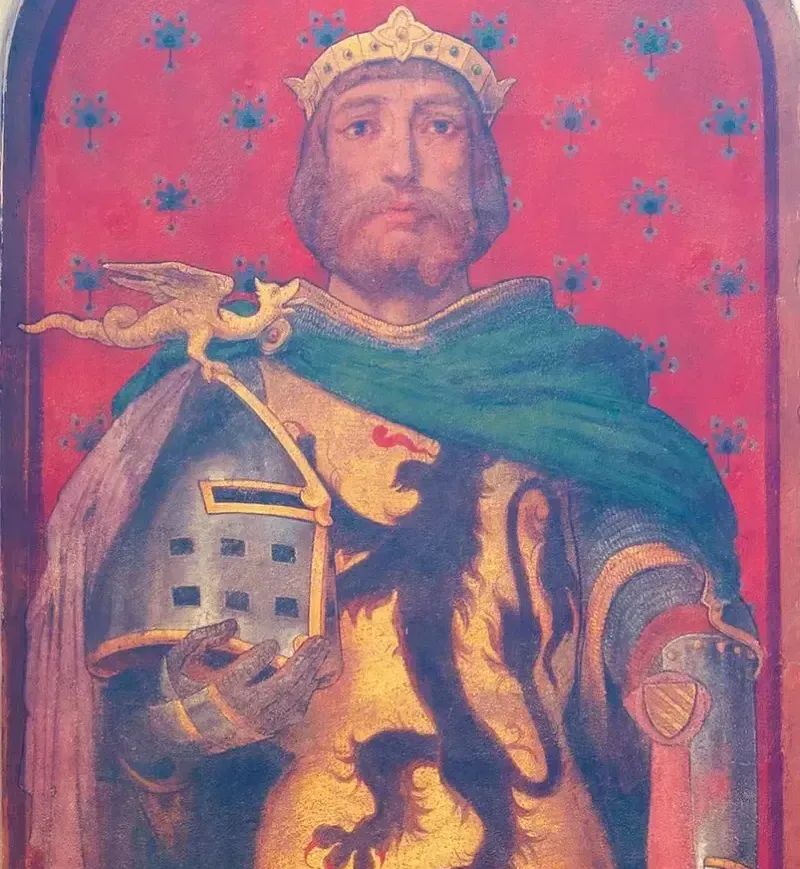
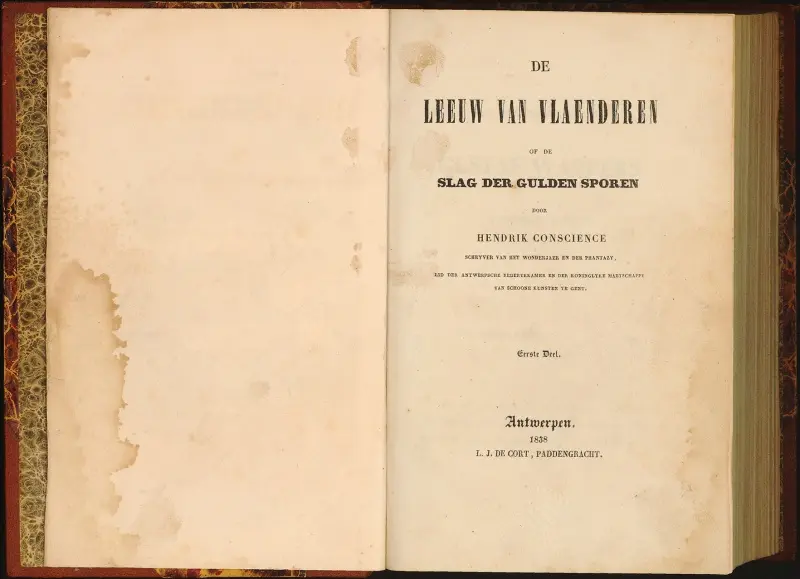
The Lion of Flanders, or The Battle of the Golden Spurs, is a novel by Hendrik Conscience. The book was published in 1838.The Antwerp-based author drew on historical sources and folk tales to craft a fictional story set in the early 14th century.
The backdrop is the historical conflict between Guy of Dampierre, Count of Flanders, and the French king Philip the Fair. The most famous episode of that conflict was the Battle of Kortrijk, or the Battle of the Golden Spurs —as it has been known since Conscience’s account.
Gwijde’s son, Robert of Béthune (the “Lion” of the title), his granddaughter Matilda, and the Bruges artisans Pieter de Coninck (a weaver) and Jan Breydel (a butcher) are some of the book’s main characters. The novel was hugely successful and influential. Flanders owes its public holiday, flag, and anthem to it today. But the book has also shaped—and distorted—our view of the Battle of the Golden Spurs to this day.
The fact that Conscience wrote his novel in Dutch was exceptional. Belgium had only recently gained independence, and French dominated society. In his books, Conscience explicitly addressed all Dutch-speaking Belgians, not just the inhabitants of the old county of Flanders. In this way, he contributed to the formation of the Flemish nation.
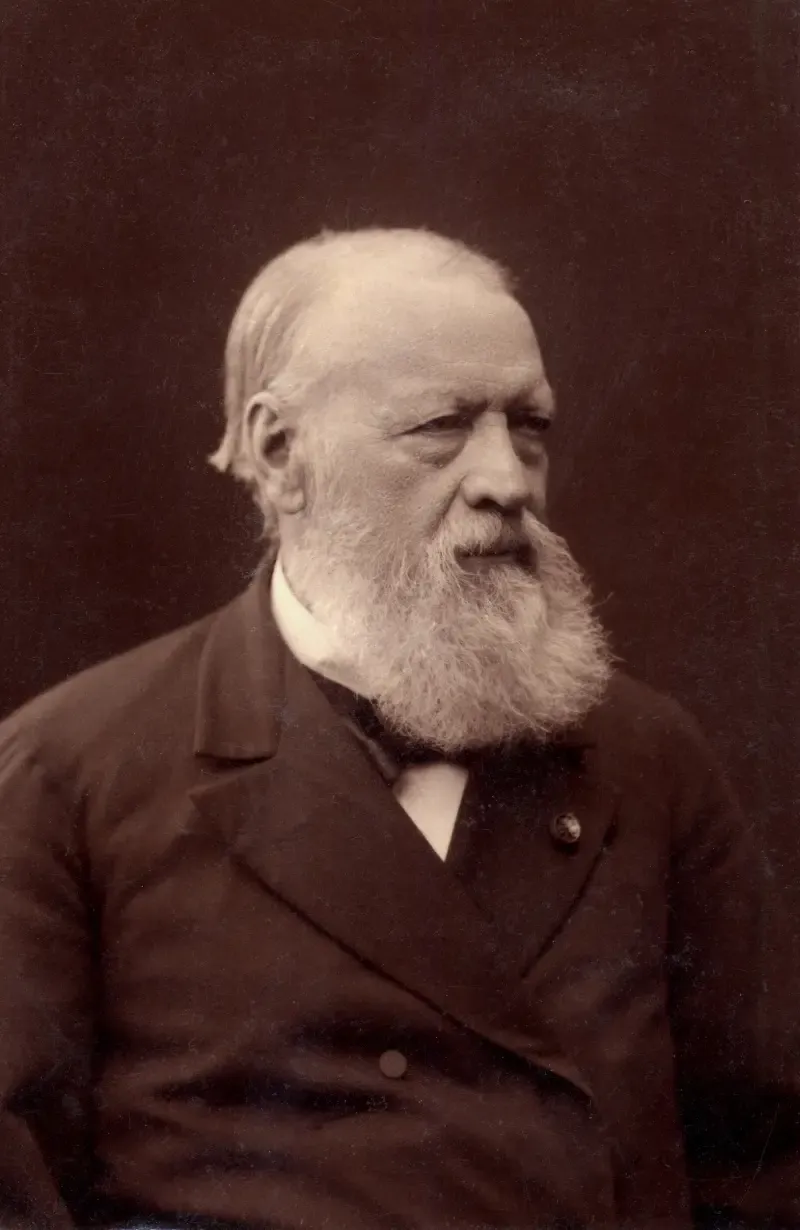
In the wake of Conscience, modern Flemish literature emerged and a Flemish movement took root. This movement championed the Dutch language and Flemish, Dutch-speaking culture. That did not mean that Conscience and his colleagues were opposed to Belgium. It was not until the 20th century that parts of the Flemish movement began to strive for the political emancipation of the Flemish region—and even for independence.
*The Lion of Flanders*has been adapted for the stage and screen countless times, most recently in 1984 by the writer and director Hugo Claus.
This story was created by Geheugen Collectief for FAAM – Virtual Museum.
 ErfgoedApp
 ErfgoedApp
 ErfgoedApp
 ErfgoedApp
 ErfgoedApp
 ErfgoedApp